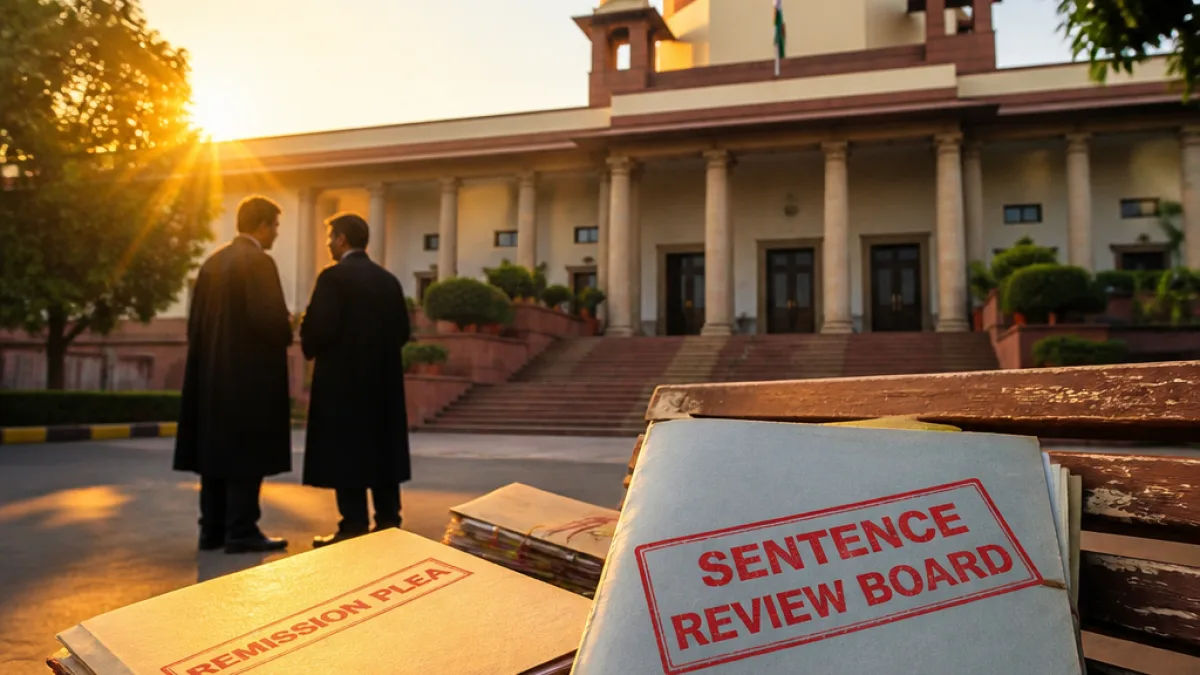
NEW DELHI / BHUBANESWAR: The Supreme Court of India on Wednesday warned the Odisha government over delay in taking a final view on the premature release application of Rabindra Pal alias Dara Singh, convicted in the 1999 murder of missionary Graham Staines and his two sons. The bench expressed displeasure that the Sentence Review Board’s report was yet to be placed before the state despite earlier directions from the apex court.
Bench presses state to act
According to reporting, the bench told the state authorities to take a decision and indicated that it would not hesitate to decide the matter itself if the state continued to stall. The court’s strict admonition was captured in its remark:
“Decide, otherwise we will.”
Dara Singh, convicted for his role in the 1999 killings of Australian missionary Graham Staines and his two sons in Odisha’s Keonjhar district, has been serving a life sentence and has completed more than 26 years behind bars. He filed an application seeking remission of his sentence, which led to intervention by the Supreme Court.
Delay blamed on pending review board report
The Supreme Court was informed that a report from the Sentence Review Board had not been submitted, prompting the bench to question the reason for the delay. The court had earlier directed the Odisha government to consider the plea, and the absence of the Board’s report was presented as the primary cause for the inaction.
No further details about the content of the Review Board’s findings or the reasons for the delay in forwarding its report to the state government were available in the reporting. The case continues to draw attention given its sensitive communal context and the high-profile nature of the original conviction.
What the court’s warning means for the state
The Supreme Court’s stern observation places pressure on the Odisha administration and the Sentence Review Board to complete their statutory processes without undue delay. If the state remains inactive, the court’s indication that it may itself pass orders could short-circuit the normal administrative review and raise questions about separation of powers in sentence remissions.
Practical implications for authorities include the need to:
- Expedite submission of the Sentence Review Board report to the state government.
- Ensure the state government records and communicates its decision on remission in a timely manner.
- Be prepared to place relevant material and reasons on record if the matter returns to the Supreme Court.
Case timeline
| Year | Event |
|---|---|
| 1999 | Graham Staines and his two sons murdered; Dara Singh convicted in connection with the case. |
| 1999–present | Dara Singh serving life sentence; over 26 years completed. |
| 2026 | Supreme Court warned Odisha to decide on remission application; Review Board report reportedly pending. |
Public sensitivity and legal scrutiny
The Graham Staines case has historically attracted intense public and political attention, making any decision on remission of a convict associated with that crime especially sensitive. While the current reporting does not detail the grounds on which remission has been sought, the Supreme Court’s active involvement underscores the judiciary’s role in ensuring timely administrative action and maintaining public confidence in criminal justice processes.
For citizens and local stakeholders, the immediate takeaway is that delays in administrative procedures relating to high-profile criminal cases can invite judicial intervention. Authorities involved in sentence review and remission processes must therefore ensure compliance with prescribed timelines and transparent record-keeping.
The matter will proceed in the Supreme Court, which has signalled it expects a decisive response from the state. Observers will watch for the Sentence Review Board’s report and any subsequent order by the Odisha government in the coming days.