Supreme Court stay shifts focus to management and heritage concerns at Bodh Gaya
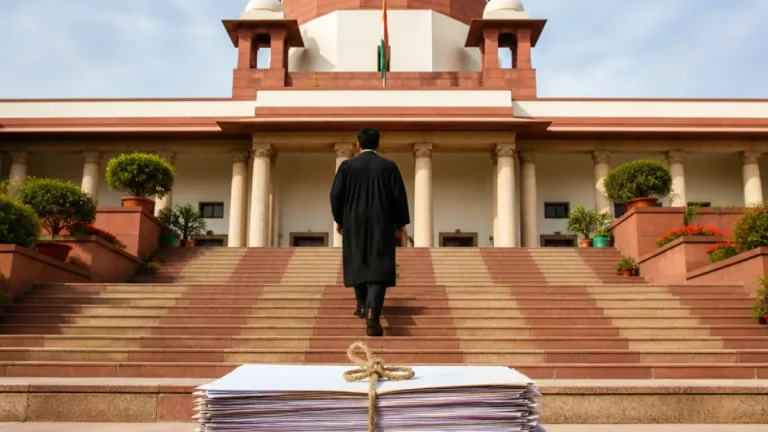
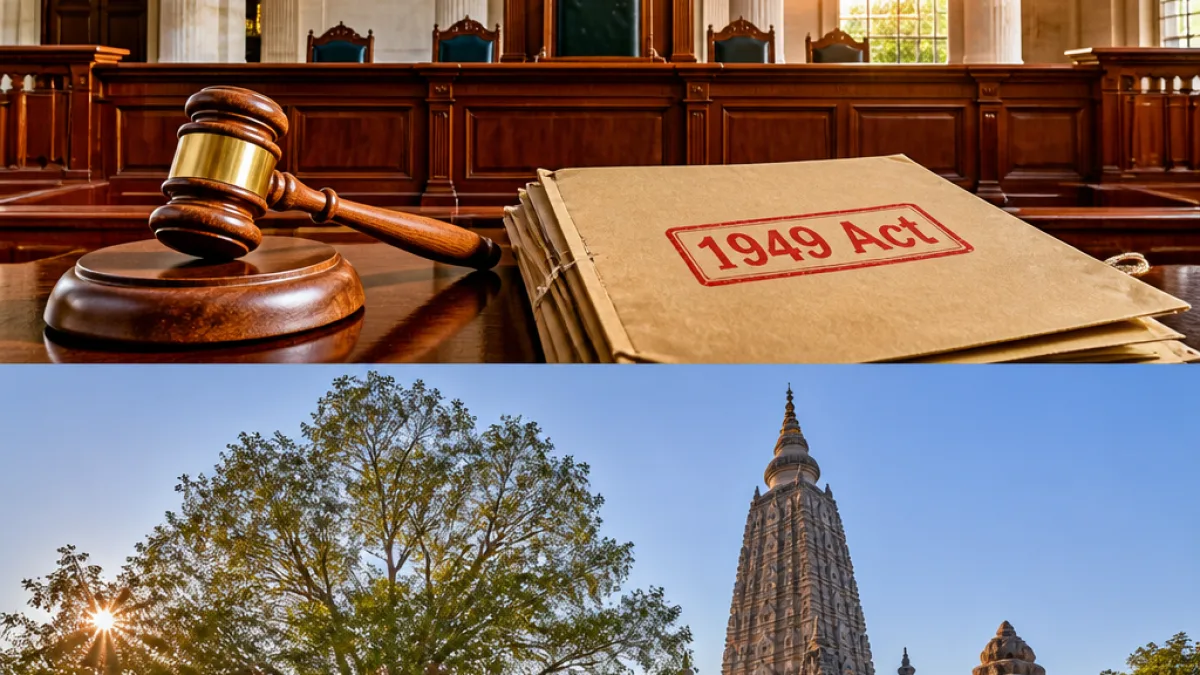
The Supreme Court on Tuesday deferred hearing on a challenge to the constitutional validity of the Bodh Gaya Temple Act, 1949, in a case that directly concerns the administration and status of the Mahabodhi Temple Complex in Gaya. A bench led by Chief Justice of India Surya Kant listed the matter for October after linking it to issues likely to be decided in the Court’s nine-judge Sabarimala reference.
The petition, filed by the Buddhist Society of India and tagged with seven similar petitions, seeks repeal of the 1949 Act and a new Central law under which the “total management, control and administration” of the Mahabodhi Temple would be vested exclusively in Buddhists. The petitioners argue the present statutory framework allows Hindu participation in management and thus dilutes Buddhists’ denominational rights under the Constitution.
“Total management, control and administration”
The plea also asks for a declaration that the Mahabodhi Temple Complex be recognised as a site of national importance, removal of alleged encroachments within the complex, and provision of separate land for Hindu worship. The bench deferred the hearing until after it pronounces judgment in the Sabarimala matter, observing the two cases raise overlapping constitutional questions on Articles 25 and 26, which govern freedom of religion and denominational rights.
Historic site and present governance
Bodh Gaya is the place where Prince Siddhartha is traditionally believed to have attained enlightenment and become the Buddha. Emperor Ashoka is credited with constructing a shrine at the site in the 3rd century BCE; the Vajrasana (Diamond Throne), a stone slab beneath the Bodhi tree, survives from that early period. The larger Mahabodhi Temple Complex is a UNESCO World Heritage site.
- The petition challenges the continued operation of the 1949 statutory scheme governing the temple.
- Petitioners seek exclusive Buddhist control and a fresh Central law to that effect.
- The case has been put off to October to await the Sabarimala judgment on denominational rights.
Local administration of the complex has long involved multiple stakeholders. The present litigation seeks to alter that balance by invoking constitutional protections for religious practice and management. By listing the hearing after the Sabarimala reference, the Supreme Court signalled that its forthcoming broader pronouncement on the scope of Articles 25 and 26 may determine how far denominational autonomy extends in managing a place of worship that has shared or contested custodianship.
Implications for Gaya: administration, pilgrimage and heritage
Any change to the statutory regime governing the Mahabodhi Temple would have immediate ramifications for managers, shrine employees, local vendors and the flow of pilgrims to Gaya. The petition’s call for removal of alleged encroachments and designation of the complex as a site of national importance would also engage archaeological and municipal agencies and could lead to fresh regulatory controls over land use around the shrine.
How the Court balances communal management claims with heritage and administrative concerns will be closely watched in Gaya. The outcome could affect:
- Who has statutory authority to administer temple properties and revenues;
- Regulation of land around the Mahabodhi complex and actions on encroachments;
- Arrangements for shared or separate worship spaces within a site visited by diverse faiths.
| Year/Date | Event |
|---|---|
| 3rd century BCE | Ashokan shrine established at Bodh Gaya (Vajrasana remains) |
| 1949 | Enactment of the Bodh Gaya Temple Act governing management |
| 11 August 2026 | Supreme Court defers hearing to October; links to Sabarimala reference |
The case will return to the national spotlight in October when the Court takes up the petition after delivering its decision in the Sabarimala reference. Until then, administrators, religious bodies and local stakeholders in Gaya will be watching the larger constitutional debate unfold, as its outcome may redraw the governance framework for one of the district’s most significant religious and heritage assets.