Gangtok, Aug 12: The Sikkim government on Wednesday welcomed Parliament’s approval of the MSME Development (Amendment) Bill, 2026, saying the legislative changes should help address persistent delayed-payment problems that constrain cash flows and growth for small businesses in the state.
State highlights expected gains for local enterprises
In a statement, the Commerce and Industries Department said the Bill—cleared by the Rajya Sabha on 3 August 2026 and by the Lok Sabha on 7 August 2026—seeks to streamline dispute-resolution mechanisms, strengthen MSME facilitation councils and promote wider use of digital systems to enhance transparency.
The department described delayed payments as “one of the biggest challenges confronting MSMEs”, noting that such delays put pressure on working capital, wages and the ability of firms to invest and expand. It said the amendments will facilitate faster recovery of outstanding dues and allow enterprises to operate with greater confidence.
“The amendments are an important step towards creating a more supportive and business-friendly environment for MSMEs. Faster recovery of delayed payments and stronger institutional mechanisms will help enterprises manage their working capital more effectively and operate with greater confidence,” the Commerce and Industries Department said.
State outreach to familiarise entrepreneurs
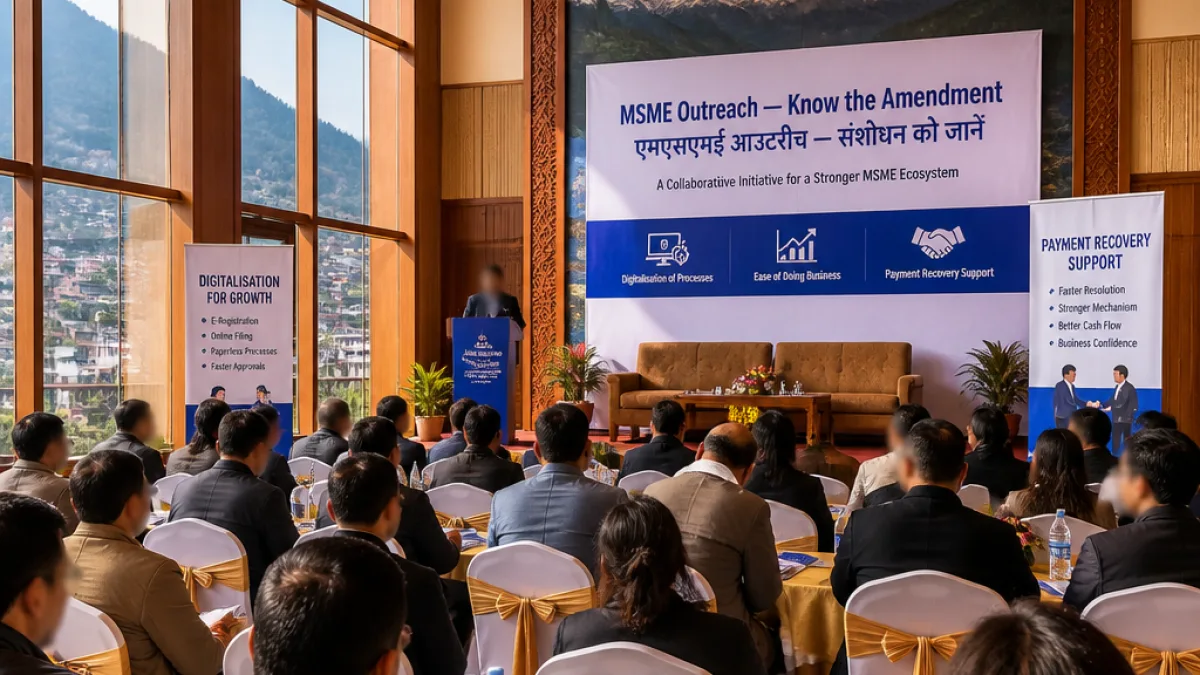
To ensure local businesses can take advantage of the new provisions, the department has launched mass awareness and outreach programmes across Sikkim. These initiatives will brief entrepreneurs, MSME associations and other stakeholders on procedural changes, digital filing routes and the role of facilitation councils.
Officials urged small firms to make use of the MSME Facilitation Councils to pursue outstanding payments and secure legitimate dues. The department said the reforms are expected to reduce the regulatory burden on smaller enterprises and simplify common business processes.
What the amendments aim to change
While the central Bill sets national-level mechanisms, the state statement underlined three practical outcomes for Sikkim-based businesses:
- Quicker recovery of overdue payments through strengthened adjudicatory and facilitation institutions.
- Greater transparency and faster processing via digital systems for filing claims and tracking cases.
- Reduced compliance complexity to ease the administrative load on micro and small enterprises.
Department officials said these measures should improve access to working capital by shortening the period receivables remain unpaid.
Local impact and practical considerations
For many micro and small businesses in Sikkim, prompt payment from buyers and government agencies can be a determining factor in survival and expansion. Shorter payment cycles lower the need for expensive short-term borrowing and improve liquidity for payroll and inventory purchases.
The outreach programme will include workshops on how to submit claims to facilitation councils, use of digital portals and documentation required to pursue disputes. The department has not yet released a detailed calendar of sessions; businesses seeking information were advised to contact the state Commerce and Industries office.
| Aspect | Expected change |
|---|---|
| Dispute resolution | Faster adjudication via empowered facilitation councils |
| Digitalisation | Greater use of online systems for filing and transparency |
| Regulatory burden | Simplified processes for small enterprises |
The department said it will monitor implementation and work with industry bodies to identify bottlenecks that remain after the law is rolled out.
Broader context
MSMEs are widely regarded as a backbone of local economies, providing employment and connecting rural producers with markets. In Sikkim, smaller firms contribute to services, tourism-linked ventures, food processing and handicrafts. Delays in payments, particularly from larger buyers or government departments, can ripple through local supply chains.
By emphasising facilitation councils and digital dispute management, the amendments mirror a national push to make the business environment friendlier for small entrepreneurs. How quickly those national provisions translate into faster payments on the ground in Sikkim will depend on administrative capacity, awareness among claimants and the adoption of new online systems.
For now, the state government’s immediate focus is on outreach and guiding MSMEs through the new procedures so they can seek timely recovery of dues and strengthen their cash positions.