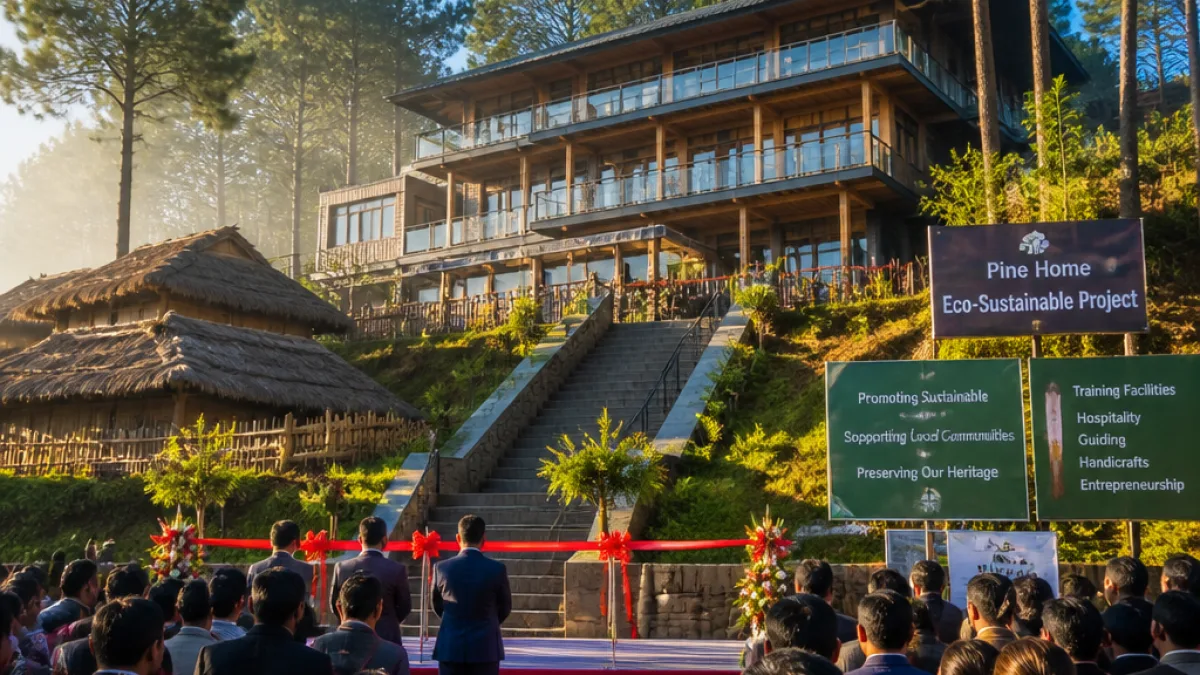
Conrad K. Sangma inaugurates Pine Home at Mawlangwir
MAWKYRWAT, Aug 17: Chief Minister Conrad K. Sangma on Monday opened the Pine Home Eco‑Sustainable Project at Shnong Mawlangwir in Mawkyrwat, South West Khasi Hills, a state government‑led initiative the administration says is intended to showcase sustainable land‑use practices while supporting local communities.
The inauguration, reported by Hub Network, was attended by Deputy Chief Minister Prestone Tynsong and Minister in charge of Jngohkai, Timothy D. Shira. The event also included the inauguration of the Twahlongwar Open‑Air Museum at the Mawsynram foothills, according to the same report.
Project design and stated objectives
According to the reporting, the Pine Home is presented as a model to demonstrate the government’s approach to soil and water conservation, sustainable land‑use and community participation. The project is described as integrating local resources and skills into facilities that will serve both residents and visitors.
- Estimated cost: the project was reported to have been approved at ₹5.90 crore through the Saitsnat Multipurpose Cooperative Society.
- Facilities listed: a restaurant, communal hall, conference and training hall, guest rooms and a tourism information centre.
- Community focus: emphasis on sourcing materials from local areas and encouraging traditional crafts and livelihoods.
The Chief Minister was quoted as saying the Pine Home will highlight ways to reduce erosion, conserve land and use sustainable building practices. He said the project would explore techniques such as the use of recyclable materials, water management and other measures to make sites less vulnerable to environmental degradation.
"Ki tiar ba pyndonkam ha kane ka project ki dei kiba pynmih hi na ka thain, da ka jingthmu ban kyntiew ia ki mar kiba don ha ka thain bad ka sap," the Chief Minister was reported to have said, emphasising use of locally sourced materials to support traditional livelihoods and skills.
Link with tourism and homestay mission
The reporting indicates that the Pine Home is intended not only as a demonstration site but also as part of a wider push to develop the South West Khasi Hills as a visitor destination. Officials said the government aims to make the area more accessible and attractive to tourists.
Hub Network also reported that the project will be linked with the state’s CM Homestay Mission, an initiative said to target the development of up to 3,000 homestays across the state by 2028. The Pine Home is expected to provide training, conference space and visitor information to support local hosts and tourism enterprises.
What is confirmed and what remains to be seen
What is confirmed in the report: the inauguration took place; the named ministers attended; the project components and the funding route through the Saitsnat Multipurpose Cooperative Society were stated; and the government’s objectives of sustainable practices and community involvement were outlined.
Questions that remain open include the detailed implementation timeline for operations, the precise roles of local cooperative members in ongoing management, and how the project will be integrated with road, sanitation and other infrastructure needed to scale visitor numbers. The report did not include independent third‑party assessments of environmental impact or projections of visitor numbers and local income generation.
| Item | Reported detail |
|---|---|
| Project name | Pine Home Eco‑Sustainable Project |
| Location | Shnong Mawlangwir, Mawkyrwat, South West Khasi Hills |
| Funding | Reportedly ₹5.90 crore via Saitsnat Multipurpose Cooperative Society |
| Facilities | Restaurant, communal hall, conference/training hall, guest rooms, tourism info centre |
The administration is presenting the project as both a conservation measure and an economic opportunity for local communities. Officials reported plans for capacity building of villagers, training in homestay management, and support for traditional artisans and farmers to take part in the tourist value chain.
Observers and residents in Shillong and the wider region will be watching how the Pine Home translates into longer‑term benefits — particularly whether it leads to measurable improvements in local incomes, environmental stability and sustainable tourism capacity in the South West Khasi Hills.