Pedestrians pushed onto carriageways as footpaths shrink or disappear
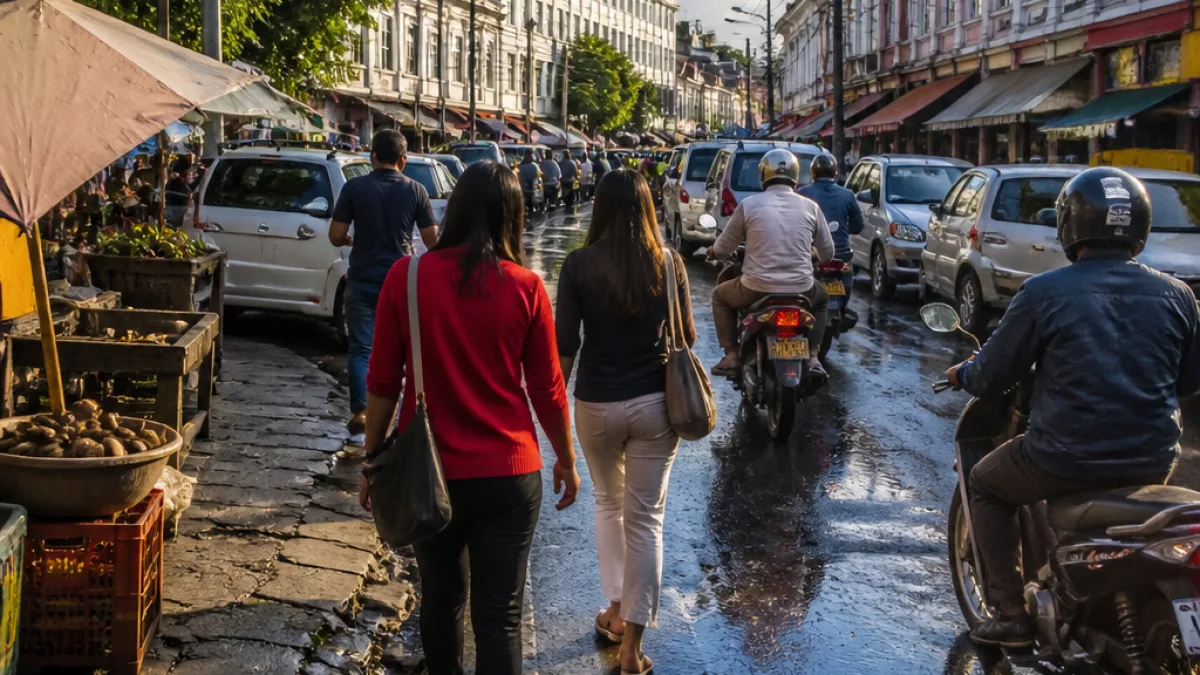
Shillong residents are confronting a growing mismatch between the city's pedestrian needs and the condition of its footpaths, according to a report by Meghalaya Monitor. The report highlights stretches across the city where people walking to work, school and markets must negotiate speeding two-wheelers, sudden vehicle stoppages and cars parked on or across footpaths.
The issue takes on new legal significance after a Supreme Court observation in June stating that the right to walk is a fundamental right and that it includes the entitlement to demarcated and well-maintained footpaths. The court said pedestrian movement cannot be treated as secondary to vehicles and that authorities are under a duty to provide and maintain proper pedestrian infrastructure, the Meghalaya Monitor report noted.
In Shillong, the situation described in the report includes multiple failure modes:
- no footpaths at all along certain stretches;
- existing footpaths that are too narrow, broken or poorly maintained;
- footpaths obstructed by shops, construction materials or other items;
- footpaths repurposed for parking, forcing pedestrians onto roads.
"Pedestrians don’t really have a safe place on Shillong roads," the Meghalaya Monitor report observed.
The practical consequence of inadequate pedestrian infrastructure is clear: where footpaths are absent or unusable, pedestrians are forced onto carriageways and directly into the paths of moving vehicles, increasing the risk of accidents. The Supreme Court recognised that absence of footpaths effectively compels pedestrians to use the carriageway, and placed responsibility on authorities to ensure safe, accessible walking space.
Local context and implications
Shillong's compact urban form and its growth in population and vehicle numbers have intensified pressure on existing road space, the report said. While vehicle ownership and traffic volumes have risen, the physical width of streets and availability of designated pedestrian areas have not expanded proportionately. Where footpaths exist, obstructions and poor upkeep reduce their utility.
That combination — more vehicles, static street widths, and encroached or damaged footpaths — means pedestrians routinely face hazards that extend beyond inconvenience to public-safety risks. The Supreme Court's framing of walking as a primary right reframes these local deficiencies as matters of constitutional obligation as well as urban planning.
What the data in the report shows
| Issue | Effect on pedestrians |
|---|---|
| No footpaths | Pedestrians forced onto carriageway |
| Narrow/broken footpaths | Unsafe or unusable for many users |
| Obstructions/parking on footpaths | Loss of continuous walking space |
The Meghalaya Monitor item did not provide numerical counts of affected stretches or a survey-based estimate of the population impacted; it framed the problem through observed conditions and reference to the Supreme Court's legal position.
Moving forward — responsibilities and questions
By underlining the duty of authorities to provide and maintain footpaths, the Supreme Court decision places onus on municipal and state bodies to assess existing pedestrian infrastructure and take remedial action. The Meghalaya Monitor report implies several areas that require attention but does not document any specific actions taken by local authorities in response.
- Authorities need to map continuous pedestrian routes and identify priority stretches lacking footpaths.
- Encroachment and parking on footpaths must be addressed through enforcement and design measures.
- Maintenance and upgrades should prioritise accessibility and safety for all users, including children, the elderly and people with disabilities.
Improving pedestrian infrastructure in Shillong will involve policy, enforcement and engineering choices. The Supreme Court observation establishes a legal imperative; local implementation will determine whether walking in the city becomes safer and more dignified for its residents. The Meghalaya Monitor report serves as a prompt for citizens and authorities to evaluate current conditions against that legal benchmark.