Cabinet clears UCC draft with polygamy prohibition and registration rules
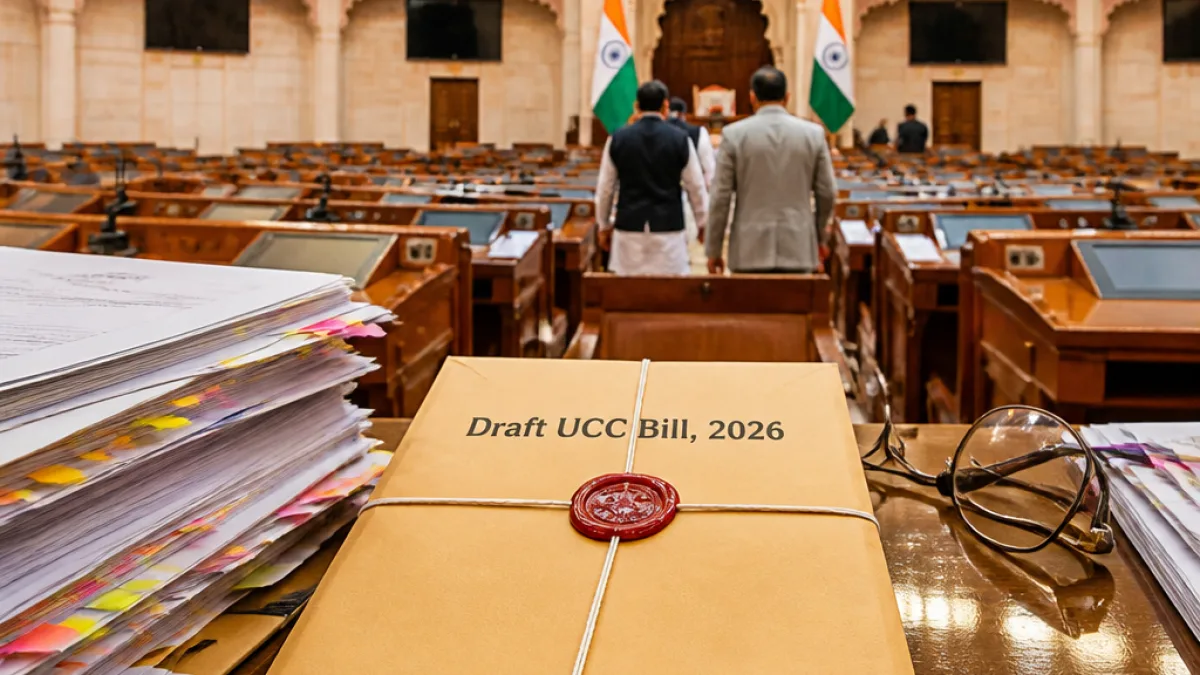
Jaipur — The Rajasthan Cabinet on Thursday approved the draft of the Rajasthan Uniform Civil Code (UCC) Bill, 2026, which seeks to create a common legal framework for personal matters such as marriage, divorce, inheritance, maintenance and live‑in relationships, Law Minister Jogaram Patel said. The government intends to introduce the Bill in the next session of the state Assembly.
According to the minister, the legislation contains several notable provisions. Among these, the Bill proposes a complete ban on polygamy and makes registration of marriages mandatory within 60 days of solemnisation after the law comes into effect. The draft, however, specifies that failure to register a marriage within the 60‑day window will not render the union invalid.
The Bill also obliges government employees to provide marriage registration certificates as part of their service records and indicates that administrative steps will be taken against those who unduly delay registration, Patel said.
Tribal exemption and study of other states' laws
Officials emphasised that the proposed UCC will not apply to tribal communities. A committee tasked with examining the implementation of similar legislation in other states — notably Gujarat, Uttarakhand and Assam — submitted findings that formed the basis for the draft, the minister added. The move makes Rajasthan the fifth state to proceed with such a statute, following enactments elsewhere.
| State | UCC adoption (reported) |
|---|---|
| Gujarat | March 2026 |
| Uttarakhand | March 2026 |
| Assam | May 2026 |
| Madhya Pradesh | July 2026 |
| Rajasthan | August 2026 (Cabinet clearance) |
Scope and specific measures
The draft aims to harmonise personal law across communities by laying down uniform rules for the registration and regulation of marriages, inheritance rights and the treatment of live‑in partnerships. It proposes a system for recording the commencement and termination of live‑in relationships to protect the parties’ legal entitlements.
- Marriage registration: Mandatory within 60 days, but non‑registration will not invalidate the marriage.
- Polygamy: Prohibited under the draft law.
- Tribal exemption: Provisions will not apply to Scheduled Tribe communities with constitutionally protected customary rights.
Parliamentary Affairs and Law portfolios were cited in official communiqués outlining the Bill’s key elements. The draft reportedly draws on an expert committee’s recommendations headed by a former Supreme Court judge; officials said the committee’s input shaped provisions such as succession order where a person dies intestate and equal inheritance claims for sons and daughters.
Administrative impact and next steps
If the Assembly approves the draft, the state administration will need to establish registration mechanisms across tehsils and municipal bodies to enforce the 60‑day requirement. Officials indicated that civil service documentation will be revised to include mandatory submission of marriage registration certificates by state employees.
Legal and social scholars have previously flagged practical implementation challenges for uniform civil codes, including administrative capacity for registrations, protections for vulnerable parties in matrimonial disputes and coordination with existing personal law systems. The draft’s tribal exemption addresses one such constitutional concern by preserving customary rights of certain communities.
The Cabinet decision follows similar actions in other states earlier this year. With the Bill slated for introduction in the upcoming Assembly session, debate is expected to centre on balancing uniformity with protections for religious and community practices, while ensuring safeguards for women’s inheritance and maintenance rights.
Further details, including the full text of the draft and the committee report that informed it, are expected to be published by the state government ahead of the Assembly discussion.