Patna, Sept 20: Jan Suraaj Party (JSP) founder Prashant Kishor on Sunday announced candidates for five Bihar Legislative Council constituencies, signalling the party's push to expand its footprint in the state's upper house ahead of elections due later this year.
Seats, scope and timeline
Elections are to be held for a total of eight Legislative Council seats in Bihar — four graduates' constituencies and four teachers' constituencies — whose terms expire in November. The contest is separate from the Bihar Assembly polls and covers constituencies spread across around 30 districts, officials said.
The Legislative Council is the state's upper chamber; only six Indian states, including Bihar, have such a body. JSP had earlier indicated its intention to contest all eight seats as part of an organisational expansion strategy across the state.
JSP's five nominees
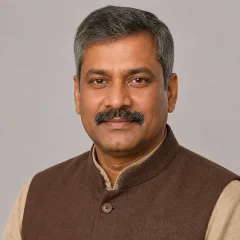
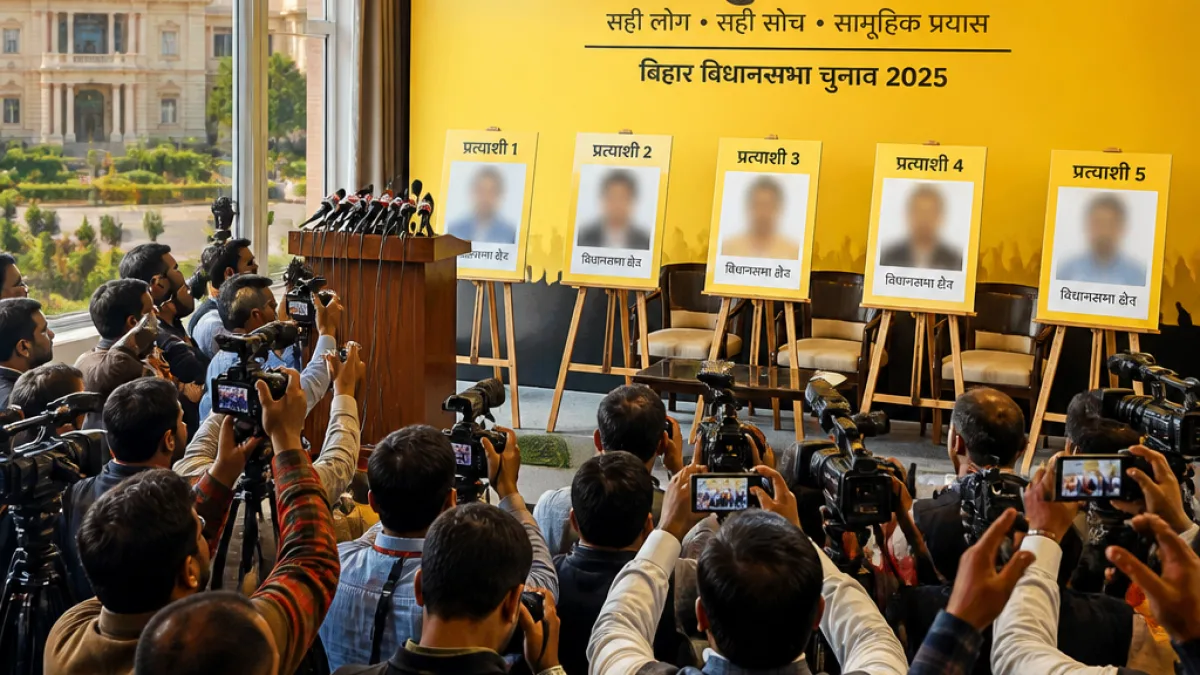
At a press event in Patna, Prashant Kishor named five candidates who will vie for the seats the party aims to capture. The nominations include sitting representative Afaq Ahmed, who will seek re-election from the Saran teachers' constituency.
| Candidate | Constituency |
|---|---|
| Afaq Ahmed | Saran (teachers) |
| Divya Jyoti | Patna (teachers) |
| S P Rai | Darbhanga (teachers) |
| Ravindra Yadav | Darbhanga (graduates) |
| Rajnish Ranjan | Kosi (graduates) |
The party has not yet formally announced nominees for the remaining three seats. Among the five named, Divya Jyoti is a recent entrant to JSP; she is described in party announcements as a lawyer and academician-turned-politician and will contest from the Patna teachers' constituency, currently held by JD(U) chief spokesperson Neeraj Kumar. S P Rai and Ravindra Yadav have been fielded from the Darbhanga teachers' and graduates' constituencies respectively, and Rajnish Ranjan from the Kosi graduates' seat.
Electoral dynamics and local impact
In Legislative Council polls, local standing among graduates and teachers, personal networks in the constituencies and organisational machinery are likely to determine outcomes more than mass party vote-shares that matter in Assembly elections. Observers say the contests are typically low-turnout affairs where targeted outreach to electors — especially college graduates and registered teachers — is decisive.
- Four graduates' and four teachers' constituencies will be in contention across roughly 30 districts.
- JSP's strategy is framed as organisational expansion ahead of larger electoral battles.
- Incumbency and local influence remain key factors in these limited-electorate polls.
The results will affect composition and debates in the Legislative Council but will not alter the Assembly arithmetic directly. For teachers' and graduates' seats, the electorate comprises a specific category of voters — registered teachers for the teachers' constituencies and graduates for the graduates' seats — who must be enrolled separately to vote in these polls.
Community representation and rhetoric
At the same gathering where candidates were declared, Prashant Kishor urged members of the Muslim community in Bihar to ensure their political representation and avoid becoming mere followers of others' camps. The Jan Suraaj Party has been emphasising outreach to various social groups as it builds its cadre and prepares for multiple electoral battles.
Party sources said JSP's decisions on the remaining three seats will be disclosed after internal consultations and candidate vetting. The dates for filing nominations and polling will be formally notified by the State Election Office as per the schedule for Council elections.
With terms expiring in November, parties across the political spectrum are expected to intensify campaigning in the coming weeks. The JSP's announcements mark an early move in what promises to be a closely watched round of upper-house contests in Bihar.
Reporting from Patna.