New evacuation facility at Khoraghat connects Jorhat gas to regional grid
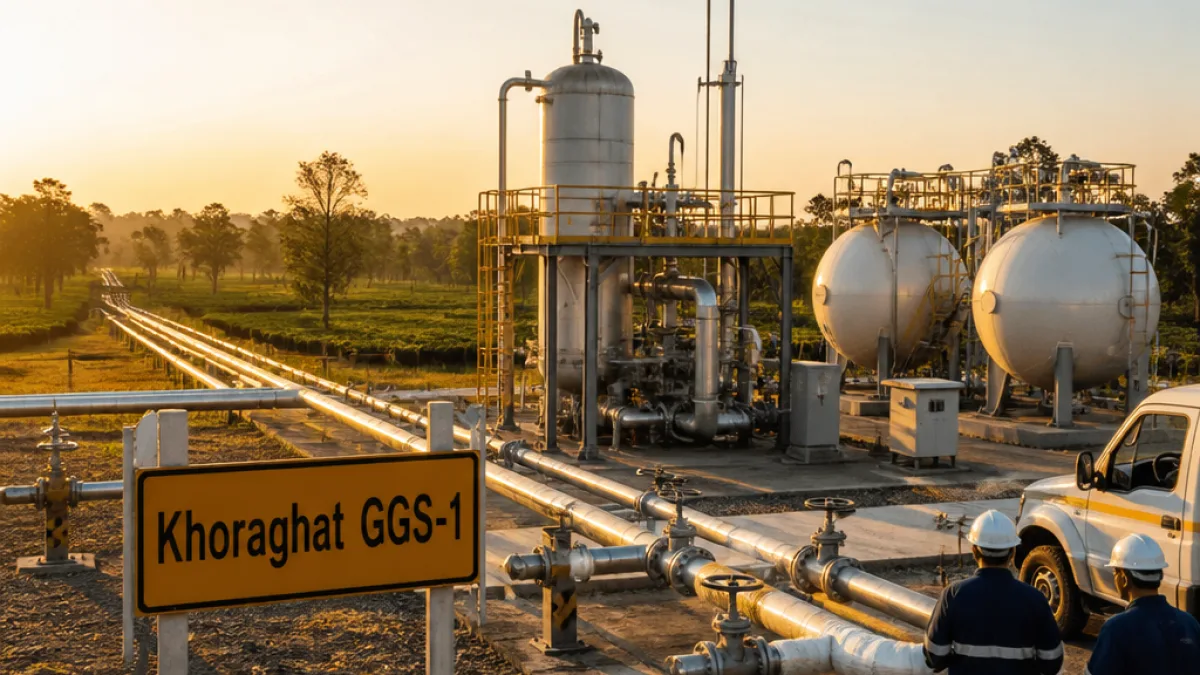
Oil and Natural Gas Corporation (ONGC) has commissioned a gas evacuation facility at Khoraghat GGS-1 in Golaghat district, Assam, enabling the utilisation of approximately 1 lakh standard cubic metres per day of gas from its Jorhat asset, the company said on Tuesday.
The installation will process and evacuate surplus associated natural gas from the Upper Assam Shelf through the North East Gas Grid, which was developed by Indradhanush Gas Grid Limited, ONGC added. Company officials said the move is intended to channel locally produced gas into the emerging regional network rather than allow it to be flared.
The project dovetails with the recent commissioning of the Dergaon–Dimapur pipeline, which has linked Nagaland to both the North East Gas Grid and the National Gas Grid. Together, these infrastructures are being positioned as building blocks for enhanced gas availability across the north‑eastern states.
"This strengthens energy security, creates new opportunities for industry, transport, households and power, and advances Atmanirbhar Bharat,"
The comment on the development was made on X by Union Minister for Petroleum and Natural Gas, Hardeep Singh Puri.
ONGC also said it is developing additional hook‑up facilities at Jantapathar and Kasomarigaon to connect more producing fields of the Jorhat asset to the North East Gas Grid. These follow the Khoraghat commissioning and are intended to further augment local gas supplies.
Company statements emphasised several anticipated outcomes from the Khoraghat commissioning and the associated hook‑ups:
- Increased gas availability for commercial, industrial and household consumers across the region.
- Reduced flaring of associated natural gas, improving environmental performance at producing fields.
- Strengthening of a gas‑based economy in the North‑East through new feedstock for industry and fuel for transport and power.
The move is part of a broader national effort to integrate remote hydrocarbon production into larger transmission networks. The Dergaon–Dimapur link has already extended pipeline connectivity by bringing Nagaland into the North East Gas Grid, and through that into the National Gas Grid, creating new routes for feedstock and consumption.
| Facility | Location | Declared capacity / purpose |
|---|---|---|
| Khoraghat GGS-1 | Golaghat district, Assam | Process and evacuate ~1 lakh scm/day from Jorhat asset |
| Jantapathar (planned) | Jorhat area | Hook-up to North East Gas Grid (under development) |
| Kasomarigaon (planned) | Jorhat area | Hook-up to North East Gas Grid (under development) |
For Assam and the wider North‑East, where pipeline infrastructure has historically lagged other regions, such evacuation and connectivity projects carry both economic and environmental weight. Local industries that require natural gas as feedstock, compressed natural gas (CNG) distribution for transport, and gas‑fired power generation stand to gain from improved supplies and network reliability.
ONGC framed the Khoraghat commissioning as a step towards utilising associated gas that otherwise may have been flared at producing locations. The company said the evacuation facility will enable the processing and onward transmission of these volumes into the regional grid.
While ONGC provided the operational details and described the development as a reinforcement of the regional gas infrastructure, the company did not disclose specific timelines for the Jantapathar and Kasomarigaon hook‑ups beyond noting they are under development. The scale of ramp‑up in delivered gas volumes to consumers will depend on the pace of these additional connections and downstream pipeline capacity.
Energy analysts and local stakeholders have in recent years underscored the importance of linking producing assets in Upper Assam to wider transmission corridors to reduce flaring, lower emissions and create economic value locally. The Khoraghat facility represents a practical step in that direction, bringing production closer to consumers through existing and newly commissioned pipelines.
As the North‑East Gas Grid expands, officials and industry participants will be watching for how quickly new uplifted volumes translate into concrete benefits — lower fuel costs for industry, widened access to CNG for transport and increased availability of piped gas for households. The Khoraghat commissioning provides an immediate incremental supply while further hook‑ups aim to increase that quantum in the months ahead.