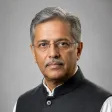
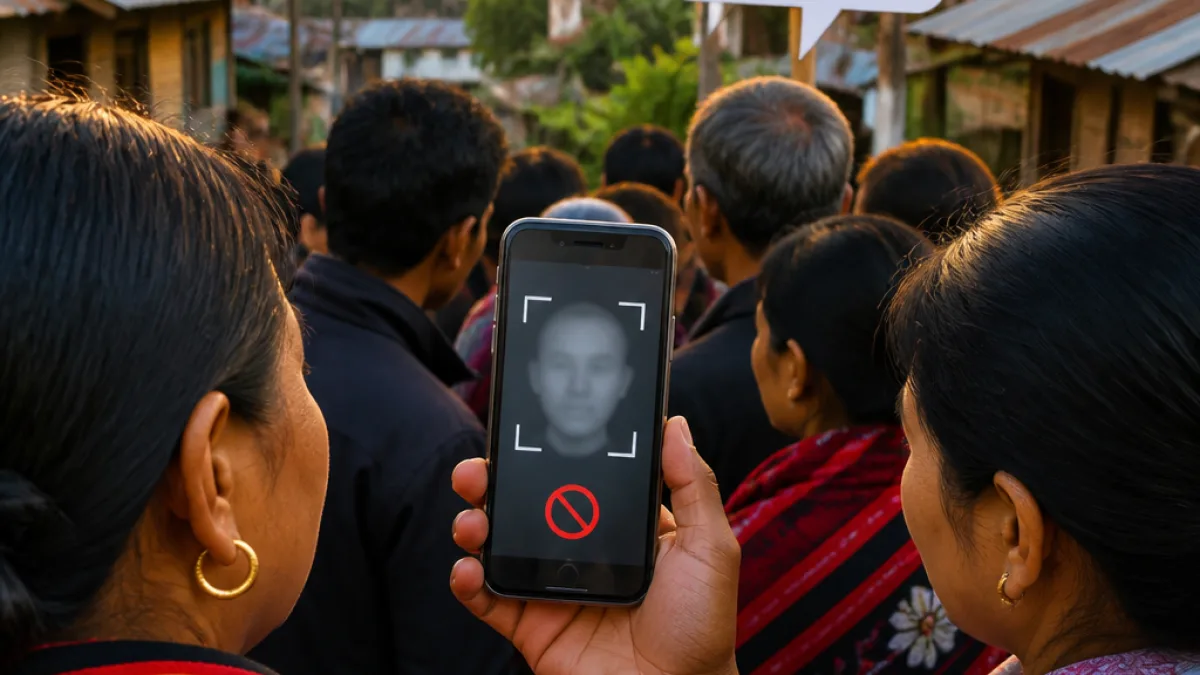
Nagaland — A short video posted by Nagaland minister Temjen Imna Along that captures a man from the Northeast struggling to complete a Know Your Customer (KYC) facial-recognition step has prompted renewed discussion online about technological bias and the need for alternative verification methods.
Video goes viral, draws public reaction
The clip, shared with the caption "Struggle is real", shows villagers assisting a man as they try to obtain a clear facial image for an identity-verification process. The post has attracted substantial attention on social media, registering more than 3.5 lakh views and over 10,000 likes, according to the post's metadata.
Users responding to the video were quick to highlight shortcomings of current biometric systems and to call for practical solutions. Several commenters said the problem lies with the technology, arguing that algorithms and hardware have not adequately accommodated the physical diversity of India's population.
"The technology is the problem not you. They didn't considered all possible cases for Indians," one user commented in response to the clip.
Concerns over epicanthic fold and practical alternatives
Observers pointed to the epicanthic fold — commonly referred to as monolid eyes — as a feature that can affect the performance of iris and facial-recognition systems if they are not designed with such variations in mind. Several respondents recommended that authorities permit alternative biometric options, such as fingerprint verification, when facial or iris scans fail.
- Users suggested adopting iris scanners that can accommodate varied eyelid shapes and sought guidance from technology providers.
- Calls were made for authorities to establish fallback methods so that people do not face exclusion because of natural biological traits.
- Some commenters referenced technologies in East and Southeast Asian countries, asking why equivalent solutions have not been widely adopted in India.
Context: minister's social media use and public engagement
The minister is a regular social media user and has posted light-hearted content in the past. Earlier posts included a video of a traffic policeman from Indore dancing in a Michael Jackson-style routine while managing traffic; that post was shared with a reflective caption encouraging people to carve out platforms for self-expression and growth.
In the current instance, the tone of the video is humorous, drawing on a familiar stereotype about people from the Northeast. While the post has entertained many viewers, it has also served as a prompt for substantive discussion on whether current digital identity systems are inclusive of India's diverse physiognomies.
Policy and technical implications
Although the clip does not identify the specific KYC system or device in use, it highlights broader concerns that policymakers and implementing agencies have faced in recent years: biometric and algorithmic systems trained or tested on limited datasets may underperform for certain communities.
Experts and rights advocates have previously urged the adoption of multi-modal biometric systems, clear fallback mechanisms and periodic audits to ensure equitable performance across demographic groups. The social media responses to this video reiterate those recommendations and underscore the need for quicker operational responses when citizens encounter problems during routine service access.
| Issue | Raised by |
|---|---|
| Facial-recognition failure for Northeast physiognomy | Social media commenters |
| Need for alternative verification (e.g., fingerprint) | Users advocating practical fixes |
| Call for more inclusive technology standards | General online discussion |
Local impact and next steps
For residents of Nagaland and other Northeastern states, failures in biometric processes can translate into real barriers when accessing banking, mobile services and welfare entitlements that increasingly rely on digital verification. The viral nature of the video may prompt administrative agencies and private service providers to review device settings, update software, expand testing datasets and more explicitly publicise fallback procedures.
For now, the video is serving both as entertainment for the minister's followers and as a reminder to authorities and vendors that technology must be tested and configured to serve India's full diversity.