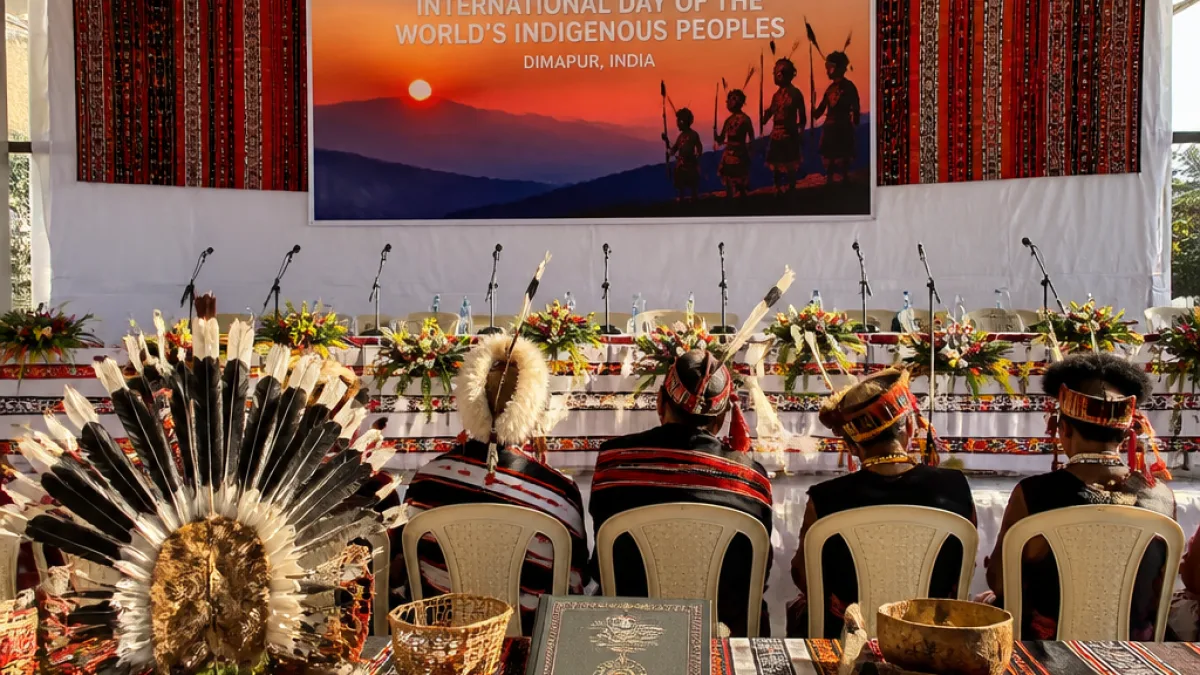
Dimapur: Nagaland Chief Minister Neiphiu Rio called on citizens to safeguard indigenous knowledge, traditions and cultural heritage, marking the International Day of the World’s Indigenous Peoples on Sunday. Mr Rio conveyed his message through a social media post, acknowledging the contributions of elders and other custodians of traditional wisdom.
Senior leaders pay tribute to tribal knowledge keepers
Governor Nand Kishore Yadav paid tribute to tribal communities for maintaining a close relationship with the natural environment and for conserving the state’s cultural legacy. Deputy Chief Minister Y. Patton honoured indigenous communities for their accumulated knowledge and practices, saying these have enriched successive generations.
At a programme organised by the Nagaland Indigenous Peoples Forum in Dimapur, Assembly Speaker Sharingain Longkumer emphasised the need to bolster traditional institutions and to protect indigenous identity through constitutional safeguards, particularly in the face of rapid development and changing generational attitudes.
What leaders emphasised
- Recognition of elders and customary knowledge as vital to cultural continuity.
- Strengthening of traditional bodies and legal protections to preserve identity and heritage.
- Celebration of cultural practices as central to community cohesion and the broader national fabric.
The statements by the governor, deputy chief minister and the speaker followed the chief minister’s social media acknowledgement, collectively underlining an official endorsement of measures to sustain indigenous ways of life.
Local context and implications
Nagaland, with a predominantly tribal population, has a range of customary institutions and customary law practices that govern social relations, land use and resource management in many communities. Calls from top state leaders to preserve indigenous knowledge and strengthen traditional institutions reflect long-standing public debate in the state over how to balance development with protection of customary rights and cultural identity.
Speeches and tributes made on the International Day of the World’s Indigenous Peoples typically aim to raise awareness about the pressures facing indigenous systems — from urbanisation and changing livelihoods to intergenerational shifts in language and ritual practices. The officials’ remarks in Dimapur reiterated the state’s interest in measures that support continuity of traditional knowledge while accommodating necessary development.
| Official | Role | Core point made |
|---|---|---|
| Neiphiu Rio | Chief Minister | Called for preservation of indigenous knowledge, traditions and cultural heritage. |
| Nand Kishore Yadav | Governor | Paid tribute to tribal communities for bond with nature and cultural preservation. |
| Y. Patton | Deputy Chief Minister | Honoured indigenous communities for enriching humanity across generations. |
| Sharingain Longkumer | Assembly Speaker | Stressed need to strengthen traditional institutions and constitutional safeguards. |
Representatives of indigenous organisations and community elders often press for clearer statutory recognition of customary rights, better protection for indigenous languages, and inclusion of traditional ecological knowledge in natural-resource planning. While the Dimapur event focused on commemoration and tribute, the officials’ comments may add political weight to future policy discussions on these issues.
Practical considerations for communities
Observers say preserving indigenous heritage typically involves measures such as documentation of oral histories, promotion of local languages in education and media, support for customary councils, and integration of traditional practices into sustainable resource management plans. Strengthening constitutional safeguards, as urged by the speaker, would require action by the legislature and collaboration with community institutions.
The event in Dimapur brought together public officials and community representatives on a day recognised by the United Nations to celebrate indigenous peoples worldwide. In Nagaland, leaders’ public acknowledgement of elders and customary knowledge underscores the continuing centrality of tribal culture in the state’s public life.