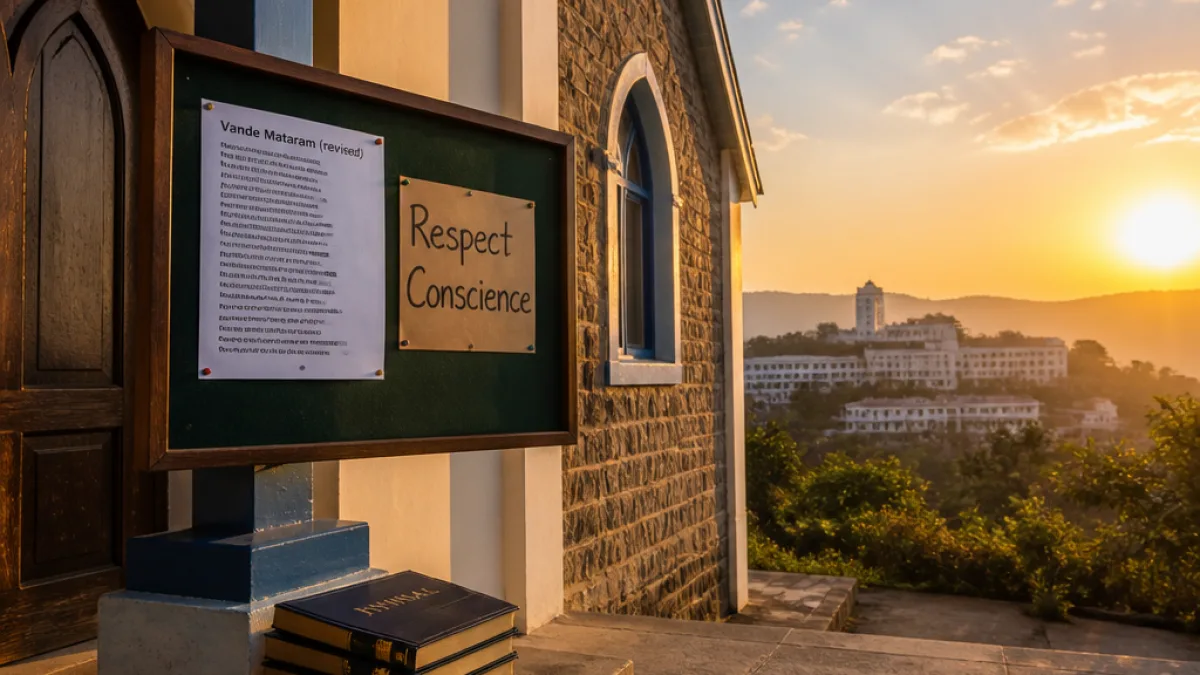
Kohima/Guwahati: The Nagaland Baptist Church Council (NBCC) on Thursday opposed the Centre’s instruction to play or sing the revised version of Vande Mataram at official events for the 80th Independence Day, saying citizens should not be compelled to take part in expressions that conflict with conscience or religious belief.
Church body calls for sensitivity over matters of faith
In a statement issued on the evening of August 13, the NBCC underlined that while it respects national symbols and patriotic sentiment, directives that seek to mandate participation in the singing of the National Song require "the highest degree of sensitivity, wisdom, and respect" because they touch upon faith and deeply held identity.
"National unity cannot be strengthened by compelling citizens to participate in an expression that, for reasons of faith or conscience, they may not be able to embrace," the NBCC said.
The church body urged stakeholders to express their positions "peacefully and constructively" and warned that disagreement over national symbols or patriotic practices should not escalate into communal tension or social division.
Students' body calls for protection for those who decline
The NBCC's position follows a similar appeal from the Naga Students' Federation (NSF), which had asked that schools and educational institutions not force students to take part in Independence Day programmes if they object to singing Vande Mataram on grounds of conscience or religion. The NSF also said students who decline should not be subjected to disciplinary action or discrimination.
Both statements focus on two linked concerns: respect for the constitutional values of the country and protection of individual conscience and religious freedom. The NBCC reiterated its respect for national symbols while emphasising that voluntary participation is the truer form of patriotism.
Legal and social context
The debate over Vande Mataram has periodically surfaced in India because the song's lyrics and historical associations are held by some communities to be inconsistent with certain religious beliefs. In Nagaland, where a large majority of the population is Christian, the NBCC's intervention highlights the sensitivity around directives that intersect with faith practices.
The NBCC asked the Centre and other authorities to take into account the plural nature of Indian society and to avoid issuing directions that could be perceived as coercive. The council argued that compelling citizens risks alienating groups whose convictions prevent them from participating in specific ceremonial expressions.
Officials and institutions urged to refrain from coercion
While the NBCC did not indicate any intent to organise protests or block official events, it called on educational institutions, government offices and other stakeholders to avoid punitive measures against those who abstain for reasons of conscience. It recommended dialogue and accommodation as preferable responses to differing views on national symbols.
- NBCC position: Opposes any directive that compels citizens, particularly Christians, to sing the revised Vande Mataram.
- NSF position: Students should not be forced to sing; no punitive action should follow a conscientious refusal.
- Call for calm: Both bodies urged peaceful and constructive expression of views to prevent communal tensions.
What authorities and communities may consider
The NBCC stressed voluntary participation as the basis of genuine patriotism and urged authorities to be mindful of constitutional protections for freedom of religion and conscience. It recommended sensitive handling of circulars or orders that touch on religious convictions, particularly in diverse and plural regions such as Nagaland.
The council's public statement adds to a broader national conversation about the balance between promoting common civic practices and safeguarding individual rights. As the country prepares for the 80th Independence Day, institutions in Nagaland will face the practical task of organising events while avoiding actions that could be seen as coercive.
Authorities in Nagaland, including district officials and educational institutions, have not issued a coordinated response to the NBCC's statement as of Thursday night. The NBCC asked that ongoing exchanges remain respectful and constructive to preserve communal harmony and civic dignity.