Different paces of delivery as corridor moves toward August 2027 target
Ahmedabad — Work on the Mumbai–Ahmedabad High-Speed Rail (MAHSR) corridor is proceeding at varying speeds across states, with authorities monitoring progress closely as the project moves toward a proposed operational target of August 2027. Recent site updates highlight contrasting stages of construction at the Mumbai and Gujarat ends of the corridor.
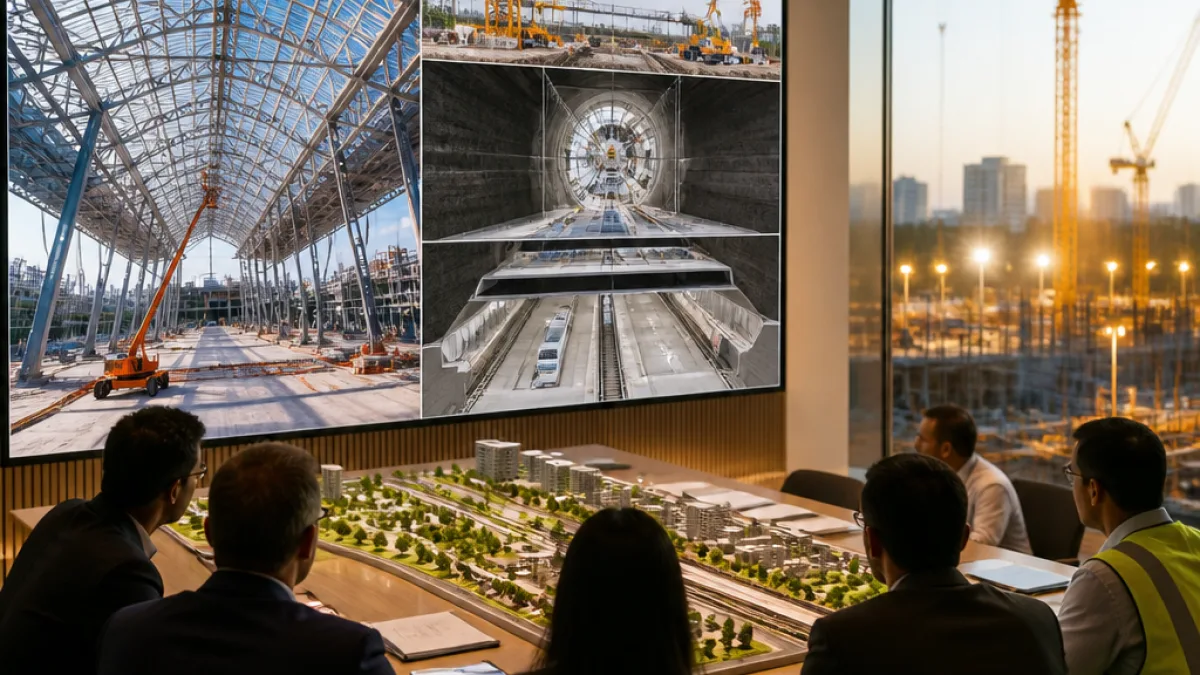
On the Maharashtra side, the Bandra Kurla Complex (BKC) station in Mumbai — planned as the corridor's western terminus — is being constructed nearly 30 metres underground, making it one of the most technically challenging elements of the project. Excavation and foundation works at the BKC site are reported to be nearing completion, though substantial specialised works remain to be carried out for an underground terminal of this scale.
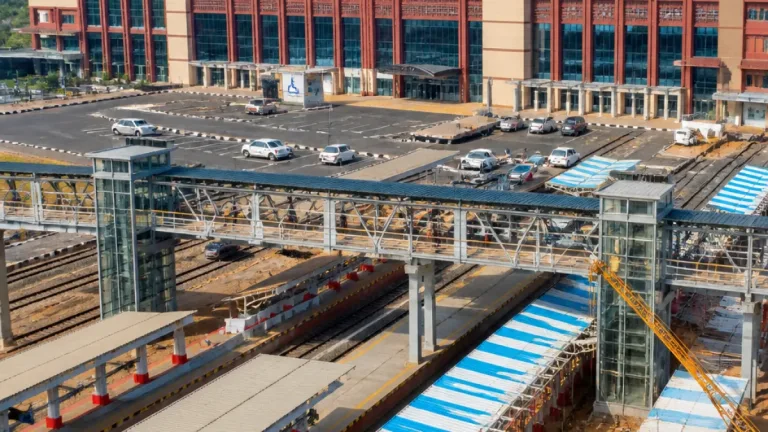
By contrast, progress in Gujarat appears more advanced at selected locations. The Surat station's structural framework and roof have been completed, and contractors have moved to internal finishes, including flooring, cladding and ceiling installations. The station's architectural concept has been tied to Surat's diamond-cutting industry to reflect local commercial identity.
"The Surat station's structural framework and roofing have been completed,"
Project documents and public visuals released to date reiterate that the corridor will be a 508-km dedicated high-speed line linking Mumbai and Ahmedabad through Maharashtra, Gujarat and Dadra & Nagar Haveli. The design specifies 12 stations along the route and rolling stock capable of running at up to 320 kmph, with end-to-end travel time projected at approximately two hours.
Local implications for Ahmedabad and Gujarat
Ahmedabad stands to gain from improved access to Mumbai's financial markets and ports, and the corridor is expected to connect several major business and industrial hubs along the route. Local industry bodies and urban planners have previously flagged potential benefits in reduced travel time for executives and faster movement of business visitors, which could support service industries such as hospitality and trade shows in the city.
- Phased operations: Officials have indicated sections of the corridor may become operational ahead of full-line commissioning, which could deliver partial benefits earlier.
- Construction tempo: Varied progress across states means timeframe adherence will depend on timely completion of technically complex segments, notably the underground BKC station.
- Design integration: Stations such as Surat are being shaped to reflect local commercial identities, signalling attention to city branding alongside functional design.
The differing construction tempo emphasises the importance of coordination among central agencies, state authorities and contractors. The underground nature of the BKC station adds layers of geotechnical, tunnelling and utility-relocation challenges that are typically time-consuming and require specialised machinery, workforce and safety regimes.
| Location | Current reported status |
|---|---|
| Bandra Kurla Complex (Mumbai) | Excavation and foundation works nearing completion for an underground terminal (~30 m deep) |
| Surat (Gujarat) | Structural framework and roofing completed; interior finishing underway (flooring, cladding, ceilings) |
For Ahmedabad stakeholders, the next crucial months will be telling. While Gujarat sites such as Surat show visible advancement, the overall delivery of the corridor by the targeted date will hinge on the progress at complex nodes and the ability to sequence civil, systems and station-operations commissioning effectively.
Authorities have maintained that operations could be phased, which opens a possibility that sections serving Ahmedabad and neighbouring industrial centres may become functional before the entire corridor is commissioned. That would provide early connectivity advantages even if the full Mumbai terminus work continues beyond initial operational dates.
Monitoring by central and state agencies will continue as contractors move from civil structures to systems integration, track laying, signalling, electrification and trial runs—each of which carries its own technical and regulatory milestones ahead of passenger services.