Shillong: Meghalaya’s election authorities have placed 6,51,644 electors under scrutiny as part of the ongoing Special Intensive Revision (SIR) of the state’s electoral rolls, the Chief Electoral Officer (CEO) said after a virtual meeting with district and sub-district election officials on August 11.
Scope and categories
The CEO’s review identified two broad groups among the electors selected for further verification. One category comprises 2,22,786 voters flagged as “No Mapping”, while the other contains 4,28,858 entries with discrepancies in comparison with earlier SIR records, according to the information presented at the meeting.
Officials were instructed to initiate the notice-and-hearing process promptly and ensure that printed notices reach the affected electors so they may present supporting documents to the concerned Electoral Registration Officer (ERO) or Assistant Electoral Registration Officer (AERO).
Timelines and procedure
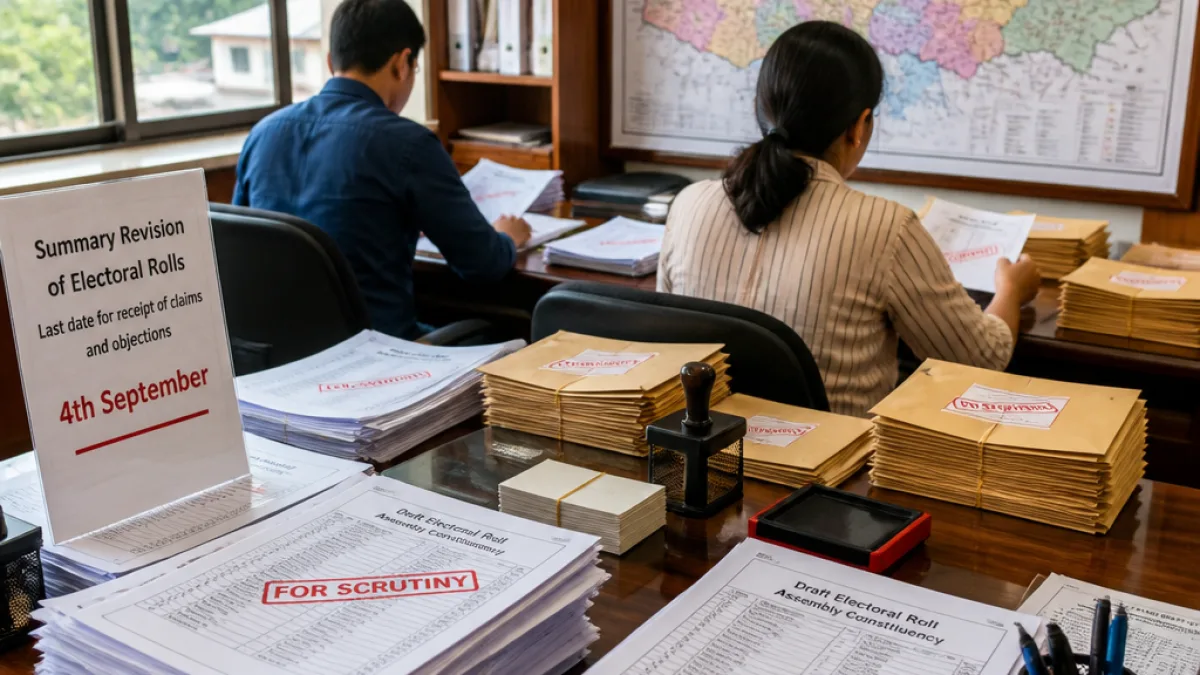
The draft electoral roll for all 60 Assembly constituencies was published on August 5. The window for filing claims and objections remains open until 4 September. The notice issuance, hearings and disposal of claims and objections will continue until 3 October, after which the final electoral roll is scheduled for publication on 7 October.
During the meeting, the CEO also reviewed applications received after the draft roll was published. As of the latest count, election offices have recorded 2,449 post-publication applications:
- 1,121 in Form 6 (new enrolment)
- 8 in Form 7 (deletion)
- 253 in Form 8 for shifting of residence
- 1,067 other Form 8 applications (corrections/other claims)
Types of discrepancies under ECINET
Officials used ECINET — the Election Commission’s network — to detect mismatches and irregularities. The CEO highlighted several specific discrepancy types that election staff must examine, including:
- Mismatch between an elector’s current name and the name recorded in prior SIR records
- Inconsistencies in parents’ names
- An age gap of less than 15 years or more than 50 years between an elector and a linked parent
- An age difference of fewer than nine months between siblings assigned to the same parent
- More than six children linked to the same parent
- An age difference of fewer than 40 years between an elector and a linked grandparent
Administrative directions and party briefing
The CEO directed EROs and AEROs to scrutinise the flagged cases thoroughly, generate notices without delay, print them and ensure timely service. Electors who receive notices are required to appear before the designated ERO/AERO and submit the necessary documentary evidence to resolve the discrepancy.
Separately, the CEO held a meeting with representatives of recognised national and state political parties to brief them on progress in the revision exercise. The briefing covered the handling of “No Mapping” cases, mapping discrepancies, ongoing notices and hearings, and the status of applications filed after publication of the draft roll.
What electors should do
Electors affected by notices should check with their local ERO/AERO office for details on hearing dates and the documents required to establish identity, residence or familial relationships. Commonly accepted proofs include government-issued photo identity, address documents and supporting records for familial links, though the CEO’s office will confirm exact requirements at the point of notice.
| Key date | Deadline |
|---|---|
| Claims and objections | 4 September |
| Notice, hearing and disposal | 3 October |
| Final electoral roll publication | 7 October |
Election officials have been urged to maintain transparent records of notices served and hearings conducted to ensure the process remains accountable and that genuine electors are retained on the rolls.
The SIR exercise is part of routine roll maintenance ahead of upcoming electoral cycles; the results of this phase will determine who remains on the state's electoral rolls when the final list is published in October.