Party writes to Chief Minister, cites historical identity and local sentiment
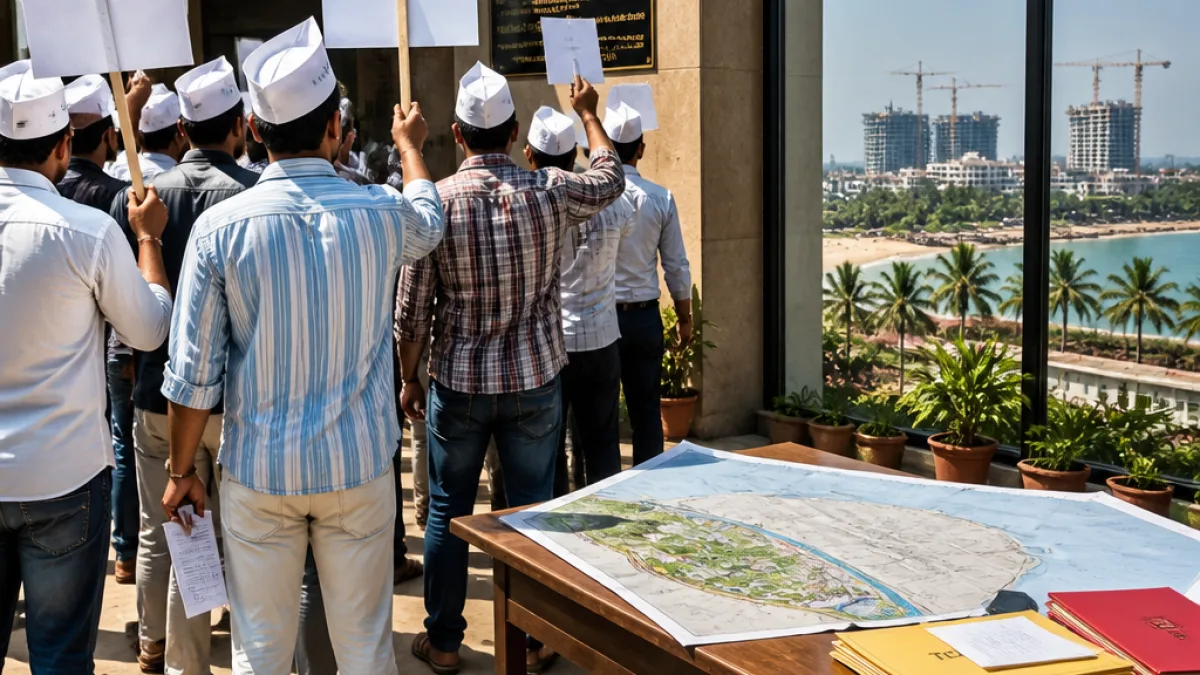
The Communist Party of India (CPI) Mangaluru taluk committee has formally requested Chief Minister D.K. Shivakumar to refrain from renaming Dakshina Kannada district as "Mangaluru", saying the move is not supported by the majority of residents across the district.
In a letter addressed to the Chief Minister, CPI district secretary B. Shekhar argued that although demands to rename the district have surfaced previously from some quarters — mainly within Mangaluru city — they do not represent the wider district view. The party said communities in other towns and villages of Dakshina Kannada have not shown support for a name change, and that the district’s long-standing name should be retained to preserve its distinct identity.
"The majority of people in this district do not desire a name change," the CPI letter stated, according to the party's communication.
Historical context cited by CPI
The CPI recalled the administrative evolution of the region, saying that during the Madras Presidency era, the large Dakshina Kannada district included areas such as Mangaluru, Udupi, Kasaragod and parts of Kannur. Subsequent reorganisation on linguistic lines led to the separation of Kasaragod and sections that became part of Kerala; later Udupi was also carved out as a separate district. Despite these territorial changes, the party said, Dakshina Kannada has retained its name and the "spirit" of its people.
- Local identity: CPI emphasised that the name "Dakshina Kannada" embeds the Kannada language itself and serves as an inspiration for Kannada literature and culture in the region.
- Language and culture: The party noted that while Tulu is widely spoken locally, residents accord high priority to Kannada, and the district has produced eminent Kannada literary figures.
- Administrative distinctiveness: CPI pointed out that only a few districts in Karnataka — Dakshina Kannada, Uttara Kannada and Kodagu — do not carry the name of their headquarters towns, suggesting this reflects a particular regional character rather than an anomaly to be corrected.
Implications for Mangaluru and the district
The CPI appeal raises issues that extend beyond nomenclature. Renaming a district can have practical implications for administration, official records, signage, and public perception. The party’s position frames the debate in terms of preserving linguistic heritage and regional distinctiveness, while signalling potential resistance from rural and outlying communities if proposals proceed without broader consultation.
While the letter was directed to the Chief Minister, it does not, in itself, indicate any formal government decision. Proposals to alter district names typically require administrative proposals, political consensus and, in some cases, cabinet approval. The CPI’s communication aims to register opposition early in the process and to influence the state government’s deliberations.
What the CPI wants and next steps
The CPI has urged the state government to respect the prevailing sentiment across Dakshina Kannada and to preserve the district name. The party’s arguments rest on historical continuity and cultural considerations, and it has underlined that calls for renaming originate mainly from certain urban constituencies rather than a district-wide demand.
| Point | CPI position |
|---|---|
| Origin of demand | Limited to some in Mangaluru city |
| District identity | Should be retained — embeds Kannada |
| Historical note | District retained name despite territorial losses |
Observers in Mangaluru and across Dakshina Kannada will watch for any official move by the state government in response to competing viewpoints. The CPI’s letter is likely to be one of several submissions that the government may consider before deciding on proposals that involve regional nomenclature.
The matter ties into larger conversations across Karnataka about language, regional identity and administrative symbolism. Any eventual decision will have political and civic repercussions locally, particularly in how communities perceive representation and recognition by the state.