Bengaluru: Karnataka has moved to bolster its renewable energy and rural electrification ambitions by floating a tender for a large-scale solar project coupled with battery storage and by initiating detailed planning for 23 model solar villages under the Centre’s PM Surya Ghar Muft Bijli Yojana.
Solar plus storage tender
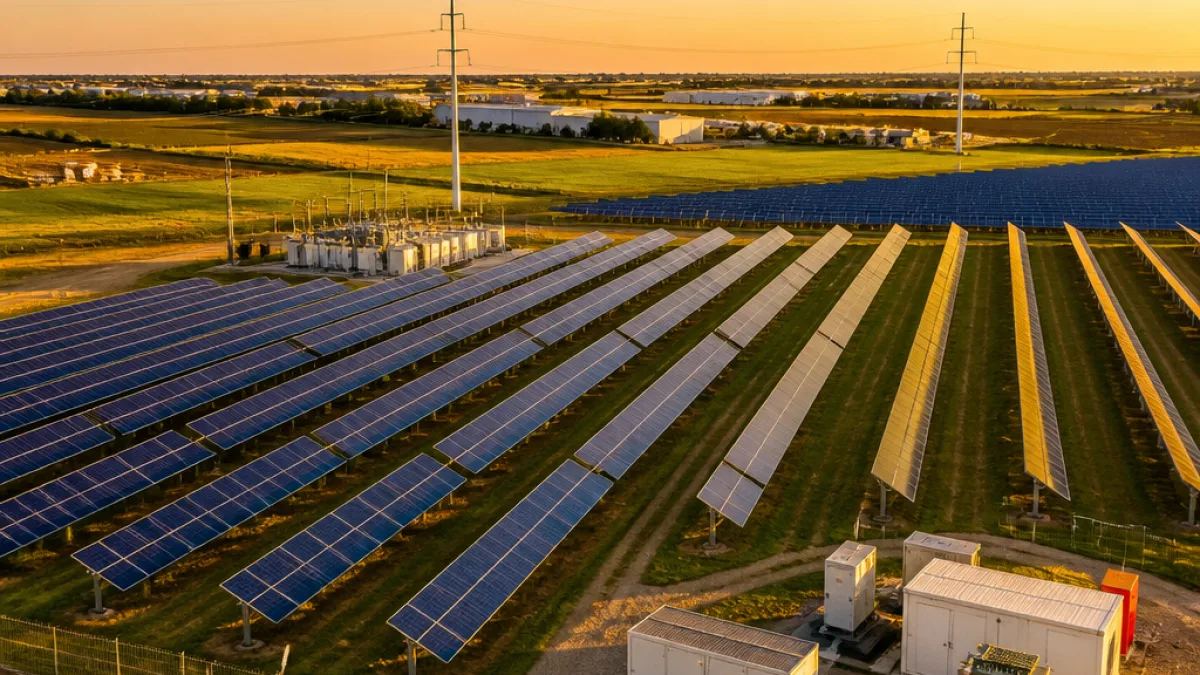
State-owned Karnataka Power Corporation Limited (KPCL) has invited bids for a ground-mounted solar installation with an aggregate capacity of 1,000 MW that will be backed by a battery energy storage system (BESS) with a rated capacity of 2,000 MWh. The selected developer will be responsible for procuring or leasing land in Karnataka, constructing the facility and operating and maintaining it.
The move comes as demand for electricity in the state rises, driven in part by energy-intensive sectors such as artificial intelligence and data centres that have expanded in and around Bengaluru. The state has also faced pressure on supply and water resources after a weak southwest monsoon earlier this year, which contributed to falling reservoir and groundwater levels.
"Integrating battery storage with solar generation can help shift electricity generated during daylight hours to periods when demand is higher or solar generation is unavailable. The extent to which the project can support peak demand will depend on its operating and discharge schedule," an official said.
The tender follows a February 2026 award to Pace Digitek for a 250 MW solar plant paired with a 250 MW / 1,100 MWh BESS at the Pavagada Solar Park in Tumakuru, signalling growing interest in large-scale storage projects in the state.
Model solar villages under PM Surya Ghar
Separately, Karnataka Renewable Energy Development Limited (KREDL) is seeking a consultant to prepare detailed project reports (DPRs) for 23 model solar villages. These villages are distributed across the Belagavi, Kalaburagi and Bengaluru revenue divisions and have been chosen under the Centre’s PM Surya Ghar Muft Bijli Yojana.
The consultant will map each village’s electricity demand profile and assess a mix of renewable solutions, including community solar, rooftop installations on public buildings, solar street lighting and solar pumps for eligible community groups. Where it is not feasible to provide round-the-clock renewable supply locally, DPRs will explore the prospect of achieving net-zero annual electricity consumption through a combination of local generation and other measures.
Financial and operational details
Each selected village under the scheme is eligible for ₹1 crore in central assistance. The DPR process will include demand mapping and an evaluation of whether local renewable resources can meet daytime and night-time needs, and will recommend technology mixes and implementation plans.
| Item | Figure |
|---|---|
| Solar capacity floated by KPCL | 1,000 MW |
| Battery storage proposed | 2,000 MWh |
| Villages selected for DPRs | 23 (Belagavi, Kalaburagi, Bengaluru divisions) |
| Central aid per village | ₹1 crore |
Why storage matters for Karnataka
Battery energy storage can address the variability inherent in solar generation by storing surplus daytime generation for discharge during evening peaks or periods of low solar output. For a fast-growing state like Karnataka, which hosts major IT and data-centre investments, storage-integrated solar projects can provide greater flexibility in meeting demand while reducing dependence on fossil-fuel peaking units.
However, an official noted that the practical contribution of the proposed project to peak support will depend on its operating strategy and discharge schedule. The technical and commercial design chosen by the developer will therefore be crucial in determining its impact on the grid.
Next steps
- KPCL will evaluate bids and select a developer to build and operate the 1,000 MW solar + 2,000 MWh BESS facility.
- KREDL will appoint a consultant to prepare DPRs for the 23 model villages, including demand mapping and technology recommendations.
- Selected village projects will be eligible for central assistance of ₹1 crore each under the PM Surya Ghar scheme.
The twin initiatives signal Karnataka’s continued push to combine utility-scale renewables with storage and decentralised village-level solar solutions, intending to balance rising urban demand and rural energy access without adding to the state’s fossil-fuel burden.