The Lakshadweep administration has activated 150 luxury tented accommodations across two islands as part of a push to expand high‑end tourism on the archipelago, officials reported on Thursday.
New capacity on Bangaram and Thinnakara
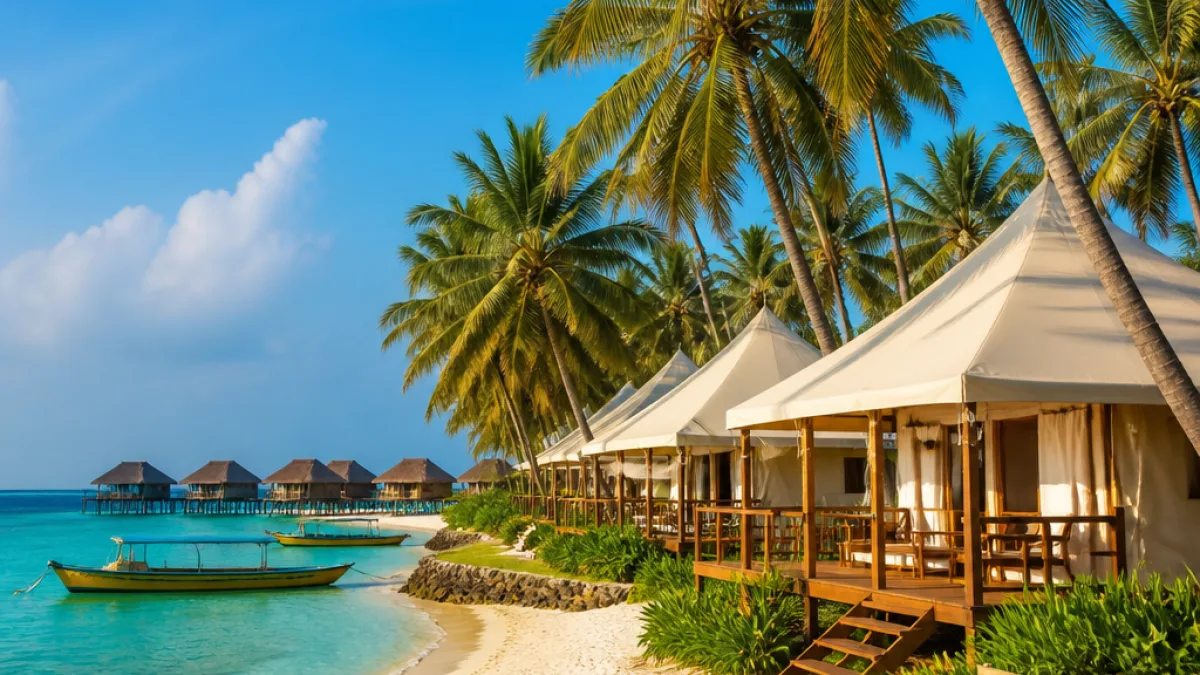
According to official updates, 50 tents are now operational at Bangaram and 100 tents at Thinnakara. The move is part of a broader plan to diversify tourist offerings on the Union Territory while increasing room capacity during the peak season.
The tents have been positioned as premium, short‑stay options aimed at visitors seeking a closer‑to‑nature experience with comfort. No further details on pricing, operators or specific launch partners were disclosed in the update.
Lagoon villas and PPP development
In addition to the tented stays, the administration said lagoon villas are being developed under the public‑private partnership (PPP) model on Minicoy, Kadmat and Suheli. The announcement signals a strategy to attract higher spending tourists and to lengthen average stays.
Under the PPP approach, the administration intends to engage private developers for construction and management while retaining regulatory oversight. The release did not specify timelines, investment amounts or the names of prospective partners.
| Project | Islands | Current status |
|---|---|---|
| Luxury tented stays | Bangaram, Thinnakara | 150 tents operational (50 at Bangaram; 100 at Thinnakara) |
| Lagoon villas (PPP) | Minicoy, Kadmat, Suheli | Under development |
Wider island tourism and regional context
The bulletin accompanying the announcement also referenced parallel developments in the Andaman & Nicobar Islands, noting that the newly operational terminal at Veer Savarkar International Airport in Sri Vijaya Puram has an annual handling capacity of 50 lakh passengers. That note places the Lakshadweep initiative in the context of a larger regional emphasis on improving island connectivity and capacity.
Additional plans mentioned include proposals for 19‑seater fixed‑wing aircraft connectivity to certain Andaman destinations under the UDAN scheme and the development of eco‑tourism projects on islands such as Shaheed Dweep, Aves, Long and Smith through PPP arrangements.
Local impacts and practical considerations
Expanding higher‑end accommodation can have multiple local effects. Potential benefits include new employment opportunities in hospitality and allied services, increased demand for local transport and supplies, and an uptick in tourist spending. At the same time, island administrations typically face challenges around waste management, freshwater supply and protecting fragile ecosystems when scaling visitor numbers.
Officials have not yet released environmental assessments or carrying‑capacity studies tied to the tented stays or the planned lagoon villas. Observers and stakeholders often point to the need for robust waste‑disposal arrangements, rules on visitor numbers and stringent building norms on coral islands to avoid long‑term damage.
What visitors and local businesses should note
- Prospective tourists should check official Lakshadweep entry requirements and permit rules before planning travel, as special permits are typically required for visiting several islands.
- Local entrepreneurs in transport, food supplies and tour operations may see increased demand but will need clarity on contracting timelines and partner selection for the PPP projects.
- Environmental and community groups are likely to seek disclosure of impact assessments and monitoring frameworks for the new developments.
The administration’s statement did not list projected visitor numbers, investment sums or an operational schedule for the lagoon villas. Further details will be necessary to assess financial flows, job creation and environmental safeguards associated with the projects.
For now, the operationalisation of 150 luxury tents marks a tangible increase in short‑term accommodation capacity on Bangaram and Thinnakara and signals Lakshadweep’s intent to broaden its tourism product through PPP‑driven resort and eco‑tourism initiatives.