Lakshadweep, the remote archipelago in the Arabian Sea, has become the first Indian state or union territory to reach tuberculosis (TB) elimination levels, the territory's State TB Office reported, marking a significant public health milestone for a region often challenged by connectivity and scarce resources.
How the islands turned isolation into an asset
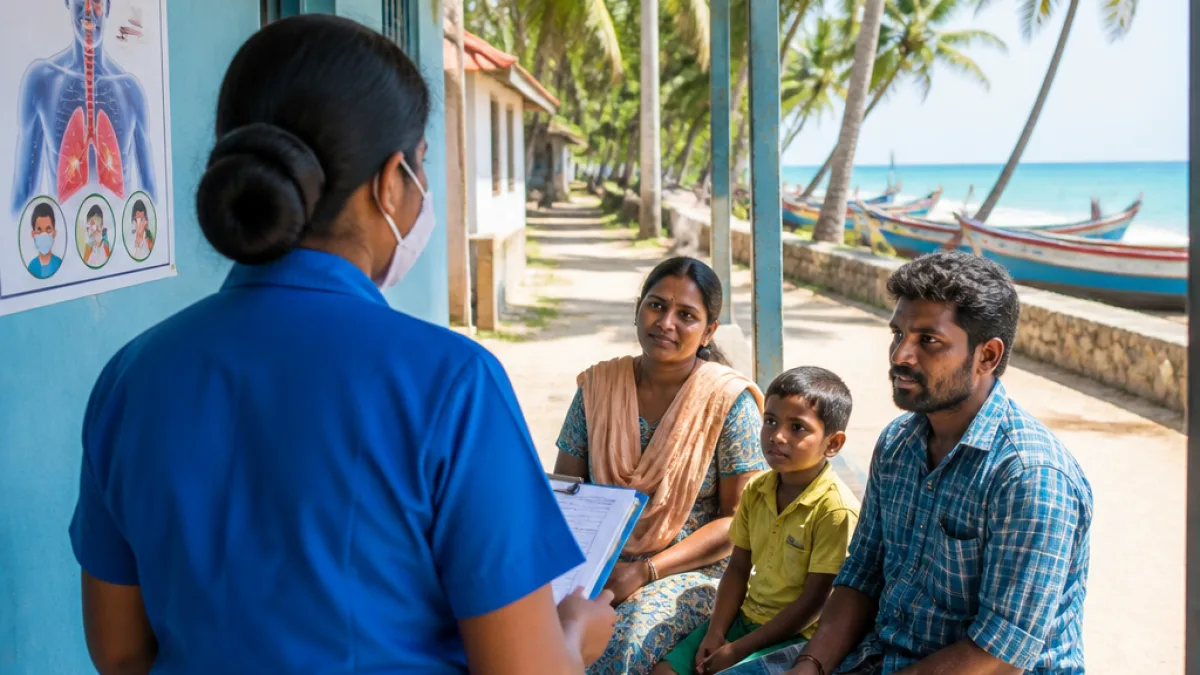
Dr MP Nezeeda, the State TB Officer of Lakshadweep, outlined the territory's approach ahead of the Union World Conference on Lung Health 2026. She said sustained community engagement, intensified door-to-door screening and systematic follow-up of patients on treatment were central to the achievement. Strong administrative backing, she added, helped channel resources and sustain interventions over time.
"Because of the geographic dispersion and heavy dependence on maritime transport, the inter-island connectivity always remains uncertain," Dr Nezeeda said, explaining how the territory adapted surveillance strategies to its unique geography.
Officials said that Lakshadweep's population dispersion across small and larger islands — separated by several hours of sea travel — allowed close-knit surveillance, enabling health teams to identify, treat and monitor people with TB in a person-centred, rights-based manner that seeks to leave "no one behind." The territory's remoteness, which complicates access to the mainland during rough seas and the monsoon, was used to create clearly defined micro-populations for targeted interventions.
Recent case numbers and treatment status
According to the State TB Office, the territory has notified remarkably low numbers of TB. Since December 2024, a total of 35 TB cases were reported. From January of the current year, 14 people with TB disease have been notified; these figures include some patients who were transferred from nearby Kerala.
| Time period | TB notifications |
|---|---|
| Since December 2024 | 35 |
| From January (current year) | 14 |
Of the 14 cases notified this year, 6 patients have completed treatment and 8 are currently undergoing care. All active cases reported were drug-sensitive; officials said there have been no recorded instances of multi-drug-resistant (MDR) TB in the current cohort. The territory also reported three extra-pulmonary TB cases among those notified.
Operational challenges and adaptations
Health authorities highlighted operational constraints that shaped the strategy. The closest inhabited island, Andrott, lies about 13–15 hours by ship from Kerala's coast, while Kavaratti — the capital — is approximately 18–20 hours by ship. Air travel is available to Agatti (a flight of roughly 1.5 hours from Kochi), but from Agatti there is still another 3–5 hours by boat to Kavaratti. Rough seas and inclement weather increase uncertainty in inter-island connectivity, particularly during the monsoon season.
- Active case-finding: Intensified door-to-door screening reached people in remote hamlets and island settlements.
- Treatment adherence: Regular follow-up of those on treatment ensured completion and reduced default risk.
- Community engagement: Local participation and rights-based messaging reduced stigma and encouraged people to seek care early.
Implications and learnings
Lakshadweep's achievement was framed as a proof of concept that TB elimination is feasible even in regions with the highest national disease burden, provided interventions are person-centred and sustained. Officials characterised the model as one that converts logistical challenges into manageable operational units, allowing health systems to maintain close surveillance and personalised care.
At the national level, India continues to contend with the highest TB burden globally. Lakshadweep's experience may offer practical lessons on prioritising active case finding, ensuring uninterrupted treatment, and mobilising community structures to support public health goals. Health planners in other island or geographically fragmented settings may study Lakshadweep's protocols for adapting screening and follow-up to transport constraints and weather windows.
Dr Nezeeda's account of the territory's strategy will be presented at forums ahead of the Union World Conference on Lung Health, where stakeholders expectedly will examine elements of the island programme that could be scaled or adapted for other Indian states and union territories.
Public health experts emphasise that sustaining elimination status will require ongoing vigilance, including timely diagnosis of imported cases, continued treatment adherence monitoring and a readiness to respond to any drug-resistant infections should they arise.