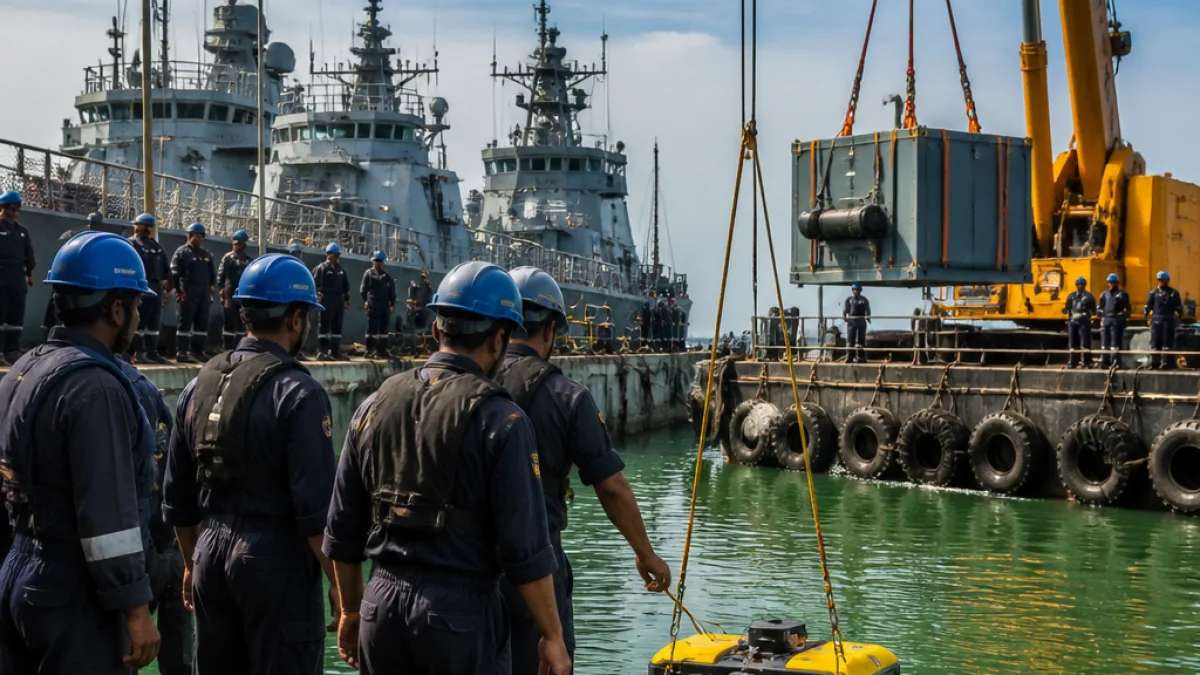
Kochi has begun hosting the Indian Navy–US Navy Explosive Ordnance Disposal (EOD) Exercise 2026, a five-day bilateral drill at the Southern Naval Command that opened on 10 August and will run until 14 August. The exercise, the eighth in the series, brings together specialist diving and EOD teams from the two navies for training, equipment demonstrations and scenario-based practical drills.
Purpose and scope of the exercise
The programme, described in official material, is intended to sharpen interoperability in the detection, identification, safe recovery and disposal of explosive devices in maritime environments. Such work includes handling underwater mines, unexploded ordnance and hazardous explosive remnants — tasks that require close coordination between salvage and diving specialists.
"Explosive Ordnance Disposal refers to the detection, identification, rendering safe, recovery, and disposal of explosive devices."
The 2026 edition combines Subject Matter Expert Exchanges with joint cross-training and practical scenarios. The syllabus covers contemporary EOD methodologies, emerging technologies and operational concepts used by specialist teams, according to exercise summaries released by the navies. The series has been conducted with the United States since 2005 as part of bilateral cooperation in the Indian Ocean and the wider Indo‑Pacific region.
Training components and facilities in Kochi
Southern Naval Command, headquartered in Kochi, has long hosted multinational and bilateral maritime drills. For the EOD exercise, the programme includes:
- Subject Matter Expert Exchanges between Indian and US specialists
- Joint cross-training in shore-based and afloat EOD techniques
- Equipment demonstrations showcasing current tools and emerging technologies
- Scenario-based practical exercises including salvage and underwater recovery
The presence of specialist diving units means both shore facilities and nearby sea areas will be used for realistic training. The Southern Naval Command’s infrastructure in Kochi allows for live demonstrations and controlled practical drills that simulate mine clearance and recovery operations.
Relevance for Kochi and the region
The exercise underscores Kochi’s continuing role as a major Indian naval hub. Hosting multinational drills brings operational exposure to local naval personnel and underlines the city’s strategic importance on the western seaboard. Officials say such exercises help standardise procedures, strengthen communication and improve technical interoperability between partner navies operating in the Indian Ocean.
While the exercise is military in nature, its conduct in Kochi has secondary local effects. There is routine coordination with civil maritime authorities for safety of navigation during training, and the event draws visiting personnel and support staff to the city, which in turn requires local logistics and hospitality arrangements. No new claims about specific participant numbers or vessels have been released in the exercise briefing that accompanied the opening announcement.
| Item | Details |
|---|---|
| Exercise name | Indian Navy–US Navy EOD Exercise 2026 |
| Location | Southern Naval Command, Kochi, Kerala |
| Dates | 10 August 2026 – 14 August 2026 |
| Edition | 8th |
| Primary focus | EOD, salvage, diving operations, equipment demonstrations |
Since 2005, salvage and EOD exercises between India and the United States have been recurring elements of bilateral naval cooperation. The Southern Naval Command’s selection as host reflects both its operational readiness and its access to appropriate sea areas for realistic training. The exercise is part of a broader pattern of maritime engagement aimed at addressing common safety and security challenges across regional sea lanes.
Local authorities and the naval command have not indicated any changes to routine commercial shipping schedules beyond standard safety advisories where necessary. Residents in Kochi are likely to see an increased presence of uniformed personnel and vessels associated with the exercise over the five-day period, while core training remains within naval precincts and authorised maritime zones.
The exercise also provides a platform for sharing technical knowledge on newer EOD technologies and operational concepts that are increasingly relevant in littoral and deep‑water environments. For Kochi — a city with a long maritime history and active naval establishments — hosting such specialised drills reaffirms its strategic maritime role in the region.