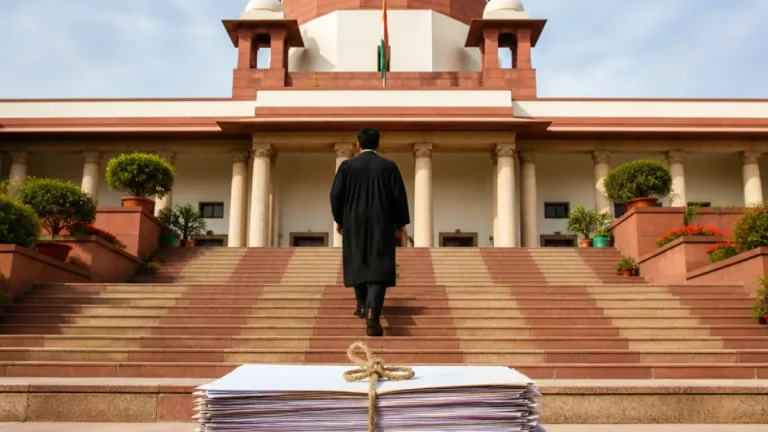
Bengaluru: The Karnataka government has filed a special leave petition (SLP) in the Supreme Court, saying it cannot grant permits for motorcycle-based bike taxis to operate in Bengaluru and other cities, and asking the apex court to reconsider a Karnataka High Court order that asked authorities to examine applications for contract-carriage licences for two‑wheelers.
State frames legal and safety objections
In its plea, the state transport department argued that commercial passenger transport is a regulated activity and that mere ownership of a motorcycle does not confer a right to use it as a taxi. The government said the High Court’s direction overlooked the existing statutory framework governing transport vehicles and substantially curtailed powers available to the state and transport authorities to regulate passenger services.
The state pointed to the Central Motor Vehicles Rules, 1989, noting that the rules classify vehicles by intended use and do not include motorcycles among categories authorised to carry passengers commercially. The government maintained that the physical capability of carrying a pillion rider does not equate to an authorisation to operate as a passenger vehicle.
Safety and enforcement concerns
Safety featured prominently in the state’s arguments. Officials said motorcycles are inherently more vulnerable to road accidents and lack safety features present in autorickshaws and cars. The plea mentioned heightened concerns over passenger safety, including the safety of women commuters on two-wheelers.
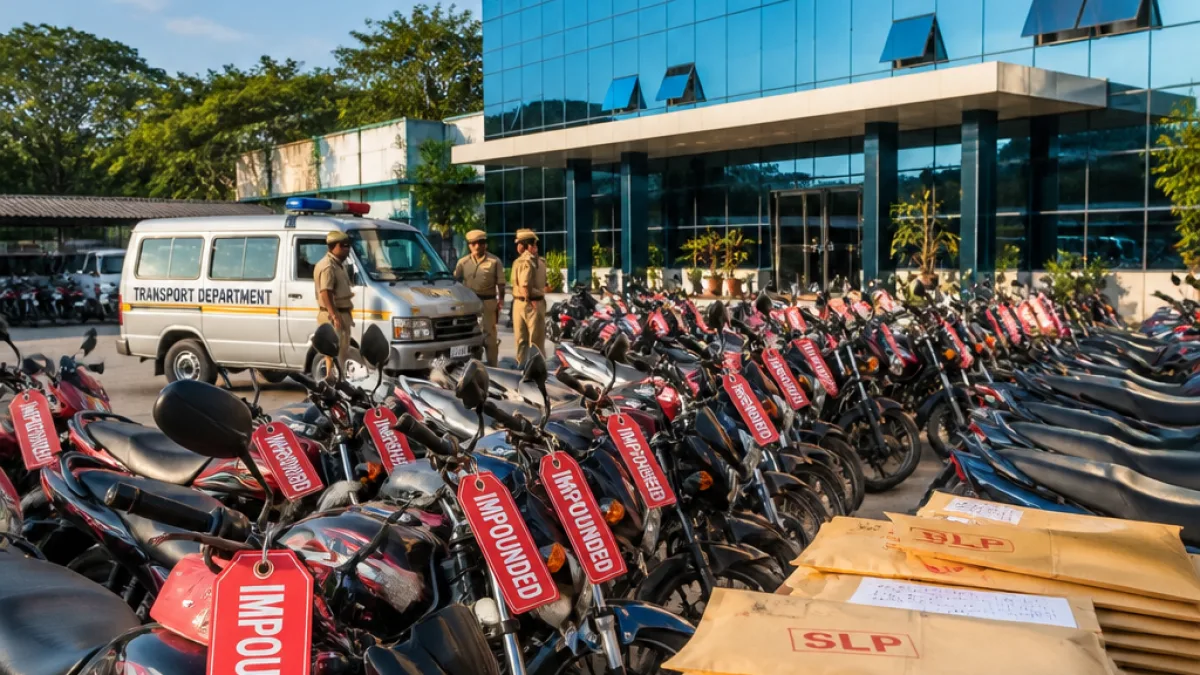
As part of enforcement, the transport department recently impounded 350 two-wheelers that were functioning as bike taxis and issued warnings to vehicle owners of stringent action, including the possible suspension of registration certificates (RCs).
- 350 two-wheelers impounded by the state transport department.
- State invoked Central Motor Vehicles Rules, 1989, to argue motorcycles are excluded from passenger-carrier categories.
- Government raised safety concerns for passengers, particularly women, and cited limits to regulatory powers.
What the state told the Supreme Court
The SLP submits that regulatory gaps and the absence of a comprehensive statutory framework for motorcycle passenger services amount to exceptional circumstances to refuse contract‑carriage permits. The government said allowing bike taxis without clear legal and safety standards would undermine the transport regulatory regime.
| Point raised by state | Implication |
|---|---|
| Central Rules exclude motorcycles from passenger vehicle categories | Legal basis to deny permit for commercial passenger carriage on two-wheelers |
| Safety vulnerabilities of motorcycles | Risk to passengers; need for protective standards not currently in place |
| Regulatory powers curtailed by HC direction, says state | Potential conflict between judicial direction and transport policy implementation |
Background: High Court order and public debate
The petition comes after a Karnataka High Court direction that authorities should consider applications from motorcycle owners seeking contract-carriage permits to operate bike taxis. That order reignited debates in Bengaluru and other urban centres over last‑mile mobility, overcrowded public transport and rising fares.
Commuters and app-based mobility firms have argued that bike taxis could ease congestion and provide affordable, flexible options for short trips, while several city residents have expressed concern about safety and regulation of informal services.
Practical implications and next steps
Pending the Supreme Court’s decision on the SLP, the state has continued enforcement, as seen in the impoundment drive. If the apex court admits the plea and stays the High Court order, authorities may maintain restrictions on bike‑taxi operations. Conversely, if the court upholds the High Court direction, the state transport department may be required to open a process for considering permit applications, subject to any conditions laid down.
The matter raises policy questions for urban transport planners: whether two‑wheelers can be integrated into commercial passenger networks through a fresh regulatory framework, or whether safety and statutory constraints make such integration impracticable without new central or state legislation.
For now, commuters in Bengaluru and other Karnataka cities can expect continued enforcement action and legal proceedings to determine whether bike taxis will become a regulated part of the urban mobility mix.