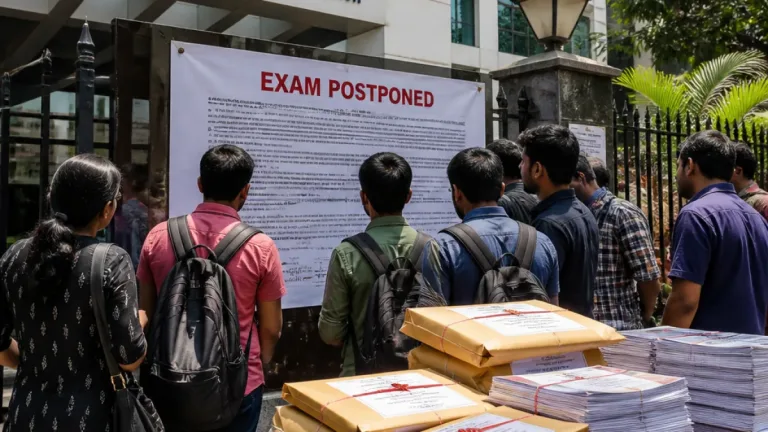

Bengaluru: The Karnataka Associated Managements of Schools (KAMS) on Tuesday withdrew an earlier advisory that had asked schools to remain closed on August 13 in connection with the proposed Cauvery bandh, saying a holiday could result in the loss of academic days, especially in aided institutions coping with teacher shortages.
Why the advisory was withdrawn
D. Shashi Kumar, secretary of KAMS, said the association decided to retract the call for closure after considering the impact on the academic calendar and the operational challenges faced by many schools. KAMS stressed that while it supports the cause of protecting Karnataka’s interests in the Cauvery water dispute, a blanket holiday could aggravate teaching shortfalls and delay the completion of ongoing SIR work in schools.
"KAMS extends its moral and peaceful support to the cause of protecting Karnataka’s interests in the Cauvery water dispute," said D. Shashi Kumar.
Instead of shutting schools, the association has suggested a set of non-disruptive measures that member institutions may adopt on the day of the bandh. These measures are intended to register solidarity without interrupting instruction or compelling student participation in political activity.
Guidance issued to schools
- Teaching and non-teaching staff, and school managements may observe a symbolic protest by wearing a black ribbon or black strip on August 13, without halting classes.
- Schools may use the occasion as an educational opportunity: students of classes V to XII can be given age-appropriate, factual information on the dispute during assembly or class time.
- Discussions suggested include the history and background of the Cauvery dispute, Karnataka’s dependence on Cauvery water for drinking, agriculture and livelihoods, and the consequences of inadequate rainfall and water scarcity.
- KAMS advised that programmes should remain peaceful, balanced, educational and non-political. Participation must not be compulsory for students and their safety and emotional well-being must be protected.
The association has left it to individual school managements to decide whether to declare a holiday, advising them to consider the local situation and recent judicial directions on releasing Cauvery water.
Suggested classroom activities
KAMS provided concrete ideas for member institutions to mark the day while preserving instructional time. These include classroom talks on constitutional processes, judicial decisions, inter-state cooperation, and responsible water conservation. The body also suggested that students could prepare posters or letters to the Supreme Court or tribunal seeking equitable distribution of Cauvery water, provided such activities remain educational and non-political.
| Area | KAMS suggestion |
|---|---|
| Symbolic action | Wear black ribbon/strip; no disruption to classes |
| Curriculum use | Assemblies or class periods on Cauvery dispute, water conservation |
| Student participation | Optional poster/letter-writing; non-compulsory |
Officials and school administrators across the state will now have to balance the association’s advisory with on-ground realities ahead of the bandh. Many aided schools in Karnataka operate with fewer permanent teachers and depend on contractual staff; KAMS cited these shortages as a key reason for withdrawing the closure call.
Local impact and administrative considerations
School closure decisions in the run-up to politically charged events often involve consultative steps with local education officers and district administrations. A holiday declared ad hoc could require subsequent adjustments to teaching schedules, examinations and mid-term plans, particularly for institutions affiliated to state boards that have fixed timetables.
By recommending symbolic action and educational programming, KAMS is aiming to allow schools to express solidarity with public concerns over water allocation while avoiding disruption to children's learning. The association emphasised that any observance should be peaceful and should not place students at risk or expose them to emotionally charged situations.
District education officers and school management committees will now be responsible for issuing local directives, if any, based on security assessments and transport arrangements on August 13. Parents and guardians are likely to be informed by schools if any deviation from normal academic hours is contemplated.
The Cauvery dispute, a long-standing inter-state water sharing issue between Karnataka and Tamil Nadu, has periodically prompted protests and bandh calls in Karnataka. KAMS' revised advisory reflects the tension between civic mobilisation over resource issues and the imperative to preserve uninterrupted schooling for students.
(Prakash Gowda is the Karnataka correspondent reporting from Bengaluru.)