The ICAR-Central Institute of Fisheries Technology (ICAR-CIFT) has entered into two consultancy agreements with the Department of Fisheries of the Andaman and Nicobar Administration to back traditional fisheries products and modernise small craft, officials said on Thursday.
Focus on value-addition and craft standardisation
Under one pact, ICAR-CIFT will assist in pursuing a geographical indication (GI) for two indigenous fish products — Chilled Andaman Coral Trout (Dollar Fish) and Nicobari Thoharango, a smoked-dried fish specialty. The institute will carry out nutritional profiling, conduct shelf-life studies, devise standard safety protocols and offer technical training to local and tribal processors, the statement said.
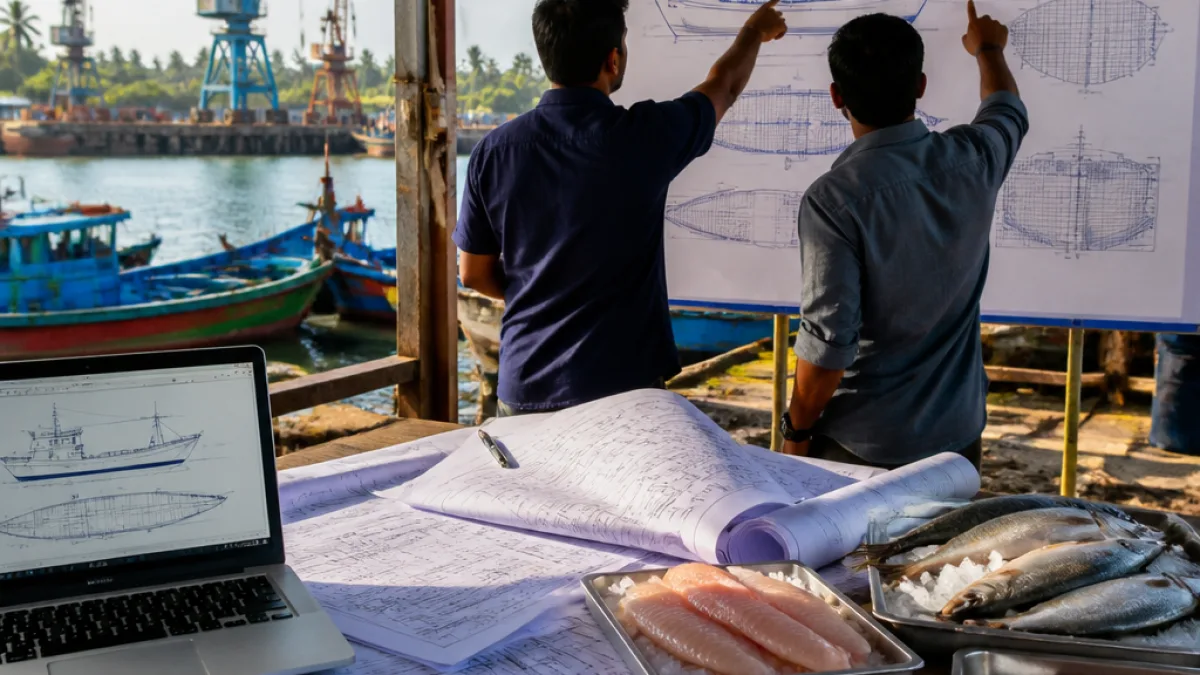
In a separate agreement, ICAR-CIFT will supply 30 standardised fishing-boat designs covering multiple sizes and categories, including motorised and mechanised variants. Each design package will include revised drawings, technical specifications and cost estimates. Materials recommended will range from traditional wood to modern options such as fibre-reinforced plastic (FRP) and steel, and hybrid approaches like wood with FRP coating.
Why it matters for island fisheries
The collaboration aims to protect traditional processing methods while improving safety and marketability. GI recognition can help differentiate local specialties in competitive markets and potentially raise returns for producers by signalling provenance and quality. Standardised boat plans are intended to simplify construction, improve seaworthiness and reduce maintenance costs through better material choices and clear technical specifications.
- Product support: Nutritional profiling and shelf-life data to inform handling and market claims.
- Safety and training: Standard operating procedures and capacity-building for local and tribal processors.
- Boat modernisation: 30 ready-to-build designs with cost estimates to ease access to the Union Territory Plan benefits.
Officials involved
The memoranda of agreement were exchanged between ICAR-CIFT Director George Ninan and Andaman and Nicobar Administration Assistant Director of Fisheries Nesnas E A, according to the ICAR-CIFT statement. The work will be carried out under the technical and scientific remit of the Kochi-based institute.
| Agreement | Key deliverables | Primary beneficiaries |
|---|---|---|
| GI tagging and product standardisation | Nutritional profiling, shelf-life studies, safety protocols, training | Local and tribal fish processors, traders |
| Fishing boat design package | 30 designs, drawings, specifications, cost estimates | Small-boat builders, fishers under UT Plan |
Potential economic impact
Officials framed the collaboration as a step to enhance market access and commercial value for island products while strengthening livelihoods. By standardising processing and demonstrating consistent quality parameters, producers could target higher-value retail and institutional buyers. For fishers, access to certified or widely accepted boat designs may lower construction risks and improve operational efficiency, especially for vessels deployed in exposed sea conditions around the archipelago.
ICAR-CIFT’s involvement brings institutional expertise in fisheries technology, which the statement says will be applied through field-level capacity building and laboratory analyses. The institute has been engaged in similar product development and technology-transfer efforts elsewhere in India, focusing on food safety, preservation and post-harvest handling.
Implementation and next steps
The agreements envisage hands-on support: technical studies, training modules and design documentation that can be used by eligible beneficiaries under the Union Territory Plan. The statement did not specify timelines for GI registration or the schedule for releasing the boat plans. Authorities will need to sequence laboratory work, community consultations and the formal GI application process, which involves evidence of origin, traditional know-how and distinctiveness of the product.
For fishers and processors in the islands, the collaboration could mean access to technology-driven solutions without abandoning traditional practices. The dual focus on product identity and vessel safety highlights a combined approach to raise incomes while addressing operational challenges in a maritime environment.
Further updates, including training dates and release of design manuals, are expected from the Department of Fisheries and ICAR-CIFT as the programmes roll out.