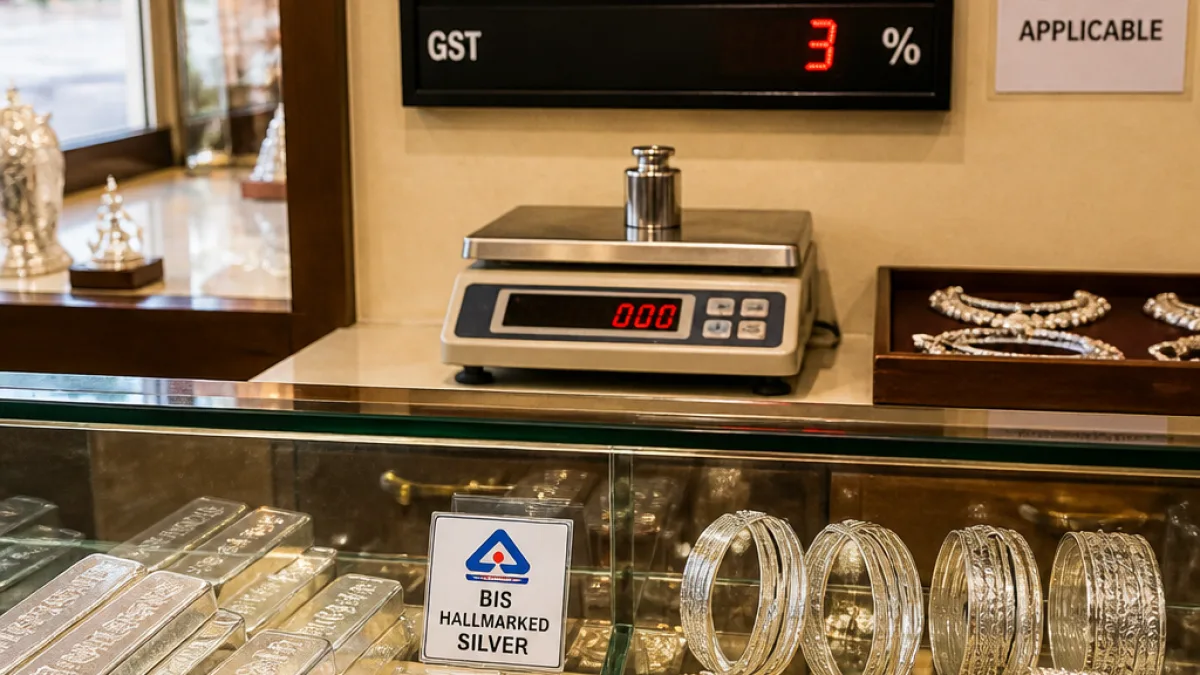
Nanded, Maharashtra — Local consumers and small investors who follow daily metal rates should be aware that the silver price figures published online are benchmark rates and do not reflect the final amount payable at retail showrooms, BusinessToday.in reported. The Bureau of Indian Standards (BIS) hallmark, making charges, GST and the purity of the silver piece all determine the final cost.
How purity is expressed and why it matters
Precious-metal purity is expressed in fineness, which denotes parts per 1,000 of pure silver in an alloy. The commonly encountered grades described in the report are:
- Fine silver (.999): 99.9% pure silver — the highest commonly available purity for consumers.
- Britannia silver: 95.8% silver and 4.2% other metals.
- Sterling silver: 92.5% silver and 7.5% other metals, typically copper.
- Coin silver: 90% silver and 10% copper, historically used in coinage.
"Fine silver, also known as pure silver or .999 silver, contains 99.9% silver content with minimal impurities," BusinessToday.in reported.
The fineness directly affects the metal value: higher fineness usually means higher intrinsic metal cost. For studded or decorated items, the weight of embedded stones is excluded from net silver weight when calculating price, the report added.
Why the shop bill is higher than the daily rate
According to the BusinessToday.in account, the published daily silver rate is only a base price. Retail or showroom bills include additional components:
- Making charges — variable charges levied for design, labour and finishing work.
- GST — goods and services tax applied at 3% on the metal plus applicable charges.
- Stone deductions — weight of non-metal components such as precious or semi-precious stones is removed from net silver weight.
| Component | Effect on final price |
|---|---|
| Base silver rate (benchmark) | Starting point for calculation |
| Making charges | Increase; varies by design and retailer |
| 3% GST | Mandatory tax on sale |
| Stone deduction | Reduces net metal weight if jewellery is studded |
Authenticity and hallmarks
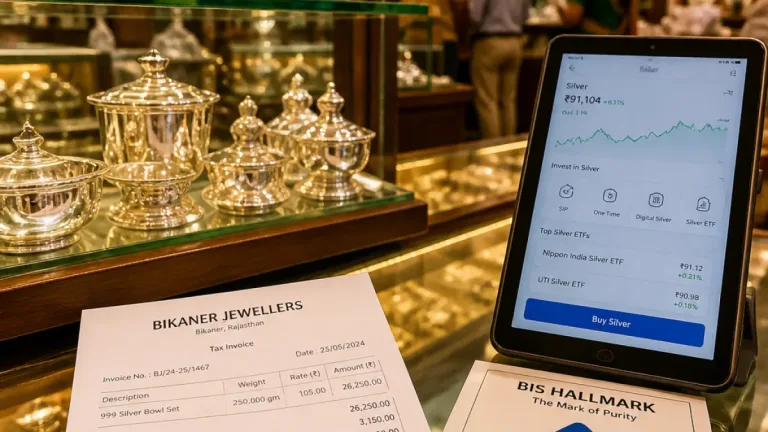
The report stressed the importance of verifying hallmark details when buying silver. BIS hallmarking and purity-grade markings (for example, 925 for sterling or 999 for fine silver) serve as primary authenticity indicators. Retailers sometimes display a HUID code; however, BusinessToday.in noted that HUID use is more widely standardised for gold than for silver.
Paper and digital alternatives
For investors unwilling to take physical delivery or deal with storage and making charges, the report outlined non-physical options:
- Digital silver — platforms sell and hold silver digitally so investors do not receive physical metal. BusinessToday.in cautioned that such instruments are not regulated by SEBI and may carry transparency and pricing risks.
- Silver ETFs and silver fund-of-funds — exchange-traded options that let investors trade silver exposure similarly to stocks on exchanges.
For buyers in Nanded — where family purchases of silver for ceremonies and festivals remain common — understanding these distinctions can prevent surprises at billing and offer alternative routes for investors seeking exposure to the metal without physical handling. The report places particular emphasis on checking BIS marks and calculating the total payable amount (base rate plus making charges and 3% GST) before purchase.
Local jewellers and traders in the Hingoli and Kandhar market areas often quote daily benchmark rates in the morning; customers are advised to ask for a breakdown of making charges and any stone deductions at the time of purchase, and to demand visible hallmarking on silver items.