The Goa government has notified a new policy to curb the reuse of cooked oil in restaurants and other commercial food establishments and to channel used oil towards biodiesel production, authorities said on Friday.
Key requirements for food businesses
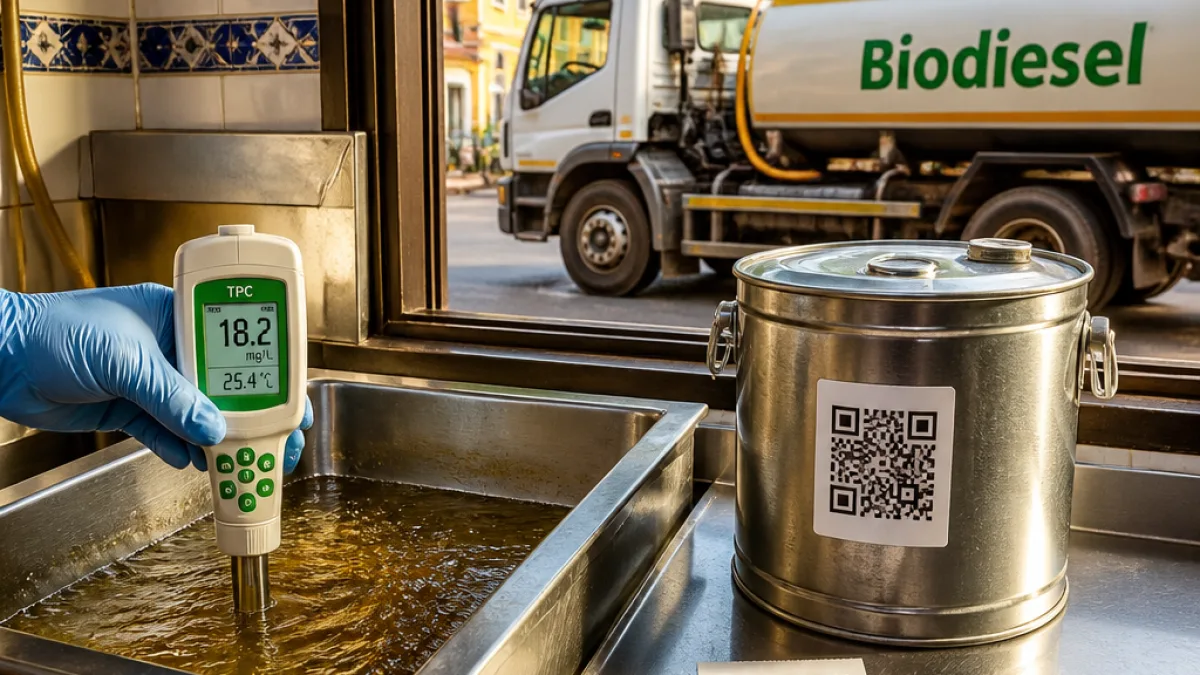
Under the policy, Food and Drugs Administration (FDA) inspectors will use handheld total polar compounds (TPC) meters during checks to assess the quality of frying oil. Oil will have to be discarded once the TPC reaches 25%, the notification states. Establishments found using oil beyond this limit will face stricter regulatory scrutiny, officials said.
| Parameter | Action |
|---|---|
| Total polar compounds (TPC) | Discard oil at 25% |
| Inspection tool | Handheld TPC meters used by FDA inspectors |
| Tracking | Geo-tagged QR e-receipts for used oil collection |
Digital tracking to ensure safe disposal
The policy introduces a digital tracking mechanism for used cooking oil. Collectors and disposers of the waste oil will issue geo-tagged QR e-receipts at the point of collection, enabling authorities to trace the chain of custody from the food outlet to the end processor. The move is aimed at preventing illegal diversion of used oil back into food preparation.
From waste to fuel
The state said the policy also seeks to promote conversion of used cooking oil into biodiesel. Biodiesel is produced by processing waste vegetable oil and can be used as an alternative fuel or blended with conventional diesel. The government framed the policy as aligning waste-management practices with sustainable energy goals, while addressing public-health concerns arising from repeated use of degraded frying oil.
What this means for restaurants and the public
- Restaurants and commercial kitchens will be subject to routine checks using portable TPC meters to measure oil quality on-site.
- Used oil must be removed from service and handed over to authorised collectors once TPC hits the 25% threshold.
- Collectors will provide a geo-tagged QR e-receipt to record the handover, creating an auditable trail to the biodiesel processor.
Officials said the measure is intended to reduce health risks associated with the reuse of degraded frying oils and to supply feedstock for biodiesel units. The policy places emphasis on both enforcement at the point of food preparation and on creating a market link between waste oil generators and recyclers.
Enforcement and compliance
The FDA will deploy handheld TPC meters during inspections. While the notification prescribes the technical threshold and digital tracking, it does not specify penalties in the text provided to the media. Enforcement details and timelines for full implementation are expected to be clarified by the department issuing the circular.
Public-health and environmental advocates have in recent years urged stronger controls on the recovery and disposal of used cooking oil, citing concerns that reuse of degraded oil can affect food quality. Governments elsewhere have also promoted collection of waste oil for conversion into biodiesel as part of circular-economy measures.
Practical considerations for businesses
Owners of eateries and commercial kitchens will need to:
- Invest in regular on-site testing or allow inspectors to test oil with handheld TPC meters;
- Establish arrangements with authorised collectors who can issue geo-tagged QR e-receipts;
- Maintain records of collection receipts as proof of lawful disposal and chain of custody.
The state administration has framed the notification as a step to ensure food safety while supporting renewable-fuel initiatives. Further operational guidelines, including the list of authorised collectors and details on the biodiesel-processing partners, are expected to be issued by the relevant departments in the coming weeks.