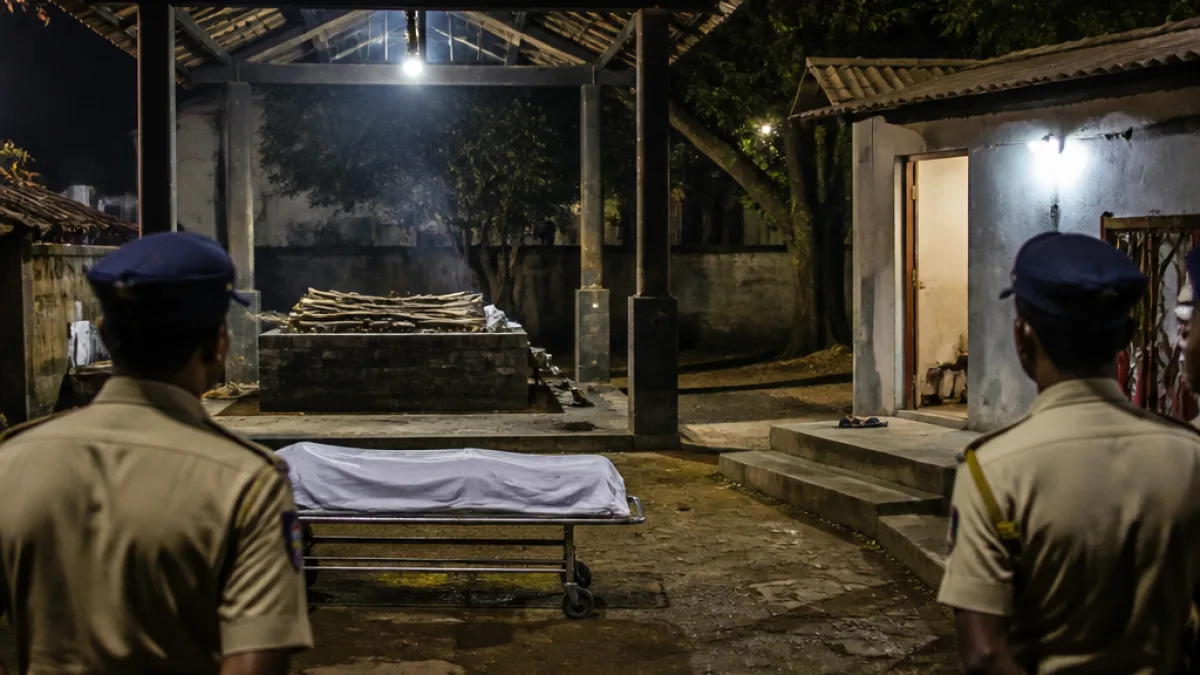
Pernem, Goa: The body of a 65-year-old man was discovered at the Pernem municipal crematorium after his family, unable to afford firewood or arrange immediate rites, left him there late on the night of Sept 13, police said.
Family's poverty and a failed attempt at a free cremation
The deceased has been identified as Ashok Vishnu Palyekar, a resident of the Deulwada ward of Kasarvarne in Pernem, officials said. Neighbours and police said Palyekar lived in a small roughly 20-square-metre dwelling sandwiched between larger houses and had been dependent on relatives after losing his livelihood.
According to neighbours, Palyekar had suffered an amputation two years ago and subsequently lost the menial job he held at a hotel. He was cared for alternately by two widowed sisters who receive a government monthly dole of ₹2,000 each, the report said.
On the evening of Sept 13, the 108 ambulance service took Palyekar to the nearby Kasarvarne health centre, where he was declared brought dead, sources in the area said. A guard at the health centre later told police that the death was not entered into the register, the neighbours said.
Body left at crematorium overnight
Believing that the Pernem municipal crematorium offered free cremations for the indigent, the sisters pooled whatever minimal funds they had, hired transport and brought the body to the facility late that evening. There was no attendant on duty and the crematorium was reportedly empty because the following day was the state festival of Ganesh Chaturthi.
With no money to buy firewood, to take the body home or to arrange any alternative, the women left Palyekar at the crematorium in the hope that municipal authorities would conduct the final rites, police and neighbours said. When officers checked the site the following morning, they found a decomposing body, initially thought to be that of an unclaimed homeless person.
“It was only after inquiry that we could trace the deceased to a house at Kasarvarne,” said Pernem police sub‑inspector Aditya Gad, who led the follow-up. “The family had come in hope that the facility would help the poor, but there was no attendant and they had no money for firewood.”
Police investigation and community reaction
Pernem police registered the incident and are investigating the sequence of events that led to the body being left unattended at the crematorium. Officers have visited the 20-square-metre home to verify identity and gather statements from neighbours and relatives.
Neighbours described the house as an informal, cramped structure with exposed laterite walls. They said Palyekar alternated living between that small home and the houses of his two sisters, both of whom subsist on the modest government assistance.
One neighbour told police that Palyekar had worked in a hotel performing menial tasks until his leg was amputated and he was unable to continue employment. Local residents characterised the family as poor and dependent on social assistance.
Questions on municipal arrangements for indigent funerals
The episode raises questions about municipal preparedness and communication of entitlements for the indigent. Relatives reportedly believed that the municipal crematorium provided free cremation services for paupers but found no attendant on duty at the time they arrived.
Officials at the Pernem municipal office had not issued a public response by the time police completed initial inquiries. Police and local residents said the crematorium’s closure or lack of staffing on a festival eve contributed to the delay in conducting rites.
- Deceased: Ashok Vishnu Palyekar, 65
- Location: Deulwada ward, Kasarvarne, Pernem
- Date: Late evening of Sept 13 (found next morning)
| Detail | Reported information |
|---|---|
| Living conditions | Approximately 20 sq. metre house, exposed laterite |
| Family income | Sisters receive ₹2,000 monthly government dole each |
| Cause of inability to cremate | No money for firewood; no attendant at crematorium |
Police said they will continue enquiries to confirm timelines recorded by the health centre and to establish whether municipal procedures for indigent cremations were followed or communicated to the family. The case underscores the challenges faced by marginalised residents in accessing dignified death rites even in a state with comparatively high per capita income.
Authorities and local elected representatives may be asked to clarify policies on free cremations for the poor and to ensure availability of staff and basic facilities at municipal crematoria, especially during festival periods when demand and public needs can rise.