Federation questions service delivery after sanitation fee increase
Dimapur: The Dimapur Urban Council Chairmen Federation (DUCCF) has expressed concern over multiple civic issues in the city, including an upward revision of the monthly residential sanitation fee, poor solid-waste collection, the proposed roll-out of smart prepaid electricity meters and the continuing application of the Nagaland Liquor Total Prohibition Act, according to a federation review reported on Wednesday.
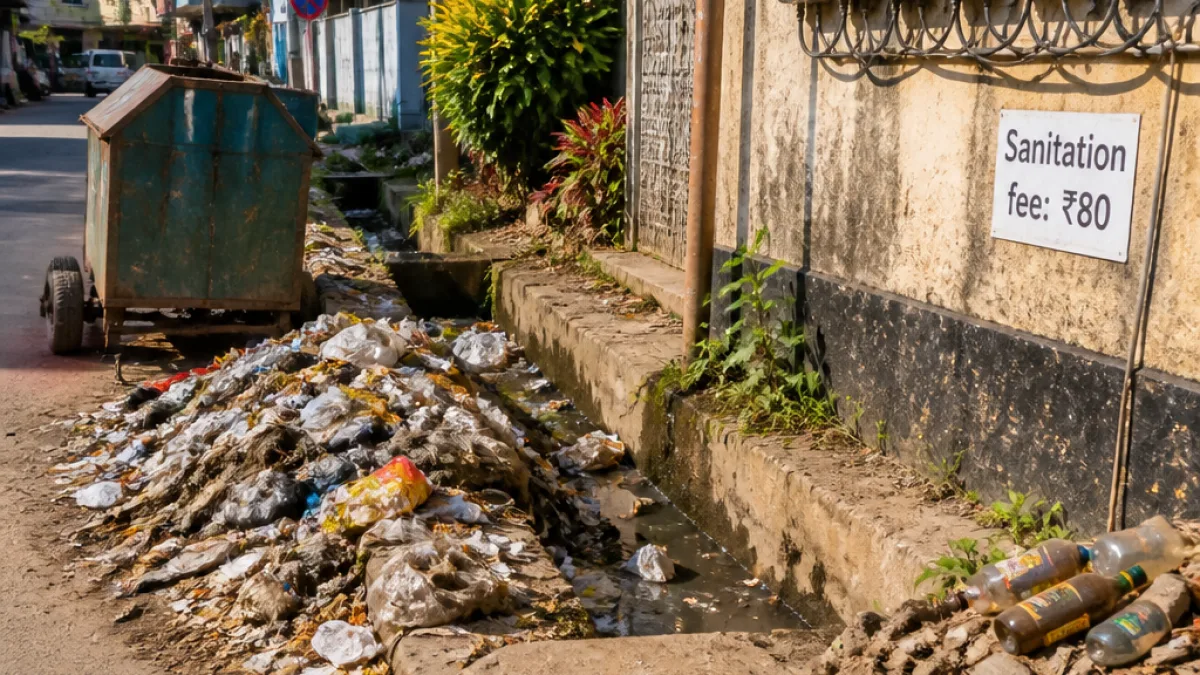
The federation said the municipal authority had increased the residential sanitation fee from ₹60 to ₹80 per month, but that the rise had not been accompanied by noticeable improvements in the frequency or quality of waste collection in several areas. The DUCCF made the observations while reviewing pre-monsoon drainage-cleaning works funded by the state disaster management department.
- Sanitation fee revised: residential fee moved from ₹60 to ₹80 per month.
- Waste collection: reported deterioration in collection frequency in several localities.
- Drainage: indiscriminate dumping of plastic wrappers and other solid waste is obstructing drains and elevating urban flooding risk.
- Smart meters: concerns raised about preparedness of power infrastructure and phased implementation.
- Prohibition: the federation reiterated its demand for repeal of the Nagaland Liquor Total Prohibition Act.
According to the DUCCF, indiscriminate dumping of plastic wrappers and other refuse continues to choke drains and block water flow, heightening the risk of urban flooding during heavy rains. The federation said the state-funded pre-monsoon drainage-cleaning works must be complemented by effective solid-waste management to keep drainage infrastructure functional.
| Item | Previous | Revised / Observed |
|---|---|---|
| Monthly residential sanitation fee | ₹60 | ₹80 |
| Waste collection | Noted as acceptable in some wards | Collection frequency deteriorated in several areas (as reported by DUCCF) |
On enforcement, the DUCCF pointed to gaps in implementation of the Solid Waste Management Rules, despite coordination meetings convened by the district administration. The federation urged the 23 newly elected ward councillors to take more active roles in resolving sanitation and infrastructure problems in their respective wards.
Separately, the federation raised questions about the proposed mandatory installation of smart prepaid electricity meters for domestic consumers. DUCCF members said Dimapur’s current power distribution infrastructure — particularly transformers and transmission lines — shows signs of strain, with voltage fluctuations already causing damage to household appliances in some instances.
To reduce potential consumer harm, the DUCCF recommended a phased roll-out of smart meters, proposing that commercial establishments and government offices be prioritised before making the devices mandatory for domestic consumers. The federation also alleged that opponents of meter installation in some colonies were being pressured, including threats of disconnection or denial of support, and asked the administration to ensure that meter deployment follows due procedure.
Finally, the federation renewed its demand for repeal of the Nagaland Liquor Total Prohibition Act, arguing that the law and its enforcement continue to have civic and social implications in the city. The report did not set out a detailed alternative policy, but signalled that prohibition remains a contentious local issue for the DUCCF.
DUCCF recommendations, as reported, focused on three broad actions: strengthening waste collection and enforcement of solid-waste rules; ensuring drainage-cleaning work is matched by behaviour change and anti-dumping measures; and adopting a cautious, phased approach to smart-meter rollout while safeguarding consumers against infrastructure-related harm.
City residents and local representatives will be watching whether the Dimapur Municipal Council and the district administration take up the federation’s suggestions ahead of the monsoon season, when drainage and power issues typically have heightened impact.