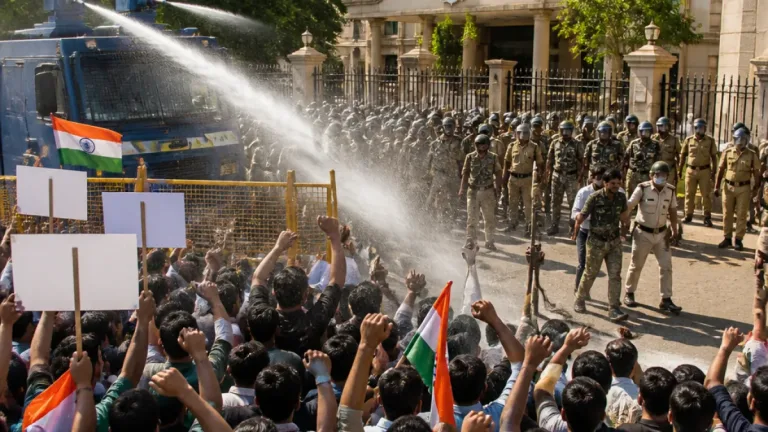
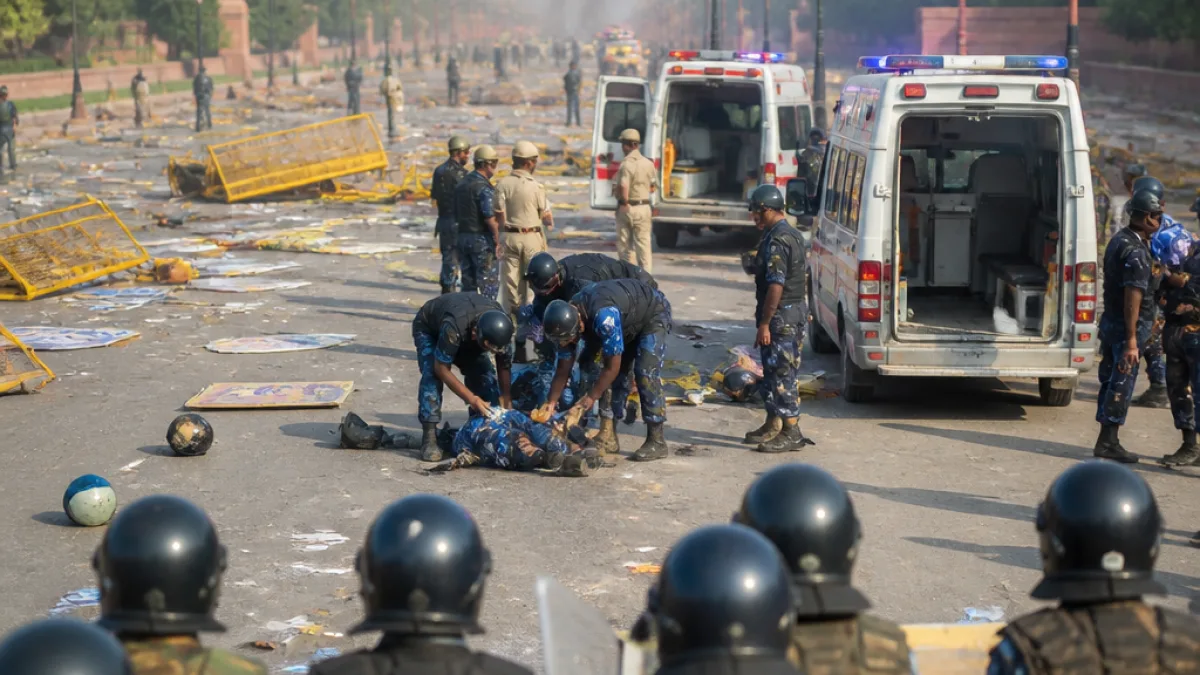
The Delhi Police has defended its actions during the July 20 "Chalo Sansad" protest, telling the Supreme Court that the demonstration was "hijacked" by "anti-social elements" and persons with criminal antecedents, which led to a breakdown of law and order and left over 240 police personnel injured.
The submission was made in an affidavit filed by Deputy Commissioner of Police Sachin Sharma of the New Delhi district in response to a batch of petitions challenging alleged excessive use of force by police on that day. The affidavit sets out crowd estimates and criminal-record matches and says police used force only after repeated warnings failed to stop the protesters from advancing towards Parliament.
"The use of force by police can be gone into by a Committee appointed by this Hon'ble Court and the Delhi police will fully cooperate with such Committee and provide all details necessary," the affidavit said.
Numbers cited by police
The affidavit gave precise figures on persons present and their links to police records. Key figures cited include:
- More than 30,000 people gathered in and around Jantar Mantar on July 20, the police said.
- Over 240 police personnel were injured in violence that followed.
- 2,873 attendees had particulars matching entries in police crime databases.
- 92 people present were said to be involved in more than 10 criminal cases, of whom 47 were described as "history-sheeters".
| Category | Figure |
|---|---|
| People gathered | More than 30,000 |
| Police personnel injured | Over 240 |
| Attendees matching crime records | 2,873 |
| People with >10 criminal cases | 92 (including 47 history-sheeters) |
Police position and judicial context
The affidavit said police had repeatedly warned protesters and tried to prevent an advance towards Parliament before resorting to force. It also told the court that the force was willing to cooperate fully with any committee the Supreme Court may appoint to examine the use of force by police officials.
The filing comes against the backdrop of petitions alleging excessive or unwarranted police action at the demonstration. On August 3, a bench led by Chief Justice Surya Kant clarified that an earlier reference to "criminal antecedents" in the court's order concerning the release of student protesters related only to those charged with grave and heinous offences. The bench had also noted that states could close or withdraw FIRs against remaining students as per law.
The Delhi Police affidavit expressly said it would comply with any court-appointed committee and provide all necessary details to assist judicial examination of its conduct during the protest.
Legal and public-order implications
The matter poses overlapping legal and policy questions: how to balance the right to peaceful protest with maintenance of public order, how far police powers may extend when demonstrations turn violent, and the procedures for independent inquiry into alleged excesses. Petitioners before the Supreme Court have argued that police used disproportionate force on largely peaceful protesters; the police maintain that miscreants among the crowd instigated violence.
Human-rights groups and civil liberties advocates following the case have underlined the need for transparent, impartial inquiries into both alleged police misconduct and criminal conduct by demonstrators. The Delhi Police's stated willingness to cooperate with a court-appointed committee may form the basis of such a probe if the Supreme Court decides to constitute one.
The apex court is yet to indicate whether it will appoint a committee to examine the use of force. Any such order would set parameters for access to evidence, witness statements and other material the police say it is prepared to furnish.
What to watch for next
- Whether the Supreme Court constitutes a committee to investigate use of force and, if so, its composition and terms of reference.
- Further filings by petitioners challenging the force used and by the police providing operational records and justifications.
- Any criminal or departmental action arising from investigations into violence on July 20.
The affidavit by DCP Sachin Sharma is the most detailed official account yet filed in the apex court about the events of July 20 and sets the stage for further judicial scrutiny of a high-profile protest that raised questions of civil liberties and public safety in the national capital.