New Delhi: A trial court has acquitted 13 persons charged in an incident from the February 25, 2020, northeast Delhi communal violence, finding the prosecution's key witness to be unreliable and the visual evidence insufficient to identify the accused beyond reasonable doubt.
Judge flags inconsistencies in eyewitness account and poor CCTV quality
Additional Sessions Judge Parveen Singh said the testimony of the prosecution witness — designated as PW8 in court papers — was "under a shadow of doubt" and that it would be unsafe to rely upon his evidence. The court observed that the witness had initially told investigators he had not seen the incident, but subsequently appeared in court as an eyewitness and identified two accused based on CCTV footage.
"Considering the fact that this witness had suddenly become an eyewitness and in view of the above discussion that the testimony of PW8 as an eyewitness is under a shadow of doubt, it will be unsafe to rely upon the testimony of PW8," the order said.
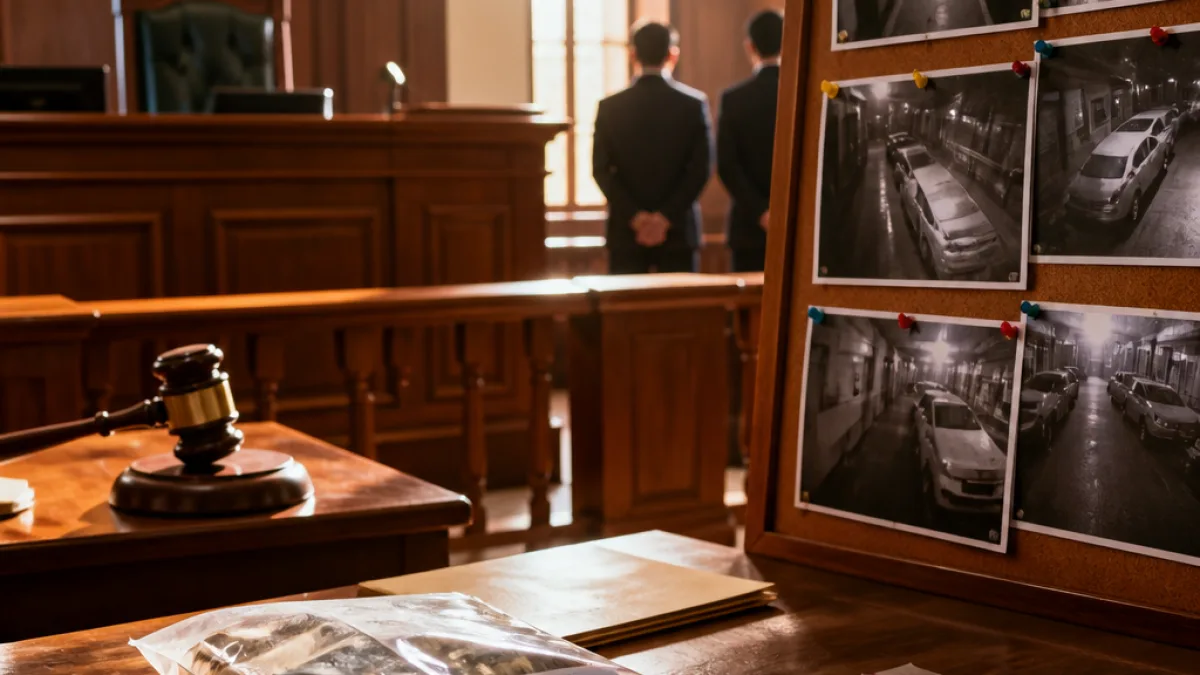
On the visual material, the judge noted that the CCTV footage relied upon for identification was dark, black-and-white and grainy, and that the Forensic Science Laboratory (FSL) had been unable to offer an opinion on facial identification because of poor pixel resolution.
Charges, accused and court's view on conspiracy
The case related to an attack on Raman Chauhan in the New Usmanpur police station area during the communal violence. Chauhan told the court he could not identify any of the rioters who had attacked him.
An FIR was registered at New Usmanpur against 13 persons. The accused named in court records are:
| Accused | Alias (if recorded) |
|---|---|
| Mohammad Anas | |
| Mobin | |
| Mohd. Javed Khan | Shanu |
| Faisal | |
| Shahjad Khan | Montu |
| Imran Khan | |
| Badshah Khan | |
| Irfan Khan | |
| Siraj Khan | |
| Arman | Arbaz |
| Aman | Suhail |
| Iqbal Khan | Sonu |
The accused had been charged with offences including rioting, rioting armed with deadly weapons, attempt to murder, criminal conspiracy and disobedience of an order promulgated by a public servant.
On the allegation of criminal conspiracy, the court made a pointed observation: the mere recovery of weapons, without evidence showing when, where or how an agreement was made or who joined it, could not establish conspiracy.
Evidence gaps and legal standard of proof
In its order, the court highlighted material improvements in the witness's account between investigation and testimony, and stressed the high standard of proof required in criminal trials. Given the inconsistencies and the limitations of the CCTV material, the judge concluded that the prosecution had not proved its case beyond reasonable doubt.
- Key evidentiary issues: change in witness statement from investigation to trial; poor quality and low-resolution CCTV footage; FSL inconclusive on facial identification.
- Legal consequence: acquittal of all 13 accused due to unsafe testimony and inadequate identification evidence.
- Conspiracy finding: court said weapon recovery alone did not demonstrate an organised criminal conspiracy.
Context and implications
The February 2020 northeast Delhi riots prompted multiple criminal proceedings across several police stations and long-running trials in the city. This order underscores judicial scrutiny of witness reliability and forensic limitations in cases that depend heavily on visual identification and eyewitness accounts.
The court's decision does not comment on wider events of 2020 beyond the evidence produced in this specific case. It reflects the application of legal principles aimed at safeguarding the presumption of innocence when the prosecution's narrative contains significant gaps or contradictions.
Copies of the detailed order and information on any prosecution appeal were not included in the material provided to the court record summarised here.
Reporting from the capital; court documents and the order of Additional Sessions Judge Parveen Singh form the basis of this account.