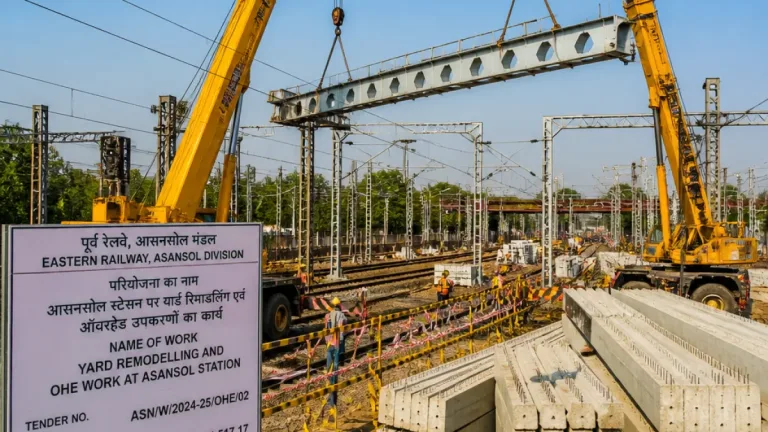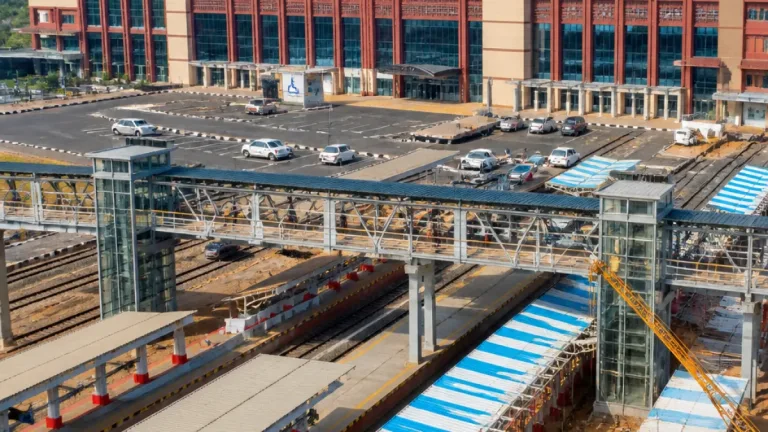
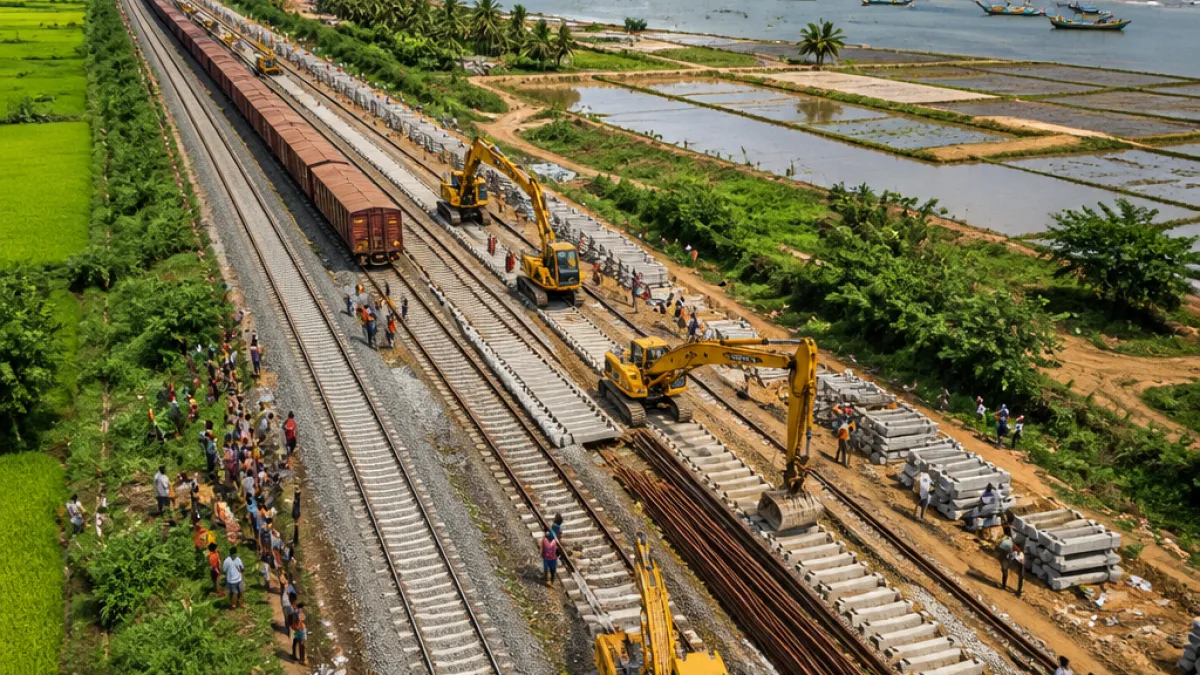
The Union Cabinet Committee on Economic Affairs on Wednesday approved four multitracking projects of the Ministry of Railways with a combined estimated cost of approximately ₹9,450 crore, the government said, in a move that will add roughly 410 km of line capacity spanning eight districts in West Bengal, Odisha, Tamil Nadu and Andhra Pradesh.
Odisha stretches: Kharagpur–Bhadrak, Bhadrak–Haridaspur and Cuttack–Paradeep
Three of the sanctioned corridors run through Odisha. They are:
- Kharagpur–Bhadrak (Ranital) 4th Line — 173 km (West Bengal and Odisha)
- Bhadrak–Haridaspur 4th Line — 75 km (Odisha)
- Cuttack–Paradeep (Badabandha) 3rd and 4th Line — 72 km (Odisha)
"The Cabinet Committee on Economic Affairs, chaired by the Prime Minister, approved four projects of the Ministry of Railways with total cost of around Rs 9,450 crore," the official statement said.
The projects form part of the PM–Gati Shakti National Master Plan and are aimed at enhancing multi‑modal connectivity, improving logistic efficiency and increasing the capacity for both passenger and freight operations. The Railways expect the works to be completed by the 2030–31 fiscal year.
Projected benefits for Odisha
According to the project brief, the capacity augmentation will improve rail connectivity for an estimated 6,448 villages with a combined population of about 60 lakh. The increase in line capacity is also expected to handle additional freight of about 76 MTPA (Million Tonnes Per Annum), supporting movement of coal, iron ore, cement, steel, containers, automobiles and food grains.
| Project | Length (km) | States |
|---|---|---|
| Kharagpur–Bhadrak (4th line) | 173 | West Bengal, Odisha |
| Bhadrak–Haridaspur (4th line) | 75 | Odisha |
| Cuttack–Paradeep (3rd & 4th line) | 72 | Odisha |
| Gummidipundi–Gudur (3rd & 4th line) | 90 | Andhra Pradesh, Tamil Nadu |
Implications for freight, tourism and ports
Rail trackage expansion along the Cuttack–Paradeep corridor is particularly consequential for Odisha’s port connectivity. Paradeep is a major gateway for bulk commodities such as coal and fertilisers; additional lines will ease congestion and reduce turnaround times for freight rakes. The Railways note that multitracking will also support tourism by improving access to several cultural and ecological destinations cited in the project note, including Bhitarkanika and coastal attractions.
Officials said the projects are intended to lower logistics cost, improve energy efficiency by shifting traffic to rail and align with broader climate goals by reducing road transport dependence. The government also flagged potential benefits to local economies through better market access for agricultural produce and inputs for industry.
Construction, land and local concerns
While the Cabinet approval clears the administrative step, several implementation challenges remain. Land acquisition, environment clearances, utility shifting and coordination with state and local authorities will be required before construction begins. For residents along the corridors, works can mean temporary disruption from construction traffic, shifting of utilities and noise; authorities typically require traffic management plans and public hearings for alignment changes.
Given Odisha’s vulnerability to cyclones and floods, integrating resilience measures into design and construction will be important. Multi‑track alignments and bridges must factor in higher runway flows, embankment protection and early warning coordination with district administrations to reduce disruption during extreme weather.
Timeline and next steps
The projects are slated for completion by 2030–31, according to the approval note. Detailed project reports (DPRs), tendering, contractor selection and phasing of construction will follow. The Railways plan to undertake stakeholder consultations and environmental assessments as per statutory requirements before major civil works commence.
For commuters and businesses in Odisha, the multitracking approval promises enhanced service reliability and freight capacity over the next decade. Local administrations and Railways will need to coordinate closely to manage land, environment and community impacts while ensuring timely execution.
Practical advisory: Residents in project corridors should watch for official notices on land acquisition and public consultations from district administrations and the Railways. Motorists and village communities near work sites are advised to follow traffic diversions and safety instructions published by local authorities during construction phases.
Reporting from Cuttack.