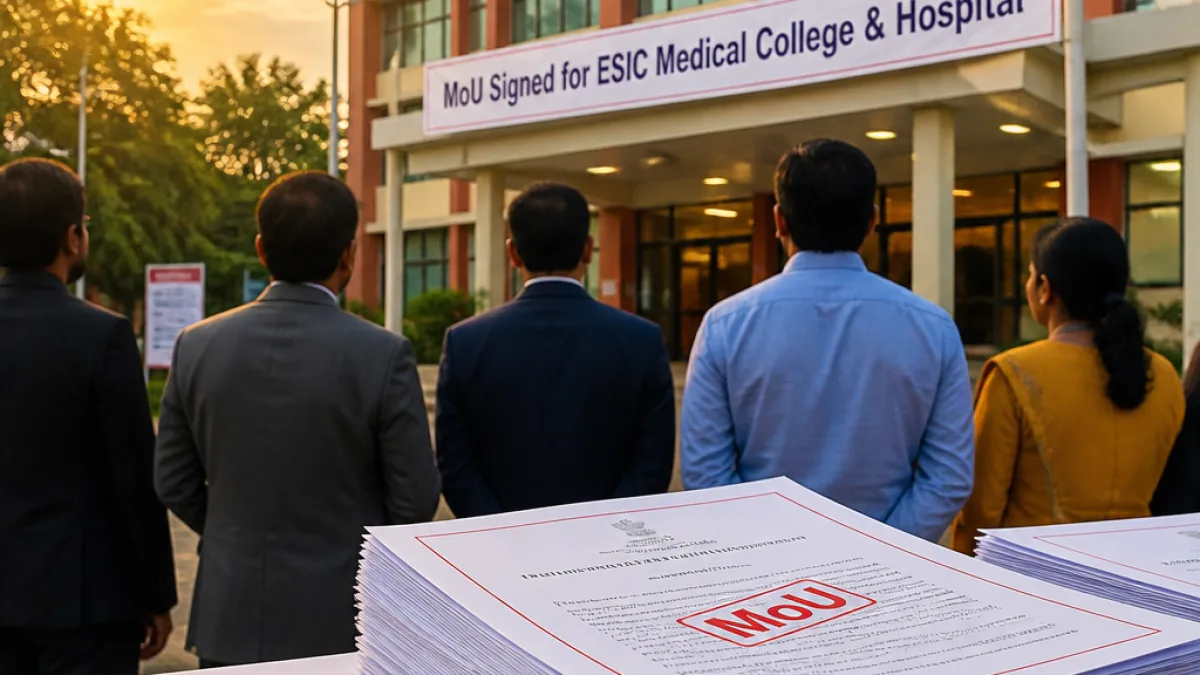
Asansol is poised to receive its first medical college after a long‑pending Memorandum of Understanding (MoU) was signed to transfer the ESI Hospital, Asansol, from the Government of West Bengal to the Employees’ State Insurance Corporation (ESIC), sources reported on Tuesday.
Transfer clears way for medical college and hospital
The MoU clears the administrative route for upgrading the existing facility into an ESIC Medical College and Hospital, a development that officials say will strengthen tertiary healthcare and medical education in the Asansol‑Durgapur industrial belt. An application has been submitted to the National Medical Commission (NMC) seeking permission to begin an MBBS programme with 50 seats, with admissions proposed for the 2026–27 academic session, subject to regulatory approval.
The Union Minister of State for Labour and Employment, Shobha Karandlaje, confirmed the signing of the MoU while replying to an unstarred question in the Rajya Sabha raised by BJP MP Samik Bhattacharya, according to the parliamentary reply reported by national outlets. The minister also outlined proposed admission arrangements linked to the ESI scheme.
“Further, the institution will significantly enhance access to quality tertiary healthcare for insured workers and their dependents in the Asansol‑Durgapur industrial belt, strengthen the availability of skilled medical professionals, improve healthcare infrastructure, and support better health outcomes through medical education, research, and advanced patient care,”
The above assessment was reported in Millennium Post and cited in the minister’s parliamentary response, highlighting the stated objectives of the upgrade for insured workers and their dependants.
Local impact: healthcare, education and workforce benefits
For Asansol — a city shaped by industry, coalfields and a growing urban population — the conversion of the ESI Hospital into an ESIC Medical College and Hospital carries several potential consequences:
- Healthcare access: A tertiary hospital attached to a medical college typically expands specialty services and diagnostic capacity, which can reduce the need for patients to travel to Kolkata for advanced care.
- Medical education: A 50‑seat MBBS intake would create local avenues for medical training, potentially supplying doctors attuned to the healthcare needs of the region.
- Insured persons’ advantages: Wards of Insured Persons (IPs) are proposed to have admission opportunities under the Ward of Insured Persons quota, in line with existing ESIC admission policies.
Officials emphasised that conversion aims to align clinical services for ESI beneficiaries with teaching and research roles, which could improve continuity of care for industrial workers and their families in Paschim Bardhaman and neighbouring districts.
Regulatory steps and timeline
The next critical step is clearance from the NMC. The application for undergraduate medical education approval has been filed; however, commencement of classes remains conditional on NMC inspection and fulfilment of prescribed norms relating to infrastructure, faculty and hospital bed strength.
| Item | Detail |
|---|---|
| Institution | ESI Hospital, Asansol (to be ESIC Medical College & Hospital) |
| Proposal | 50 MBBS seats |
| Proposed session | 2026–27 (subject to NMC approval) |
Medical Dialogues and other outlets reported that the Government of West Bengal has already handed over the hospital to ESIC, part of a central government effort to bolster healthcare infrastructure for ESI scheme beneficiaries. The ESIC is a statutory body under the Ministry of Labour & Employment responsible for social security and health benefits for industrial workers.
Local health administrators and worker representatives in the Asansol‑Durgapur belt will now await the NMC’s site inspection and the fulfilment of faculty and hospital facility norms before formal admissions can begin. If approved, the new college would be the first full‑fledged medical college in Asansol, a milestone for a region long dependent on medical centres in Burdwan, Durgapur and Kolkata for specialised care.
Further updates will depend on procedural clearances from regulatory authorities and the implementation plan jointly managed by ESIC and state health departments.