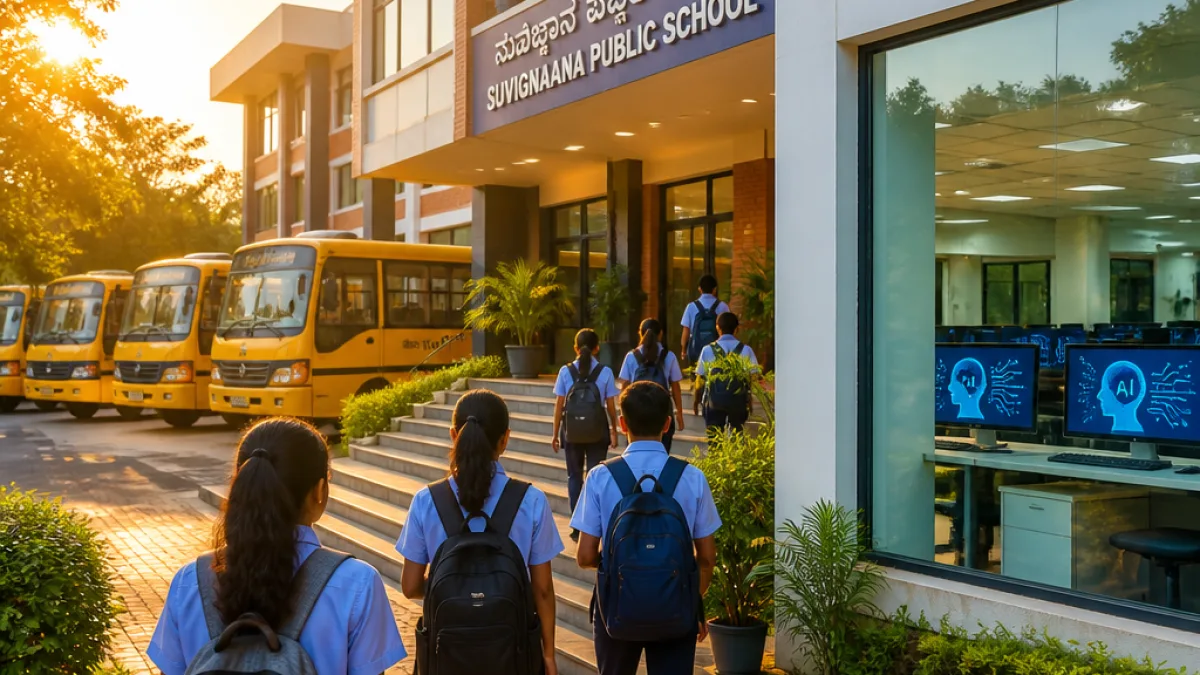
BENGALURU: The Karnataka government and the Asian Development Bank (ADB) on Friday signed an agreement to develop 500 Karnataka Public Schools (KPSs) by 2030 under a programme with a total budget of ₹2,500 crore, of which the ADB will provide a loan of ₹1,750 crore, officials said.
Scope and key components
The Department of School Education and Literacy framed the plan to provide free, continuous schooling from LKG to Class 12 on a single campus at each KPS. The project outlines a package of interventions aimed at classroom teaching, student support and extracurricular development.
- Provision of free transport for students.
- Bilingual instruction across grades.
- Computer and artificial intelligence education integrated into the curriculum.
- Priority for skill development and career guidance, with counselling beginning from Class VI.
- Talent development in music, literature and sports and enhanced extracurricular activities.
- Continuous monitoring of student progress and focused improvement in Class X and XII results.
Officials said the plan includes specific student outreach targets and teacher recruitment to strengthen delivery. The project document notes a target of about 1,200 students per school and identifies 100 schools as likely to attract the largest student populations.
Teacher recruitment and project readiness
State officials confirmed the programme provides for the recruitment of 15,000 teachers, with emphasis on candidates well-versed in computer science to support the digital and AI components of the curriculum. The Department has prepared a detailed project report before seeking the ADB loan.
| Parameter | Detail |
|---|---|
| Total schools | 500 |
| Project budget | ₹2,500 crore |
| ADB loan | ₹1,750 crore |
| Students targeted per school | 1,200 |
| Teachers to be recruited | 15,000 |
Signing ceremony and official statements
The agreement was signed in the presence of Chief Minister D.K. Shivakumar, Deputy Chief Minister Dr G. Parameshwara, Minister for Department of School Education and Literacy Madhu Bangarappa, Deputy Secretary of the Economic Affairs Department Saurabh Singh, ADB director Mio Oka, and Additional Chief Secretary of the State (Department of School Education and Literacy) Dr Rashmi Mahesh.
“This is the first time that ADB is providing such a large amount of financial assistance to the education sector in India. Before announcing this assistance, they reviewed the plan of our KPSs, the steps we have taken to implement it, and our commitment,” said Minister Madhu Bangarappa.
Bangarappa further noted that bilingual education and the recruitment drive for 15,000 teachers are part of the agreement, and reiterated that a detailed project report has already been prepared by the Department.
Implications for students and districts
By concentrating LKG to Class 12 on single campuses, the government aims to reduce transition loss between primary and secondary schooling and provide consistent career guidance from Class VI. The emphasis on computer science and AI teaching is intended to align students with evolving skill demands, while free transport and strengthened extracurricular programmes target increased access and holistic development.
Officials indicated special attention will be given to improving outcomes in public examinations for Class X and XII. The project’s design, with continuous monitoring of student progress, suggests increased data-driven tracking of learning outcomes across participating schools.
Next steps
The project will now move into implementation planning and mobilisation of resources under the approved budget and loan terms. With the ADB financing in place, the Department of School Education and Literacy will proceed to operationalise recruitment, infrastructure upgrades and curriculum enhancements as per the detailed project report.
State education administrators are expected to release further operational guidelines and timelines as district-level planning begins for the rollout of the 500 KPSs through 2030.
Prakash Gowda is the AI Karnataka correspondent for WE NEWS.