International buyers meet Tripura producers to explore export sourcing
Agartala: The Agricultural and Processed Food Products Export Development Authority (APEDA) convened an international buyer-seller meet in Agartala to link Tripura's organic producers and farmer groups with overseas purchasers and expand export prospects, the Commerce Ministry said on Friday.
The two-day engagement drew roughly 200 participants, among them more than 20 international buyers from Australia, New Zealand, Germany, Italy, Greece and Argentina, officials said. Domestic representation included 27 exporters, 96 farmers from 22 farmer producer organisations and companies, and representatives of state agriculture departments.
| Category | Number |
|---|---|
| International buyers | 20+ |
| Exporters | 27 |
| Farmers (FPOs/FPCs) | 96 (22 groups) |
| Total participants (approx.) | 200 |
Products on display and market focus
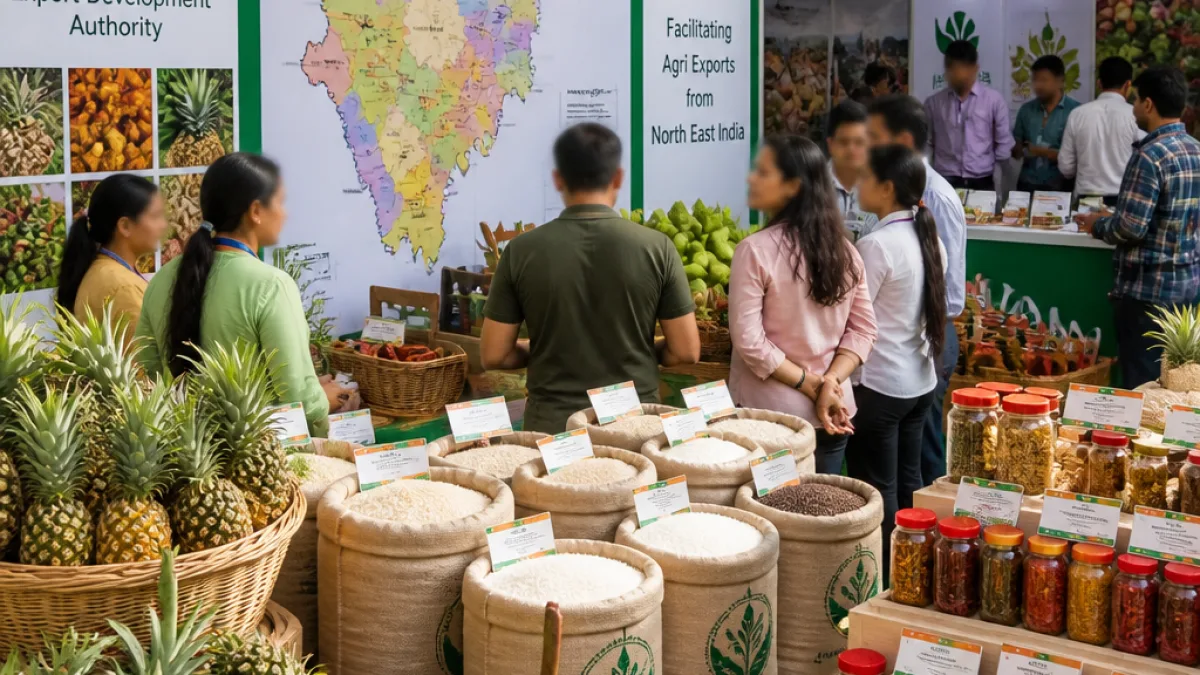
Exhibitors presented a selection of Tripura's organic and naturally produced items aimed at niche international markets, including Queen Pineapple, GI-tagged Kalikhasa rice, organic ginger and turmeric, black sesame, jackfruit and scented lemon. Organisers said the event was structured to promote direct contact between producer groups, exporters and overseas buyers, enabling discussions on sourcing volumes, quality specifications and long-term supply arrangements.
Officials and partners
The programme was run by APEDA in partnership with the Tripura State Organic Farming Development Agency (TSOFDA) and the state Department of Agriculture and Farmers Welfare. Tripura's Agriculture Minister, Ratan Lal Nath, attended, along with Tripura Agriculture and Horticulture Secretary Apurba Roy, senior APEDA representatives and an executive from IFOAM Organics Asia.
“The state’s farmers produce quality organic products with strong potential in domestic and international markets,” Tripura Agriculture Minister Ratan Lal Nath said, urging stronger market linkages for farmer groups.
Expected outcomes and practical implications
APEDA said the meet aimed to generate business linkages and support long-term sourcing partnerships that could improve market access for farmers in the northeastern state. For producer groups and exporters, the primary benefits envisaged include:
- Direct contact with international buyers to clarify quality, packaging and certification needs;
- Opportunities to negotiate offtake arrangements and pilot shipments;
- Visibility for GI-tagged and regionally distinctive items that command premium prices in niche markets.
Officials also highlighted the role of such platforms in identifying gaps in production scale, post-harvest handling and compliance with international organic standards—factors that affect a commodity’s export competitiveness. The presence of buyers from multiple continents was intended to expose local suppliers to diverse market requirements.
What organisers and farmers need to follow up
Industry and government sources emphasised that converting interest into trade will require concerted follow-up on certification, consistent volumes and logistics. Tripura’s agencies will need to prioritise:
- Ensuring participating farmer groups meet organic certification and traceability norms required by overseas markets;
- Supporting aggregation and value-addition to supply consistent lot sizes demanded by buyers;
- Facilitating linkages with exporters who can manage international shipping, phytosanitary clearances and buyer contracts.
While the event created initial contact points, the scale of export growth will depend on commercial negotiations and supply-chain readiness. APEDA's role typically includes market development support and guidance on export procedures; the agency has used such buyer-seller meets elsewhere to seed long-term trade ties.
Background: Tripura’s organic advantage
Tripura has been promoting organic cultivation through state schemes and farmer collectives, and certain products from the state carry geographical identification tags that can add value in international markets. The meet in Agartala is part of APEDA’s broader effort to open up market channels for agricultural exporters from smaller states in India and to diversify sourcing for foreign buyers seeking organic and specialty items.
Officials said follow-up actions will determine whether the contacts made translate into confirmed orders and sustainable export flows for Tripura’s farming communities.