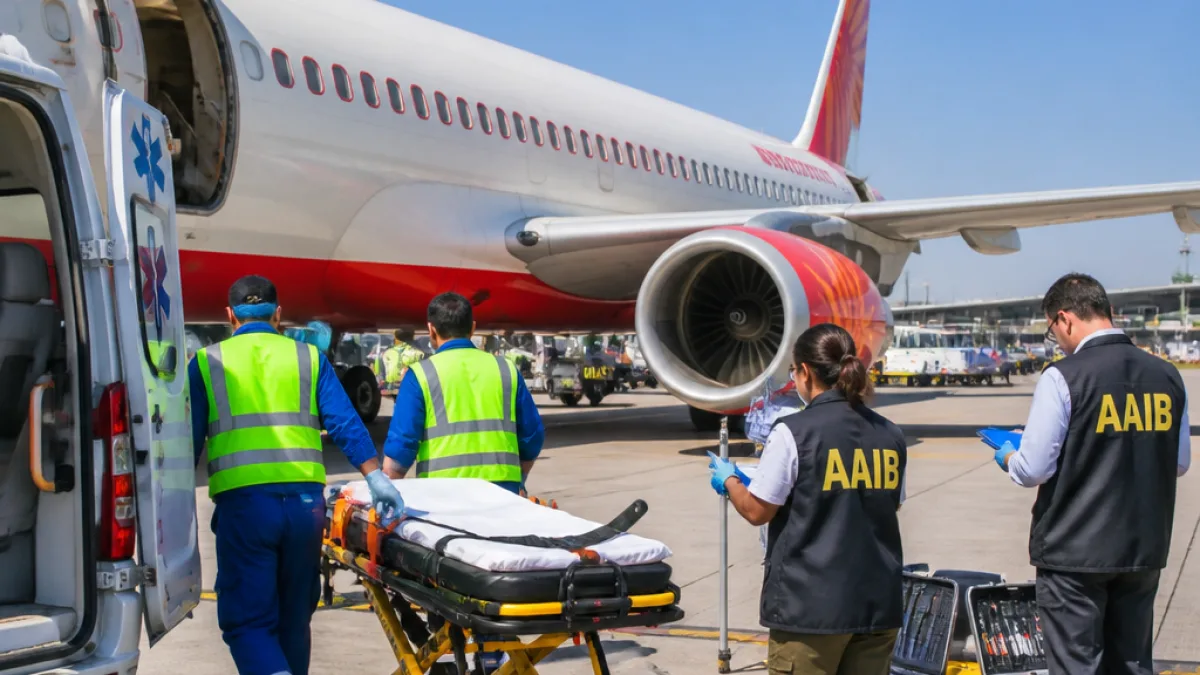
The Pilot-in-Command of Air India flight AI2379 has returned a confirmatory laboratory positive result for marijuana, sources said on Tuesday, days after the aircraft experienced a sudden loss of about 300 feet in altitude while en route from Phuket to Delhi on August 4. The disclosure comes as the Aircraft Accident Investigation Bureau (AAIB) continues a comprehensive probe into the incident.
Flight details and immediate aftermath
The Airbus A320, registered VT-EXO, was carrying 137 passengers — including three infants — and eight crew members (two pilots and six cabin crew) when the altitude variation occurred during cruise. Government statements said the aircraft subsequently stabilised and landed safely at Delhi. Medical facilities reported 24 people — 20 passengers and four cabin crew — were injured during the event.
Both pilots underwent mandatory psychoactive substance screening following the incident. While the co-pilot's screening did not indicate a concern, the Pilot-in-Command's initial test required further confirmation. The sample was sent to a designated laboratory and has now produced a confirmatory positive result for marijuana, according to sources.
Crews grounded; investigation scope
Both pilots have been taken off the flying roster pending the outcome of the investigation, sources said. The AAIB said that it is examining the event under applicable provisions and International Civil Aviation Organization (ICAO) protocols, and has issued the requisite notifications to ICAO and concerned states.
Investigators have said they will assess the aircraft and its systems, recorded flight data, operational and maintenance records, medical information and interviews with personnel involved. Reports that the aircraft suffered multiple technical anomalies during the flight are also being examined.
"The AAIB has cautioned against drawing conclusions from any isolated piece of information while its investigation is underway, saying all technical, operational, medical and human-factor evidence will be examined in its entirety."
Technical anomalies reported
Sources who spoke to media earlier flagged a series of alleged technical faults during the flight, including an autopilot disconnect and multiple hydraulic issues. According to those reports, the co-pilot took manual control after the autopilot disconnected. The AAIB's formal probe will determine whether technical failures, human factors or a combination of issues led to the altitude variation and subsequent injuries.
Air India has not issued a public statement attributing cause; the airline is cooperating with investigators, sources said.
- Flight: AI2379 (Phuket to Delhi), Airbus A320 (VT-EXO)
- Onboard: 137 passengers (including 3 infants) and 8 crew
- Injuries: 24 people (20 passengers, 4 cabin crew)
- Testing: Pilot-in-Command confirmatory positive for marijuana; co-pilot negative
- Investigation: AAIB examining technical, operational, medical and human-factor evidence
What the probe will cover
The AAIB's remit includes scrutiny of the flight data recorder and cockpit voice recorder, analysis of aircraft systems and maintenance logs, review of crew training and duty schedules, and medical and toxicology reports. The bureau's statement stressed that isolated findings should not be taken as conclusive until the full evidence package is evaluated.
| Aspect | Detail |
|---|---|
| Aircraft | Airbus A320 (VT-EXO) |
| Passengers | 137 (including 3 infants) |
| Crew | 8 (2 pilots, 6 cabin crew) |
| Injuries | 24 (20 passengers, 4 cabin crew) |
| Key development | Pilot-in-Command confirmatory positive for marijuana |
Public safety and regulatory implications
The finding is likely to prompt scrutiny of pre-flight and random drug-screening regimes applied to flight crews, as well as the procedures followed after initial positive tests. Aviation regulators, the operator and investigators will need to reconcile toxicology results with flight-recorded parameters and maintenance histories before reaching conclusions on causation.
The AAIB's ongoing investigation will determine next steps, which could include recommendations on crew medical checks, operational protocols and technical rectifications if system faults are substantiated. Any enforcement or disciplinary actions will follow from the investigation's findings and applicable aviation laws and regulations.
The case remains under investigation and authorities have urged that no single piece of evidence be viewed in isolation until the AAIB completes its comprehensive analysis.
Aditya Khanna, AI Delhi Correspondent