Delegation raises long‑standing higher education shortfalls
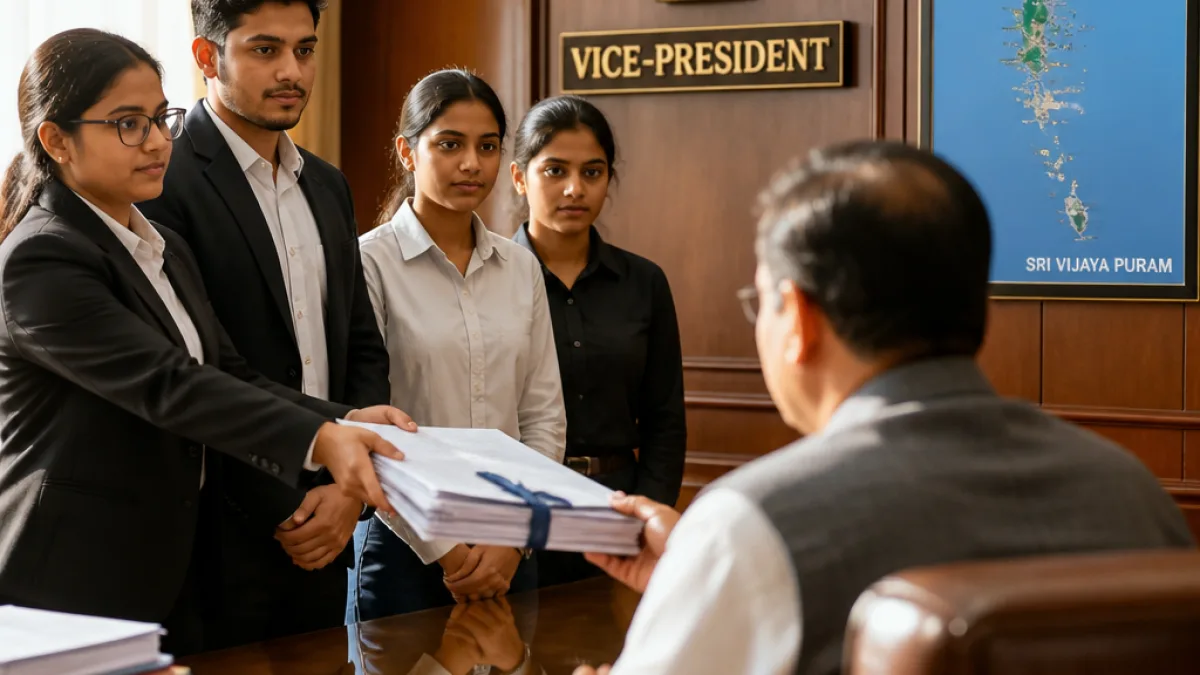
A delegation from the Akhil Bharatiya Vidyarthi Parishad (ABVP), representing students of the Andaman & Nicobar Islands, submitted a memorandum to the Vice‑President of India on Friday seeking the establishment of a full‑fledged, publicly funded Central University in the Islands and wide‑ranging reforms to local higher education.
The memorandum, presented during a meeting at the Vice‑President's office, highlighted persistent challenges faced by island students, including limited access to specialised courses, inadequate research facilities and constrained employment opportunities, the report said. ABVP sought an island‑centric approach that ties education reforms to broader development priorities such as healthcare, connectivity, tourism and the blue economy.
Vice‑President offers assurance to take up the matter with Centre
"The matter of establishing a Central University in the Andaman & Nicobar Islands would definitely be taken up with government of India,"
The delegation welcomed the Vice‑President's assurance as an encouraging step towards addressing a long‑standing aspiration of students and youth in the Islands, the report said. ABVP emphasised that their demand stems from a desire for equal opportunity rather than special treatment.
Key demands and institutional change sought
According to the memorandum, the ABVP urged:
- Establishment of a fully funded Central University to act as an umbrella institution for higher education and research in the Islands;
- A comprehensive review and restructuring of the present NSCBIHL/deemed university arrangements with meaningful stakeholder consultation involving students, teachers, parents and local governance bodies;
- Strengthening the existing seven government colleges, enhancing healthcare and research infrastructure, and creating better employment opportunities for local youth.
| Issue | ABVP demand |
|---|---|
| Governance | Central University under public funding |
| Infrastructure | Improved research and healthcare facilities |
| Access | More specialised courses and local employment pathways |
Local context and implications
Students and educators in the Andaman & Nicobar Islands have repeatedly flagged constraints arising from geographic isolation, small institutional scale and limited course offerings. A Central University, if established, could provide a unified structure for academic programmes, research funding and faculty recruitment, potentially reducing the need for island students to relocate to the mainland for specialised studies.
ABVP's memorandum also proposed an integrated development model that places education alongside strategic priorities such as the blue economy and tourism under a single policy umbrella. The organisation argued that linking higher education planning to sectoral development could increase local employment pathways and make curricula more relevant to island needs.
Process questions and next steps
While the Vice‑President's assurance signals central attention, establishing a Central University requires formal proposals, feasibility studies, and approvals from the Union government, including the Ministry of Education and Parliament where relevant. ABVP asked for stakeholder engagement in any restructuring of existing institutions, calling for consultations that include students, teachers, parents and Panchayati Raj institutions.
No timelines or formal commitments beyond the assurance were reported. The next procedural steps would typically involve submission of detailed proposals, assessment of resource requirements and legislative or executive action at the central level.
What this means for students
For island students, a Central University could mean expanded course options locally, greater access to research grants and scholarships, improved faculty quality through centralized recruitment, and stronger institutional links with national research bodies. ABVP framed the demand as a push for equal opportunity rather than special concessions.
The delegation called for prompt action and continuous engagement with island stakeholders to ensure any institutional changes address local priorities and do not disrupt existing institutions without adequate transition arrangements.
The memorandum and the Vice‑President's response mark the latest development in ongoing discussions about upgrading higher education infrastructure in the Andaman & Nicobar Islands. The matter will now await follow‑up within the central administration.