Project cannot be sanctioned without WRD clearance, official says
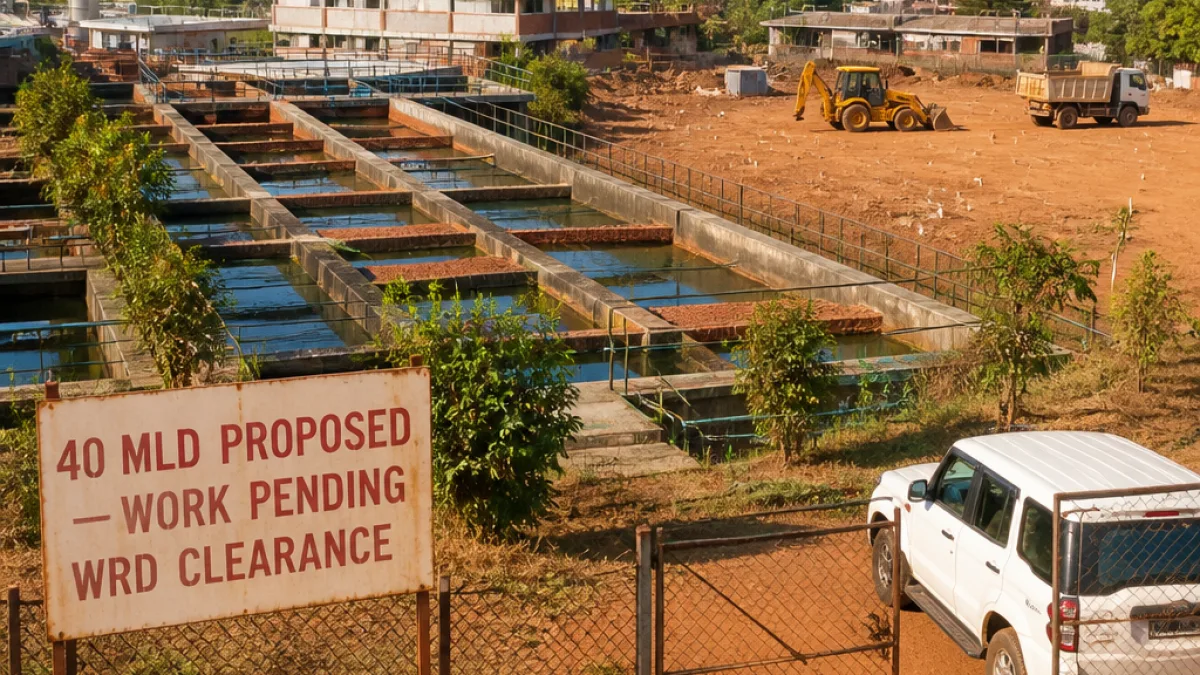
Construction of a proposed 40 million litres per day (MLD) water treatment plant at Opa Water Works, intended to improve drinking water supply to Tiswadi and Ponda talukas and support the Smart City Panaji initiative, has been delayed as the Water Resources Department (WRD) has not yet issued the mandatory water availability certificate, officials reported.
The upgrade involves adding a new 40 MLD plant adjacent to the existing facility and increasing the filtration capacity of the current 8 MLD unit by expanding its filter beds from five to ten and installing an additional pump, Assistant Engineer Sunil Shet said.
“The current five filter beds collectively filter around 8 MLD per day,” Shet said. “Although the proposed plant would take about two to three years to complete, the water availability certificate is required first to secure project sanction.”
The project is being planned by the Department of Drinking Water (DDW), which constructs treatment facilities, while the WRD must certify that sufficient raw water is available for the expanded capacity. Without that certification, the project cannot obtain formal sanction or funding clearance, delaying procurement and construction schedules.
Existing capacity and expected gains
Opa Water Works presently runs five treatment units of various capacities that together supply 152 MLD to Ponda and Tiswadi talukas. The breakdown of existing plants is:
- 8 MLD unit (current five filter beds)
- 12 MLD unit
- 27 MLD unit
- 40 MLD unit
- 54 MLD unit
| Plant capacity (MLD) | Filter beds (as reported) |
|---|---|
| 54 | 8 |
| 40 | 4 |
| 27 | — |
| 12 | 4 |
| 8 | 5 (to be doubled) |
Shet said the proposed works — both the new 40 MLD plant and augmentation of the 8 MLD unit to 16 MLD — were intended to strengthen supply to Tiswadi taluka and extend improved water delivery to Madkai, Priol and surrounding villages in Ponda taluka.
Why the WRD certificate matters
The WRD certificate confirms availability of raw water resources for any new or expanded drinking-water project. Officials from the DDW said the certificate is a precondition for formal project sanction, after which funds are released and construction timelines become firm. In the absence of WRD clearance, tendering, procurement and on-site work remain on hold.
Project proponents estimate the construction phase would take around two to three years once sanction is granted. Local authorities have linked the expansion to broader objectives of improving urban water supply resilience for Smart City Panaji and meeting growing demand in rapidly urbanising pockets of Tiswadi and Ponda.
Local implications and next steps
The delay has implications for planning of distribution upgrades and for areas currently facing intermittent supply or rising demand. The proposed augmentation of the existing 8 MLD unit by doubling its filter beds would immediately lift its nominal treatment capacity to 16 MLD, easing pressure on other units if implemented.
- DDW must await WRD's certification before the project can be sanctioned and funded.
- Once sanctioned, the combined works (new 40 MLD plus the 8→16 MLD upgrade) are expected to be executed over two to three years.
- Enhanced capacity would aim to support Smart City Panaji and improve supply for peripheral villages in Ponda taluka.
Officials did not provide a timeline for when the WRD might issue the water availability certificate. The administration's next procedural steps will depend on WRD assessment of raw water sources and any conditions it may stipulate for allocation.
This development underlines the interconnected roles of departments responsible for water resource management and urban drinking-water provision, and the procedural checks that govern expansion of water-treatment infrastructure in Goa.