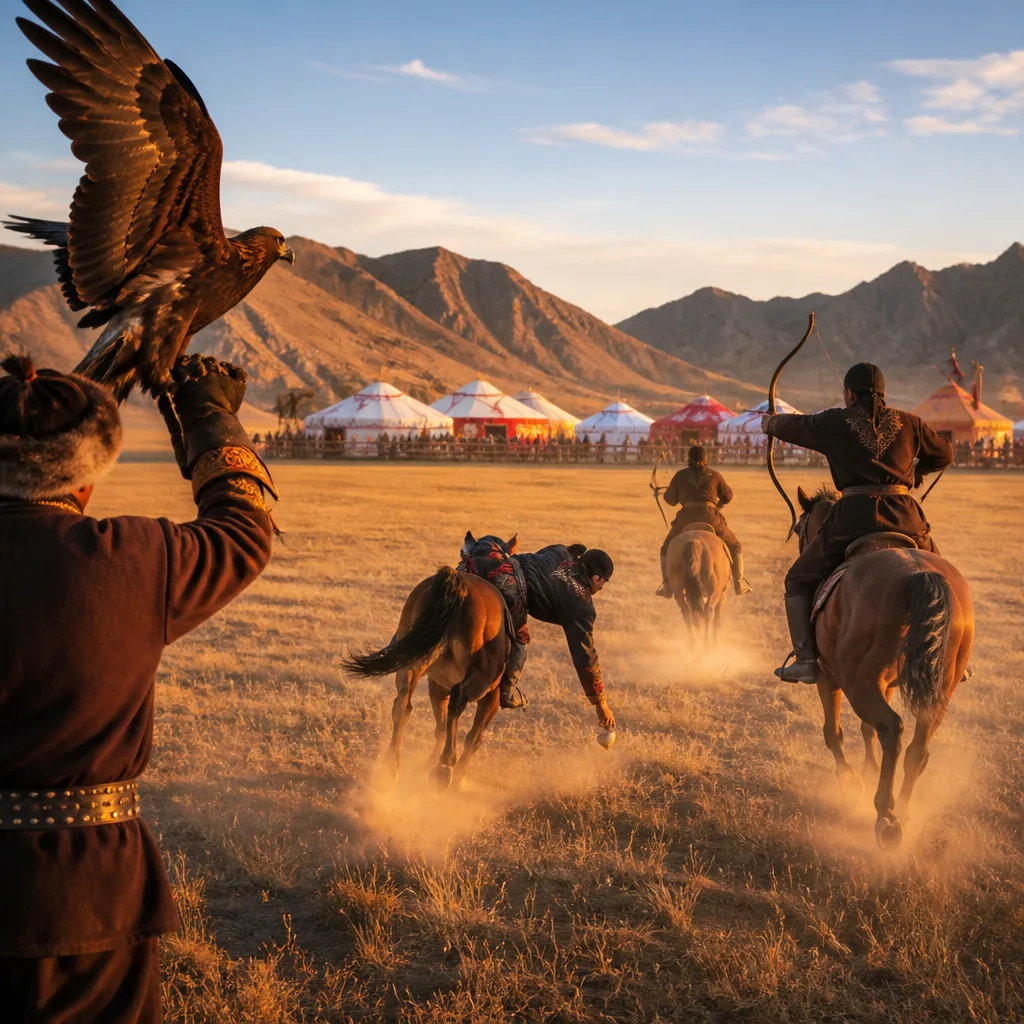
The sixth edition of the World Nomad Games is taking place this week in Kyrgyzstan, drawing competitors and spectators from around the globe to a festival of traditional Central Asian sporting disciplines and cultural demonstrations.
Where and when
Competitions and cultural events have been staged at the site in Kyrchyn Gorge, roughly 314 kilometres east of Bishkek. The multi‑day festival began on Monday and is scheduled to conclude on Sunday.
What’s on display
The programme centres on equestrian and hunting traditions that are part of the Turkic nomadic heritage of Central Asia. Among the contests and displays captured by international photographers are:
- Horseback archery — archers shooting while mounted at speed.
- Tyiyn enmei — a rapid equestrian skill in which riders pick up a coin or pouch from the ground while galloping.
- Kok‑boru (buzkashi) — a full‑contact mounted game in which teams vie to place a goat carcass into a scoring area.
- Hunting‑bird exhibitions — handlers present golden eagles and other raptors used in traditional falconry.
Photographs circulating from the site show riders competing closely in the kok‑boru matches, archers taking aim during timed rounds, and participants parading with their eagles — all elements intended to revive and sustain practices linked to nomadic lifeways.
Scale and significance
Organisers report athletes from 104 countries are taking part, underlining the event’s growing international profile. While the contests are rooted in the history and customs of Central Asia, the gathering functions as both a sporting festival and a cultural showcase.
| Detail | Information |
|---|---|
| Edition | 6th World Nomad Games |
| Location | Kyrchyn Gorge, ~314 km east of Bishkek, Kyrgyzstan |
| Participation | Competitors from 104 countries |
| Duration | Began Monday; concludes Sunday |
Why it matters
For countries across Eurasia, and for diasporas and enthusiasts worldwide, the Nomad Games are a platform to keep traditional skills alive and to present them to new audiences. The event also fosters cross‑border sporting ties that differ from mainstream international competitions by emphasizing cultural continuity as much as medals.
Photographers from major international agencies documented key moments at the venue: mounted players contesting possession in kok‑boru, riders performing the swift pick‑up manoeuvre, and handlers demonstrating raptors that historically assisted hunters across vast steppe landscapes. Coverage highlights both the competitive intensity and the ceremonial atmosphere that surrounds the festival.
Context and possible consequences
Beyond sport, the games are an instrument of cultural diplomacy. They can strengthen Kyrgyzstan’s visibility on the world stage and promote tourism connected to cultural heritage. At the same time, staging a large international event requires significant logistical and organisational capacity — from animal welfare and competitor safety to accommodations for the influx of foreign delegations and media.
For Canadian readers, the World Nomad Games are a reminder of how sporting events can serve as vehicles for cultural preservation and international exchange. They also illustrate how regional traditions — in this case the Turkic nomadic legacy — are finding renewed audiences and participation from across the globe.
The festival runs through Sunday, when final competitions and closing ceremonies will bring the weeklong celebration of nomadic sport and culture to a close.