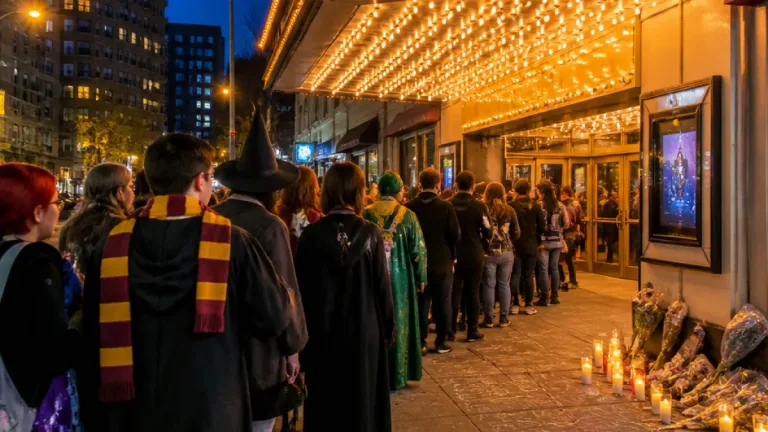

Gloria Steinem and Dolly Parton died within a week of one another — Parton on Aug. 25 and Steinem on Sept. 2 — prompting a global outpouring of grief and a renewed debate about what counts as feminist work in the public sphere.
Two public figures, different approaches
Both women have been widely credited with advancing women’s autonomy, but they did so in markedly distinct ways. Steinem, a central figure in organised feminist activism, built institutions and public campaigns: she wrote investigative pieces that exposed workplace exploitation, cofounded Ms. Magazine and made sustained interventions in policy and public conversation.
Parton cultivated a different kind of influence. A country-music superstar and businesswoman, she embraced a persona that was flamboyant and accessible; she declined the feminist label while demonstrating through her career the capacity for women to define themselves on their own terms. Her music and public presence invited a broad audience into conversations about aspiration and self-determination.
Public reaction and cultural meaning
Responses to their deaths emphasised both the contrasts and the overlaps in their work. As one commentator put it, “Dolly taught us to dream big. Gloria taught us to speak up.” Many obituaries and opinion pieces have argued the pair can be read together as complementary models of empowerment: one explicitly political and institution-building, the other cultural and entrepreneurial.
“If feminism means each of us finding your unique power, and helping other women do the same, Dolly Parton certainly has done both,” said Steinem in 1987 when Ms. Magazine named Parton one of its “Women of the Year.”
Media outlets and commentators have revisited the historical record to highlight moments when the two women intersected in public discussion. Ms. Magazine republished Steinem’s 1987 essay about Parton with an editor’s note following their recent deaths, underscoring how Steinem publicly framed Parton as a figure whose career advanced women’s agency even if she did not adopt the label “feminist.”
Legacy and unanswered questions
The nearly simultaneous losses have produced the question: who will succeed them as visible standard-bearers for women’s rights and cultural autonomy? Many who wrote about the deaths suggested there is no single successor, noting instead a diffuse landscape of activism, art and entrepreneurship that carries forward elements of both women’s projects.
- Steinem: remembered for overt political activism, investigative journalism and institution-building.
- Parton: remembered for cultural reach, storytelling through music and a refusal to be boxed into political categories while still expanding women’s possibilities.
- Public reaction: framed the two as complementary forces in a multigenerational conversation about agency and choice.
Dates and context
| Figure | Date of death |
|---|---|
| Dolly Parton | Aug. 25 |
| Gloria Steinem | Sept. 2 |
The twin departures have encouraged reflection across generations about how feminism is practised in public life — whether through marches and magazines, or through songs, business acumen and mass appeal. Commentators have pointed out that while the language and methods differed, both women modelled a form of autonomy that helped open space for others to make their own choices.
As cultural institutions and writers continue to assess the women’s contributions, the conversation is likely to focus on how movements for gender equality can combine political organisation with the kind of cultural influence that reaches millions. In that sense, the passing of these two icons at nearly the same time has crystallised a broader question for feminist and cultural historians: how to carry forward both the structural work Steinem championed and the wide-reaching, identity-making influence Parton embodied.