A caver trapped vertically in a cramped section of Rat’s Nest Cave in Canmore, Alta., was rescued late Saturday after an operation that used volunteer-built underground radio technology for the first time in a live incident.
Search and Rescue Alberta said the man became pinned in a tight spot known among cavers as the “Psych Squeeze” at about 11:30 a.m.. The Alberta/BC Cave Rescue team, part of Search and Rescue Alberta, mobilized alongside Canmore Fire Rescue and Kananaskis Mountain rescue members to free him.
Slow, technical extraction
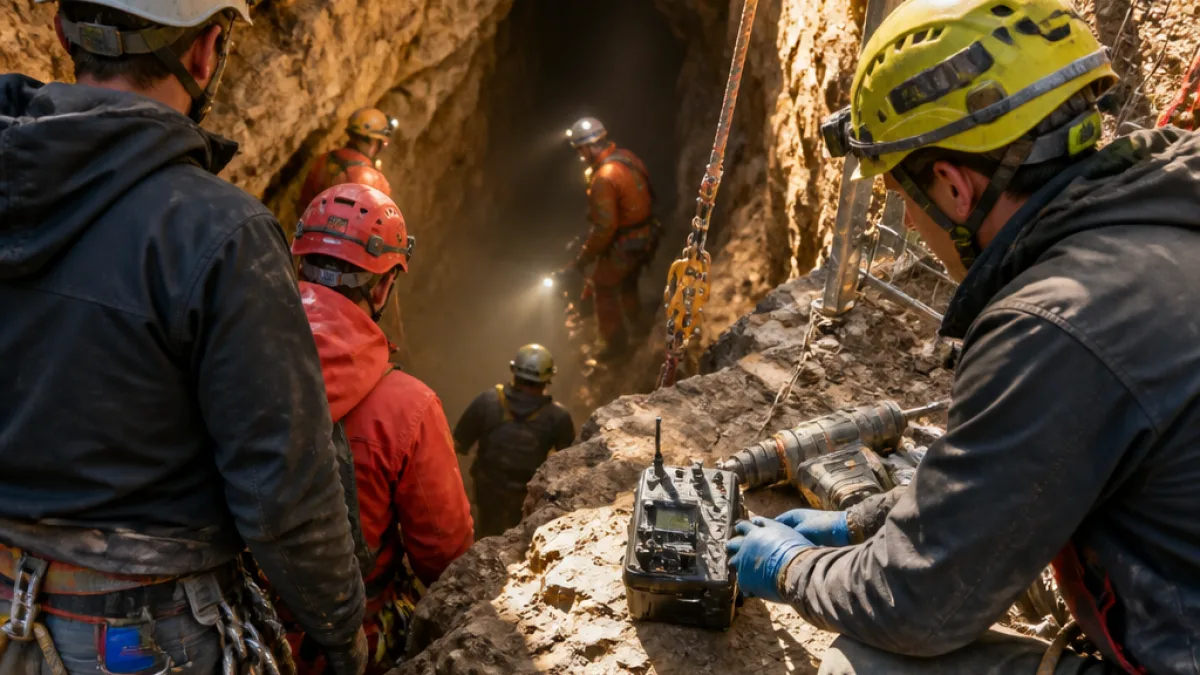
Rescuers used hammer drills to remove rock while easing the trapped person out at a rate described in the incident statement as “inches per hour.” The man was freed around 10 p.m. and finally emerged from the cave at about midnight.
The operation involved volunteers and emergency personnel from multiple units: 13 cave rescuers, 10 firefighters and two Kananaskis Mountain rescue members took part in the mission, according to Search and Rescue Alberta.
New radio tech used underground
For the first time in a live rescue, teams employed a cave radio system developed by members of Alberta/BC Cave Rescue to transmit messages through rock where conventional communications are unreliable or impossible.
“By providing reliable text-based communications from deep inside caves to the surface, or between different locations in a cave, teams can now deploy with equipment that is purpose-built by the rescuers who will use them in the field,” Search and Rescue Alberta said in a news release.
The new radios use technology known as QDX-M, which the release says is capable of communicating through more than 500 metres of solid rock. Search and Rescue Alberta noted these units are smaller and lighter than older analog cave radios, whose technology is no longer serviceable.
Why the upgrade matters
Cave rescues are complex. Phones, standard radios and GPS rarely function underground. That forces teams to rely on line-of-sight signals or physically transporting messages, which adds time and risk. A radio that can pass text through rock shortens decision time and helps coordinate delicate, slow extrications.
The new system is the result of work by rescue volunteers who designed a purpose-built solution for a specific operational problem. Search and Rescue Alberta emphasised that commercially available options offering the same capability at an affordable price are currently lacking.
Local impact and safety reminders
The Rat’s Nest Cave, a popular destination for guided and technical caving near Canmore, has known hazards. The incident underscores the risks of tight vertical squeezes and the need for careful trip planning, appropriate gear, and training.
People heading into caves or other technical terrain in the Bow Valley and Kananaskis region should expect limited communication and longer-than-anticipated rescue timelines. Local authorities continue to advise recreationists to travel with experienced partners and to notify others of intended routes and return times.
- Time trapped: became pinned ~11:30 a.m.; freed ~10 p.m.; emerged ~midnight.
- Personnel on scene: 13 cave rescuers, 10 firefighters, two Kananaskis Mountain rescue members.
- Technology: new QDX-M cave radio system capable of >500 metres through rock.
| Moment | Action |
|---|---|
| ~11:30 a.m. | Caver becomes pinned in Psych Squeeze |
| Afternoon–evening | Alberta/BC Cave Rescue mobilizes; hammer drills used to remove rock |
| ~10 p.m. | Caver freed from squeeze |
| ~midnight | Caver emerges from cave |
Search and Rescue Alberta did not provide further details about the caver’s injuries or condition beyond the completion of the rescue. The organisation said the cave radio had not been used in a live operation before this incident and represents an important step in improving underground communications.
This rescue highlights both the persistent hazards of technical outdoor recreation in Alberta’s front ranges and the value of volunteer-led innovation. The QDX-M system’s successful deployment will likely become a point of interest for other Canadian rescue units that confront similar communication challenges underground.
As rescue teams continue to test and refine the new equipment, the message to the public is straightforward: caving remains a technical activity requiring skill, appropriate equipment and a sober assessment of risk. When something goes wrong, the response can be slow and resource-intensive, even with improved communications.