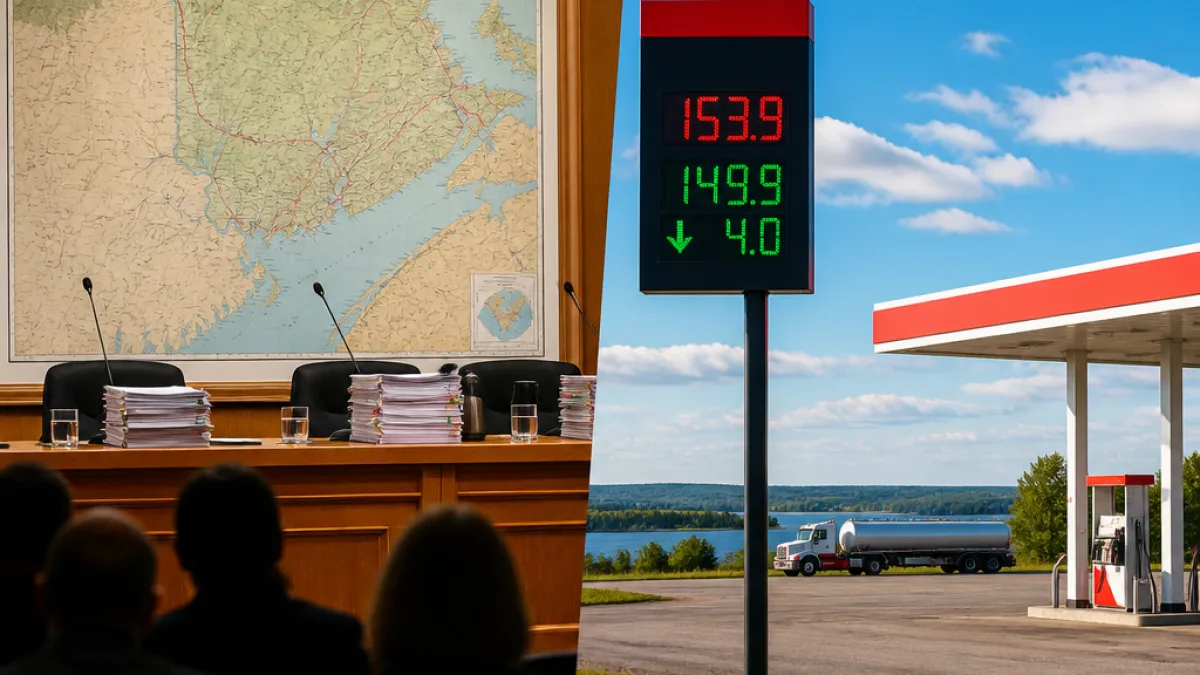
The New Brunswick Energy and Utilities Board (EUB) is this week conducting hearings into the province’s retail fuel margins after an expert report recommended a reduction that would, on paper, make gasoline "slightly cheaper."
What’s before the board
The hearings focus on how much profit retailers add to the wholesale price of fuel before selling it to consumers. According to the expert report submitted to the EUB, retailers in New Brunswick increased their earnings last year after selling "millions more litres" of fuel. The report’s authors concluded that a decrease in the regulated retail margin is warranted.
The proposal has drawn competing perspectives. Proponents say a lower margin would pass savings on to drivers at the pump. Opponents — including some retailers and industry representatives who appeared during the hearings — warned the board that cutting margins could have unintended consequences for small businesses and the continuity of retail service, especially in rural communities.
Why this matters to New Brunswickers
Gasoline margins can affect the price drivers pay directly at the pump and also shape the economics of operating a fuel station. In New Brunswick, where many communities are rural and distances between service centres can be long, margins support day-to-day business costs such as staffing, maintenance and compliance with safety and environmental rules.
Consumers are sensitive to fuel prices; even modest changes can be politically charged and immediately noticeable for commuters, farmers, fishers and small businesses that rely on road transport. The EUB’s decision will therefore carry both economic and social implications.
Positions presented at the hearings
- Expert report: recommends a decrease in retail margins because retailers realised higher earnings after selling significantly more fuel last year.
- Retailers and industry representatives: cautioned against a margin cut, citing potential harm to business viability and service provision, particularly in less populated areas.
- Consumers and advocates: are likely to push for any measure that reduces pump prices, though their voices at the hearings were varied.
How margins work — a plain explanation
Retail fuel margins represent the markup retailers add to the wholesale price to cover operating costs and generate profit. Regulators review these margins periodically to ensure they are fair to both consumers and businesses. The EUB’s review is part of that oversight function.
| Element | Function |
|---|---|
| Wholesale price | Cost of fuel before retail markups and taxes |
| Retail margin | Markup to cover expenses and profit for retailers |
| Pump price | Final price paid by consumers (includes taxes) |
Local economic implications
A reduction in retail margins would likely translate into smaller savings per litre for drivers, depending on how retailers respond. Some chains or independent stations might pass on the full decrease; others may absorb part of it or offset it through non-fuel sales, price promotions, or operational adjustments.
Retailers warned the board of risks that could follow a blanket margin reduction: compressed profits could make it harder for independent stations to remain open, potentially reducing convenience and competition in some communities. The hearings gave voice to those concerns, urging the EUB to weigh both consumer relief and retail viability.
What happens next
The EUB will consider the evidence presented during the hearings before making a decision on retail fuel margins. Any change to margins would be implemented through the board’s regulatory process. The timeline for a final ruling was not specified in the materials presented to date.
Until the board issues a determination, pump prices will continue to reflect prevailing wholesale costs, taxes and the current regulated margins. Motorists and local businesses will be watching the EUB’s deliberations closely, as even a modest adjustment could have ripple effects across the province.
As the hearings proceed, stakeholders on both sides underscore the trade-off regulators must balance: achieving savings for consumers while ensuring a resilient and accessible network of fuel retailers across New Brunswick.