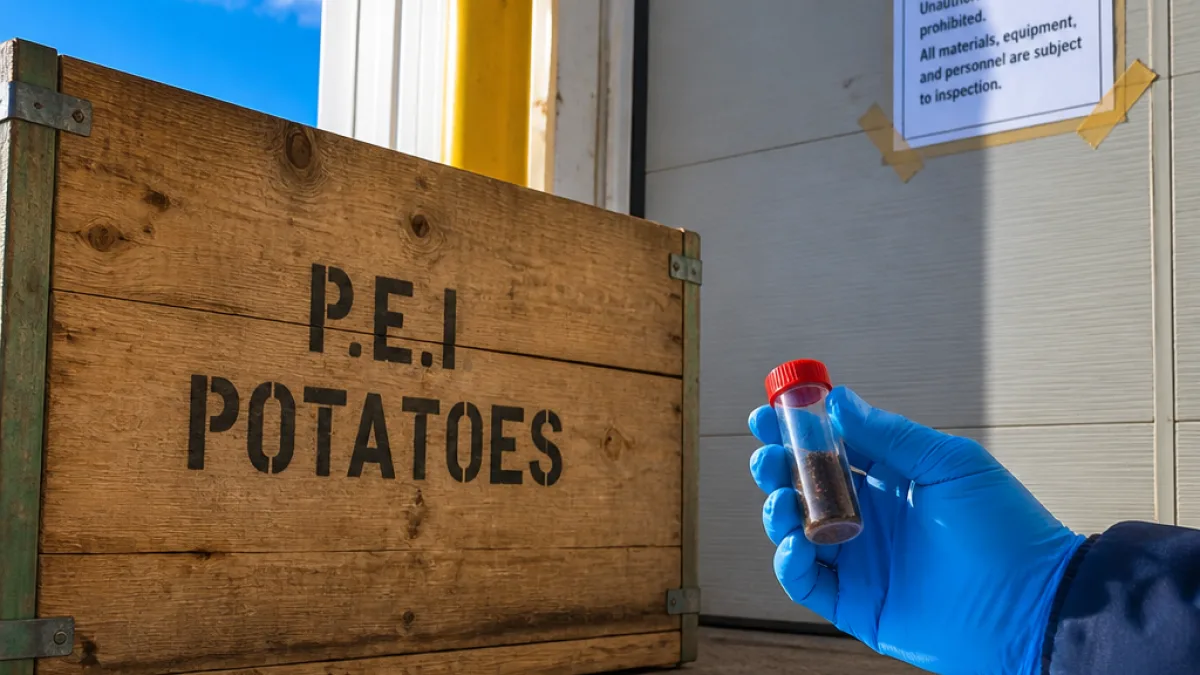
The United States has announced stricter import rules for potatoes from Prince Edward Island after the discovery of potato wart fungus in a soil sample from an Island farm this spring.
Federal agency cites May detection
The U.S. Department of Agriculture's Animal and Plant Health Inspection Service (APHIS) said the changes follow the detection of the potato wart pathogen in a soil sample taken as part of annual testing of P.E.I. potato fields in May. The new requirements come into force on Oct. 5.
The measures are aimed primarily at U.S. facilities that receive bulk shipments of P.E.I. potatoes for processing, packaging or repackaging. APHIS said the changes will alter how imported Island spuds may be labelled and certified, and place new limits on how potato waste generated during processing can be managed.
What the new rules do
- Ban on potato waste as animal feed: Potato waste from imported P.E.I. shipments will no longer be permitted for use as livestock feed in the United States and must instead be disposed of at an approved site.
- Tighter labelling and certification: Export certification standards and labelling requirements for potatoes destined for the U.S. market will be strengthened.
- No use as seed potatoes: Potatoes imported from P.E.I. will be prohibited from being used as seed.
"Managing generated potato waste will significantly reduce the risk of introducing potato wart disease to the United States," the agency said in a news release.
APHIS described the disposal requirement as a measure to lower the chance that infected soil or tubers could introduce the disease into U.S. production areas.
About potato wart and what it means locally
Potato wart is caused by a pathogen that spreads through infected seed tubers and contaminated soil. It is not a human health or food-safety risk, but it can substantially reduce the quantity of marketable potatoes by damaging tubers and limiting yields.
Prince Edward Island is known for its potato industry, with many farms participating in routine soil and seed testing. The soil sample that prompted the U.S. action was taken as part of those regular checks, the agency said.
Immediate implications for Island producers and exporters
The new U.S. measures affect the downstream handling of bulk shipments in U.S. facilities, which means processors and packagers south of the border will need to adopt facility-specific controls for disposal and traceability. For Island exporters, the practical effects include higher certification and labelling standards before goods cross the border and the prohibition on exporting potatoes intended to be planted as seed in the U.S.
Those changes may add compliance steps for P.E.I. exporters and U.S. buyers alike, and could alter existing business arrangements where potato waste was previously shared or repurposed.
| Rule change | Who it affects |
|---|---|
| Ban on using imported potato waste as animal feed | U.S. processors, packagers, repackagers |
| Stronger labelling and certification | P.E.I. exporters and U.S. importers |
| Prohibition on use as seed potatoes | Any U.S. entities planning to plant imported tubers |
Local growers who already participate in annual testing will likely be asked to provide documentation that meets the tightened certification standards. Exporters and packers on the Island will need to monitor guidance from the federal Canadian Food Inspection Agency and the U.S. authorities to ensure shipments comply with the new order.
What farmers and processors should watch for
- Confirm what new documentation U.S. importers will require before shipping.
- Discuss with buyers how potato waste will be handled once product crosses the border.
- Stay informed about inspections and testing protocols tied to certification standards.
The APHIS update emphasises that the measures are intended to manage disease risk rather than to address human health concerns. For now, the federal and provincial agencies responsible for agriculture and plant health will be the primary sources of technical guidance for growers and exporters navigating the new rules.
As the Oct. 5 effective date approaches, Island producers, packers and exporters are advised to connect with their trade partners and government contacts to ensure shipments meet the updated U.S. import requirements.
— Erin Callaghan, Prince Edward Island correspondent