CHARLOTTETOWN — Federal U.S. authorities have tightened requirements for facilities that receive bulk shipments of potatoes from Prince Edward Island following a recent detection of potato wart, a disease that can devastate potato production and linger in soil for decades.
What changed
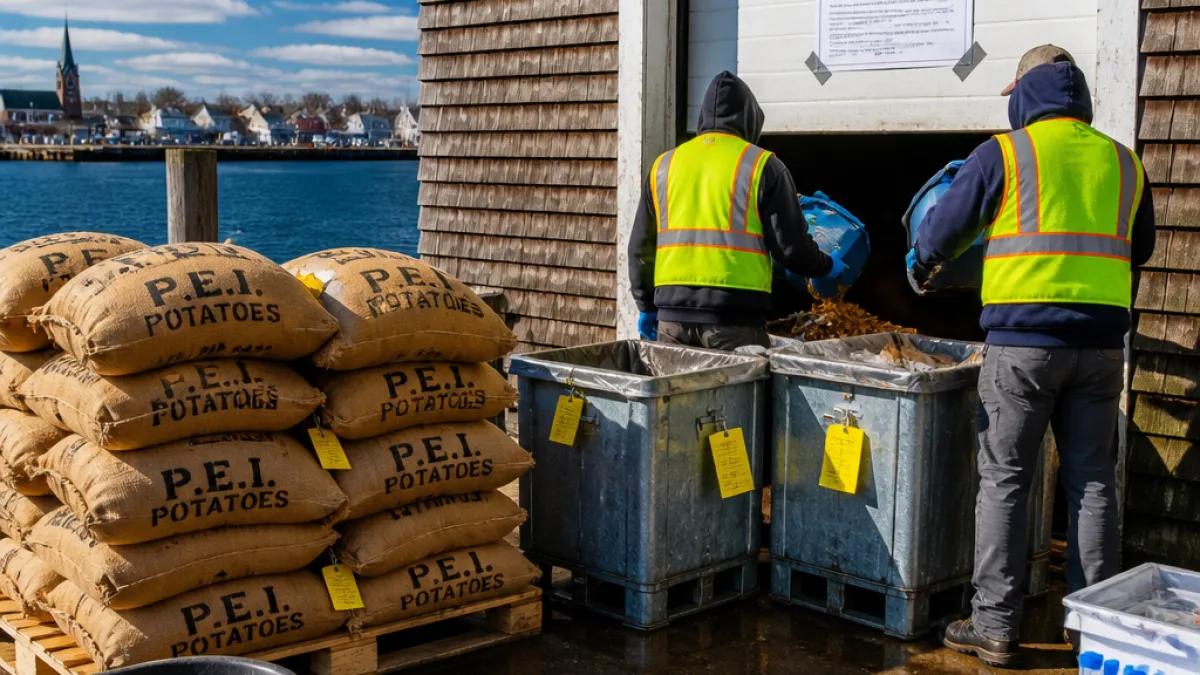
The U.S. Department of Agriculture’s Animal and Plant Health Inspection Service (APHIS) amended a federal order requiring U.S. handlers of bulk P.E.I. potatoes to dispose of waste material in a manner approved by the agency. The change focuses on ensuring that waste — including peelings, cull piles and other refuse — does not become a pathway for the potato wart fungus to enter U.S. production areas.
Those handling Prince Edward Island potatoes in bulk must now follow disposal practices that APHIS has deemed acceptable, a move the National Potato Council says is needed to protect American growers.
Why growers are concerned
Potato wart, caused by a fungal pathogen, is considered highly destructive because once established in a field it is extremely difficult to eradicate. The fungus produces spores that can remain viable in soil for long periods, posing a persistent threat to potato operations.
“It’s a highly destructive disease. Once you’ve got it, it’s nearly impossible to get it out of your production areas,”
The quote above comes from Kam Quarles, CEO of the National Potato Council, reflecting the concern expressed by U.S. industry representatives following the April detection on Prince Edward Island and a historical finding in 2000.
Local context and recent history
Potato wart was first identified on Prince Edward Island in 2000. The most recent detection occurred in April of this year. While the federal order does not stop shipments outright, it imposes stricter handling conditions to reduce the risk of spreading the pathogen.
For Islanders, potatoes are not just an agricultural commodity but a cornerstone of many family farms and local processing businesses. Any changes to export acceptance or handling rules in destination markets can carry real economic consequences, from increased compliance costs to potential disruptions in trade flows.
Practical implications for Islanders
The APHIS amendment affects U.S. facilities that receive P.E.I. potatoes in bulk. It centres on waste management protocols, which could influence how exporters package shipments and how importers handle offloads.
- Waste disposal: U.S. handlers must follow APHIS-approved disposal methods for potato waste from P.E.I. shipments.
- Risk mitigation: The measure is designed to limit any soil or spore transfer that could introduce potato wart into U.S. fields.
- Traceability and compliance: Exporters and importers may face additional record-keeping or inspection requirements tied to the new directive.
What remains unclear
The federal order specifies approved disposal practices but the public documents do not outline whether additional testing, certification, or pre-shipment measures in Prince Edward Island will be required. Nor does the amendment prohibit movement of potatoes; it aims to manage risk at the receiving end.
| Event | Date |
|---|---|
| First reported potato wart detection on P.E.I. | 2000 |
| Most recent detection reported | April (this year) |
Island producers and provincial authorities have previously engaged with federal Canadian and international partners on phytosanitary measures for regulated pests. This latest U.S. step underscores the long-term nature of potato wart management and the vigilance required at borders and receiving facilities.
What growers and the public should know
Growers and businesses involved in the P.E.I. potato supply chain should monitor communications from provincial agriculture officials and federal trade or plant health agencies for any guidance affecting exports. Meanwhile, the USDA’s adjustment is a reminder of how plant pathogens can shape trade rules and operational practices across borders. Local handlers and exporters may need to review packing, documentation and logistics to comply with any downstream requirements imposed by importers in the United States.
The amendment is aimed at keeping potato wart out of U.S. production areas by tightening how waste is handled in receiving facilities; its immediate practical effect will be observed in how both Island exporters and U.S. importers adapt their processes to satisfy APHIS conditions.