
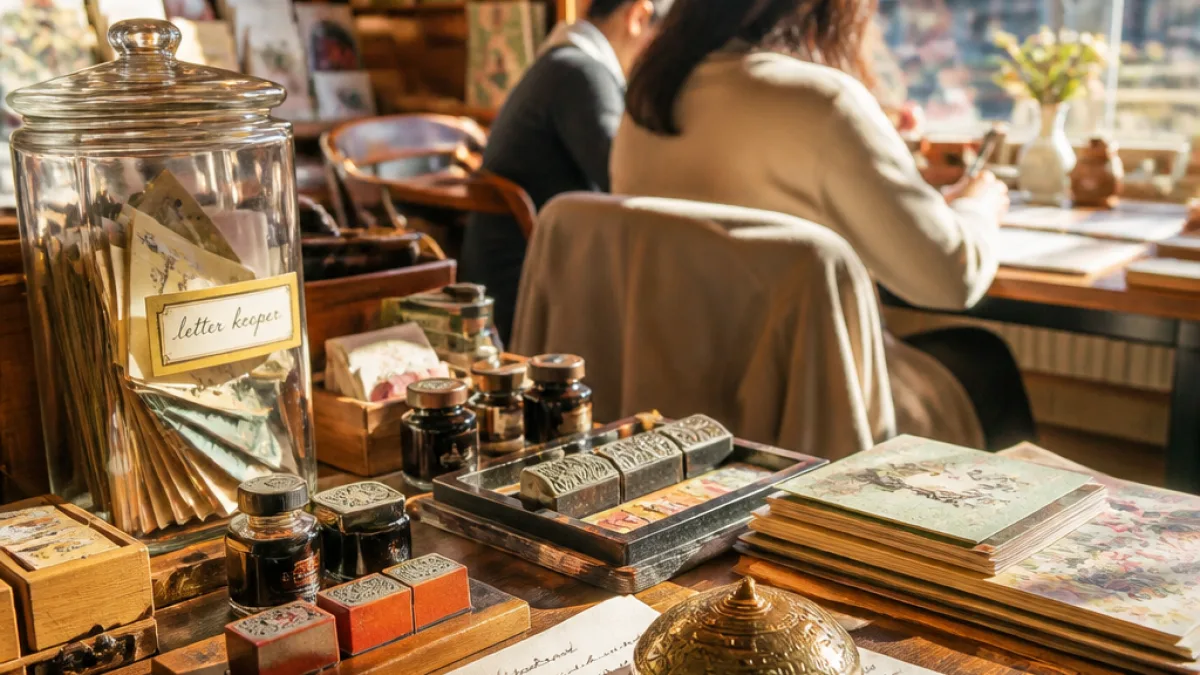
At a compact desk inside a neighbourhood stationery and letterpress studio in Richmond, people are taking time to write instead of tap keys. The shop recently became part of an international initiative that helps strangers become pen pals by routing letters through participating businesses that act as local “letter keepers.”
Analog connections in a digital age
Hey June, the shop run by owner Maria Brown, joined the Sunday Letter Project this past summer as one of almost 50 U.S. locations enrolled in the network. The project allows a writer to drop a general letter to any participating shop; other customers can pick it up, respond and, if both parties wish, continue an exchange by addressing future letters care of their respective letter keepers.
The system removes the need to exchange home addresses and creates a public, curated mailbox where people can start conversations with strangers and maintain them if both agree. Since joining, Hey June reports letters arriving from other parts of the United States and internationally — including England and Australia.
- Participation: nearly 50 letter‑keeper locations in the United States.
- Correspondence reach: letters received from across the country and as far as England and Australia.
- Access: customers may drop by throughout the week to write, leave, or collect letters; the program is not limited to Sundays.
Materiality matters
Patrons are drawn not only to the prospect of conversation but also to the tactile aspects of letter writing: the choice of stationery, the selection of a stamp, ink colour and handwriting style. For a shop whose craft revolves around paper and press, the physicality lends the exchange a tangible intimacy some say is lost online.
"finding that humanity again,"
Those were the words used by Maria Brown to describe the appeal of handwritten exchange. The quote underscores the project’s aim: to foreground personal gesture and curiosity over the speed and anonymity of digital messaging.
Who is taking part
The Sunday Letter Project is organised as a network of letter keepers — independent stores that accept incoming general letters, make them available to visitors to pick up and reply to, and forward addressed letters when both writers decide to continue the correspondence. Hey June’s role mirrors that model: a local point of contact that connects customers to a broader, decentralised community of correspondents.
| Detail | Information |
|---|---|
| Letter‑keeper locations | Nearly 50 in the United States |
| International replies noted | England, Australia |
| Onsite access | Available throughout the week |
Although the project carries the name Sunday Letter Project, Hey June makes clear that customers need not wait for a single day to participate: people can drop in any day to compose a note, check for replies or collect incoming letters.
Local resonance and wider trends
The revival of postal pen‑pal culture at small shops like Hey June taps into broader interest in analogue practices — from handmade cards to letterpress printing — as consumers seek slower, more deliberate modes of expression. For neighbourhood businesses, hosting a letter‑keeping service can also provide a steady stream of foot traffic and an engaged community of visitors beyond typical retail transactions.
Even though the project described here operates in a different Richmond than our city, the story highlights a cultural moment many local retailers and community groups are already exploring: using tangible media and public spaces to foster connection in an era when digital channels dominate.
Richmond readers interested in similar offerings should look to independent stationery stores, libraries and community centres, which often host letter‑writing gatherings, postal art events and workshops that encourage the same kind of slower, letter‑based exchange the Sunday Letter Project promotes.














