The federal government will invest $10 million in Red Deer to replace outdated electricity meters with next‑generation smart devices, city officials and a federal minister said Monday.
Modernization aimed at reliability and efficiency
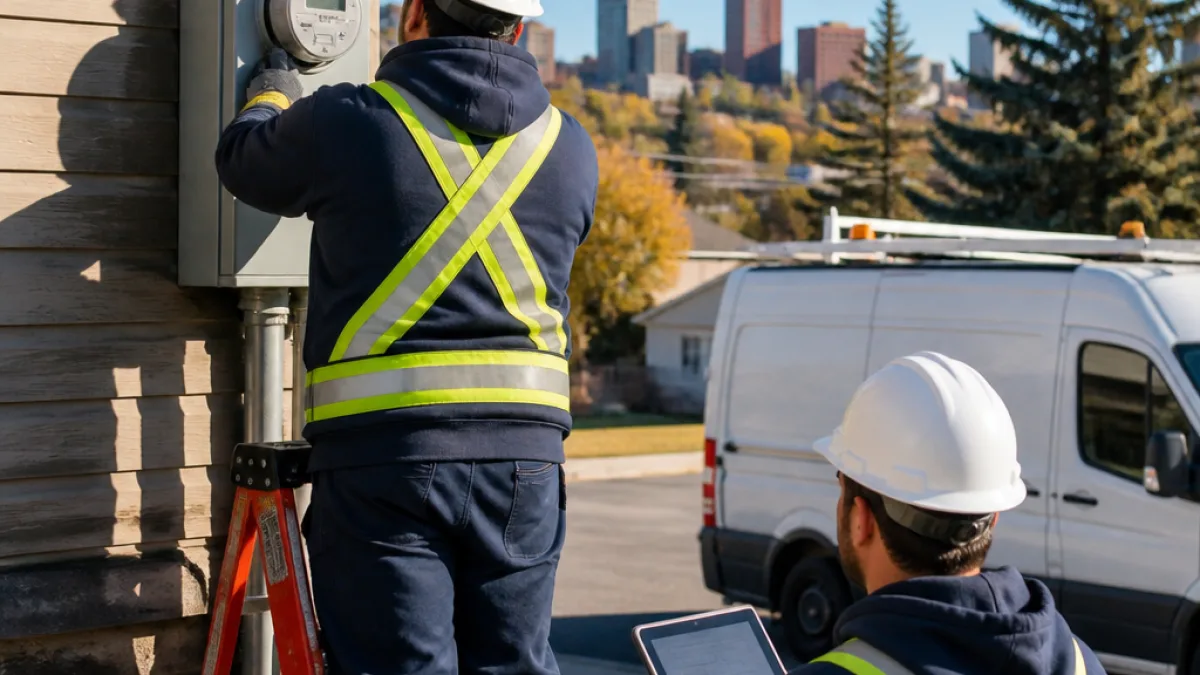
The funding, announced in Red Deer by Treasury Board president Shafqat Ali, comes through Natural Resources Canada’s Smart Renewables and Electrification Pathways program. The money will help the city move to Advanced Meter Infrastructure (AMI) 2.0, technology municipal officials say will detect outages faster, allow remote meter reads and provide better information to manage the grid.
City leaders say the upgrade replaces meters that are often hard to repair and expensive to maintain. The municipality estimates more than 45,000 residential and business meters will be swapped out as part of the program, and that nearly half of those have already been replaced following a pilot in April and a wider rollout that began in June.
“This is about more than replacing meters. It will give us better information to manage our grid, help us identify outages faster, support preventative maintenance and allow meters to be read remotely rather than manually.”
The quote above was delivered by Mayor Cindy Jefferies at a news conference held at Heritage Ranch, where city and federal officials outlined the project’s scope and timeline. City communications say the installation program is expected to be complete by early 2027.
Cost sharing and local context
Red Deer is contributing about $8.35 million, roughly half the total project cost, matching the federal commitment. The city says its current electricity infrastructure has operated for about four decades, and that around 30 per cent of the power system dates back more than 40 years.
- Federal contribution: $10 million
- City contribution: ~$8.35 million
- Number of meters to be replaced: more than 45,000
- Project completion target: early 2027
Officials framed the upgrade as part of a broader national effort. The federal program that supplied the funding is part of a $4.5‑billion initiative to reduce emissions, modernize electricity grids and support renewable integration under the Powering Canada Strong national strategy.
Operational benefits and regional positioning
City electrical staff say AMI 2.0 will support preventative maintenance and provide near real‑time data on consumption and system health. That capability is already in use in Calgary, which moved to AMI 2.0 almost a decade ago; Edmonton continues to operate with earlier meters.
During the announcement, Minister Ali cast the investment as part of a wider national push to strengthen Canada’s energy systems amid rising demand for electricity. He described the moment for the country as “pivotal,” and tied the work to efforts to ensure secure, resilient power as electrification expands.
What residents and businesses can expect
As meters are swapped, the city has said the transition will allow remote meter reading, reduce the need for manual site visits and improve billing accuracy for households and commercial customers. Faster outage detection should also decrease the time customers are without power during disruptions.
| Item | Detail |
|---|---|
| Federal funding | $10 million |
| City contribution | ~$8.35 million |
| Meters to replace | More than 45,000 |
| Current rollout status | Nearly half replaced; completion by early 2027 |
Municipal officials say the project will impose minimal direct disruption to customers beyond access to meter locations during scheduled appointments. The city’s broader electrical system renewal is intended to address the challenges posed by ageing equipment while positioning Red Deer to manage future load growth as Alberta’s energy landscape evolves.
Red Deer residents who want more information or to schedule meter appointments are directed to the city’s electrical utility pages for details on timing and privacy protections related to smart meter data.