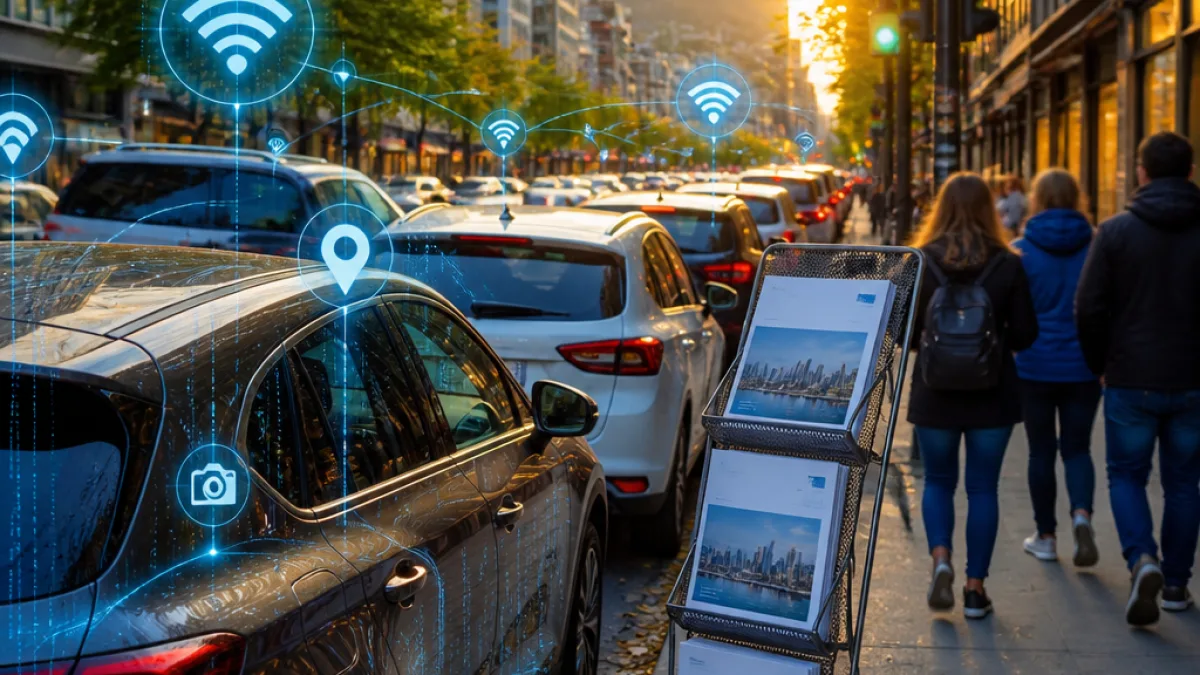
Modern cars equipped with internet connections and on‑board sensors are not just modes of transport but increasingly sophisticated digital platforms that collect, transmit and store vast amounts of personal information, a provincial ethics committee says in a report released this week.
Report highlights broad risks from vehicle data
The 64‑page analysis, published by Quebec’s committee on ethics in science and technology, identifies 12 major privacy risks associated with connected vehicles. Among the specific concerns the report names are cybersecurity weaknesses, intrusive location tracking, and the possibility of unfair insurance practices built on data gathered by car systems.
The committee also draws attention to footage captured by in‑vehicle cameras that can record people outside the vehicle — bystanders who have not given consent and may be unaware they were filmed.
“Because many skip reading the terms and conditions, it’s crucial people be aware of the risks to make informed decisions,” Luc Bégin, head of the committee, said in connection with the report.
While the report recognises benefits from connected technologies — such as enhanced navigation, vehicle maintenance alerts and collision avoidance systems — it stresses that those advantages can come with trade‑offs for privacy and fairness if safeguards are not put in place.
What this means for Quebec drivers
The findings have implications for multiple public‑policy areas, including consumer protection, privacy legislation and insurance regulation. The report suggests a need for clearer rules about data collection, limits on how insurers may use vehicle data, and stronger security standards for automotive software.
For individual drivers, the practical takeaways are straightforward but often overlooked: read privacy notices where possible, review in‑car settings related to data sharing and camera use, and ask questions when shopping for vehicles about what information is logged and who can access it.
- Check privacy controls in your infotainment and telematics systems.
- Limit location sharing where settings allow.
- Ask dealers and manufacturers how long data is retained and who can access it.
Consumer advocacy groups and privacy commissioners elsewhere in Canada have raised similar alarms in recent years as more vehicles ship with embedded connectivity and third‑party apps. The committee’s report adds a Quebec voice to a growing national and international conversation.
Summary of identified risks
The committee lists a dozen risks in total; the report specifically names several by example. The table below summarises those mentioned in the public summary and situates them within the broader set.
| Risk (as reported) | Examples or notes |
|---|---|
| Cybersecurity | Vulnerabilities in vehicle software and external connections |
| Location tracking | Continuous GPS logs that reveal personal movement patterns |
| Unfair insurance practices | Use of driving data to set or deny coverage without clear rules |
| Other risks | Report identifies a total of 12 distinct privacy concerns |
Officials and industry representatives will likely face questions about how to translate the committee’s recommendations into regulation or voluntary standards. Quebec’s existing privacy laws could come into play, and the report may prompt the provincial government to review regulatory gaps specific to automotive data.
For now, the committee’s assessment is primarily advisory: it aims to inform public debate and encourage both consumers and policymakers to take the data‑collection practices of connected vehicles seriously.
The emergence of cars as data platforms is part of a broader shift affecting devices from phones to home appliances. In Quebec, the report positions vehicles at the intersection of technological innovation, individual privacy and sectoral regulation — a nexus that will increasingly determine how people interact with both transport and data in everyday life.
As connected vehicles become more common on Quebec roads, the committee’s call for clearer information and stronger protections underscores an urgent choice for drivers: embrace new conveniences while insisting on transparency and safeguards, or accept automated systems whose implications for privacy and fairness remain inadequately addressed.