Quebec City-born Ashton takes poutine to Montreal with franchise push
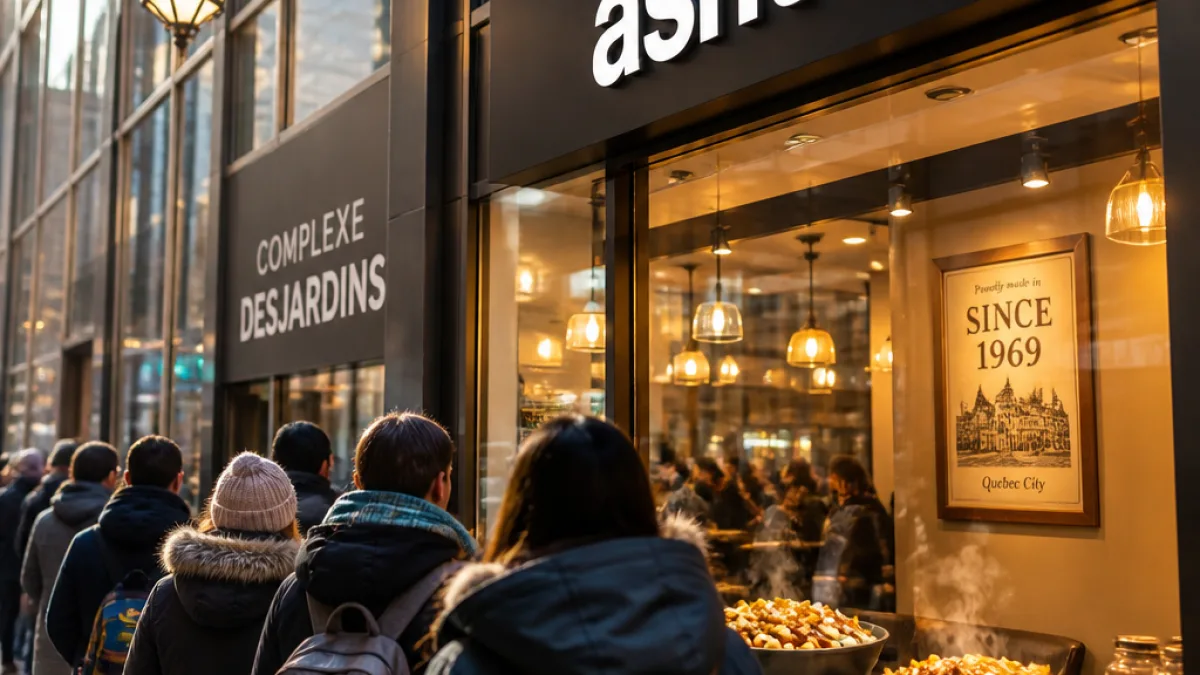
After more than half a century as a Quebec City institution, Ashton is taking a more ambitious step outside the provincial capital. The fast-food chain, founded in 1969 and synonymous for many with poutine, opened its first Montreal-island location this week at Complexe Desjardins, marking a renewed push into a market it briefly tried to crack in the 1980s.
The move follows a series of strategic changes that began after current owners Émily Adam and Jean-Christophe Lirette acquired the brand in 2022. They have steered Ashton away from a tightly controlled, corporate-operated model toward franchising — a shift company officials say has made growth outside Quebec City feasible.
“The model was really geared towards corporate-based restaurants. It was easier to manage the corporate chain of restaurants from Quebec City, where the head office was. Now, the fact that it’s a franchisee-based model and the company has a larger team means Ashton can support restaurants farther from home,” said Vincent White, marketing director for Ashton Group.
The Complexe Desjardins location is operated by franchisee Simon Robitaille. According to White, it will not be the chain’s last expansion on the island of Montreal; he said more openings for the Greater Montreal area are expected to be announced in the coming months. The company also tested the region when it opened a location at Premium Outlets Montreal in Mirabel in 2025, which the company says sees particularly good summer traffic.
From a regional favourite to a franchised chain
For many Quebec City residents, Ashton is part of the local food landscape: longstanding, familiar and regarded as homegrown. The transition to a franchise model represents a notable cultural shift for a brand that was historically run from its Quebec City headquarters with company-owned restaurants.
White acknowledged the company tried Montreal once before in the 1980s but said that experiment was brief. He suggested logistical problems at the time — including sourcing — contributed to the decision to pull back. The current leadership views the new franchise-driven approach and a bigger support team as the key differences that will enable sustainable expansion.
On its product side, Ashton is leaning on a selling point that speaks to changing consumer expectations: fresh ingredients in fast service. “We don’t have anything frozen in the restaurant,” White said, noting that the chain’s potatoes are prepared fresh on-site — a claim he suggested sets Ashton apart from many fast-food competitors.
- Founding: 1969, Quebec City
- Ownership change: 2022, Émily Adam and Jean-Christophe Lirette
- Recent test market: Premium Outlets Montreal, Mirabel (2025)
- New opening: Complexe Desjardins, Montreal (2026)
| Year | Event |
|---|---|
| 1969 | Ashton founded in Quebec City |
| 1980s | Short-lived Montreal experiment |
| 2022 | New owners take over |
| 2025 | Mirabel (Premium Outlets) opening |
| 2026 | Complexe Desjardins opening (Montreal island) |
Local impact and questions ahead
The expansion carries both practical and symbolic significance for Quebec City. Practically, franchising can create opportunities for local entrepreneurs to grow a familiar brand while expanding supply chains and distribution beyond the capital. Symbolically, seeing a homegrown restaurant attempt a foothold in Montreal signals confidence in the brand’s appeal beyond its municipal origins.
Still, questions persist about how Ashton will differentiate itself in a market where poutine and fast-casual options are ubiquitous. Company officials cite ingredient quality and in-restaurant preparation as key competitive advantages. Whether that will be enough to build long-term traction on the island remains to be seen.
For now, Ashton’s leadership is framing the Desjardins opening as the next logical step after a successful outlet in Mirabel and the organisational changes since 2022. For Quebec City residents, the development is a reminder that local brands can evolve and aim for broader visibility — even in a province where regional loyalties and culinary traditions run deep.