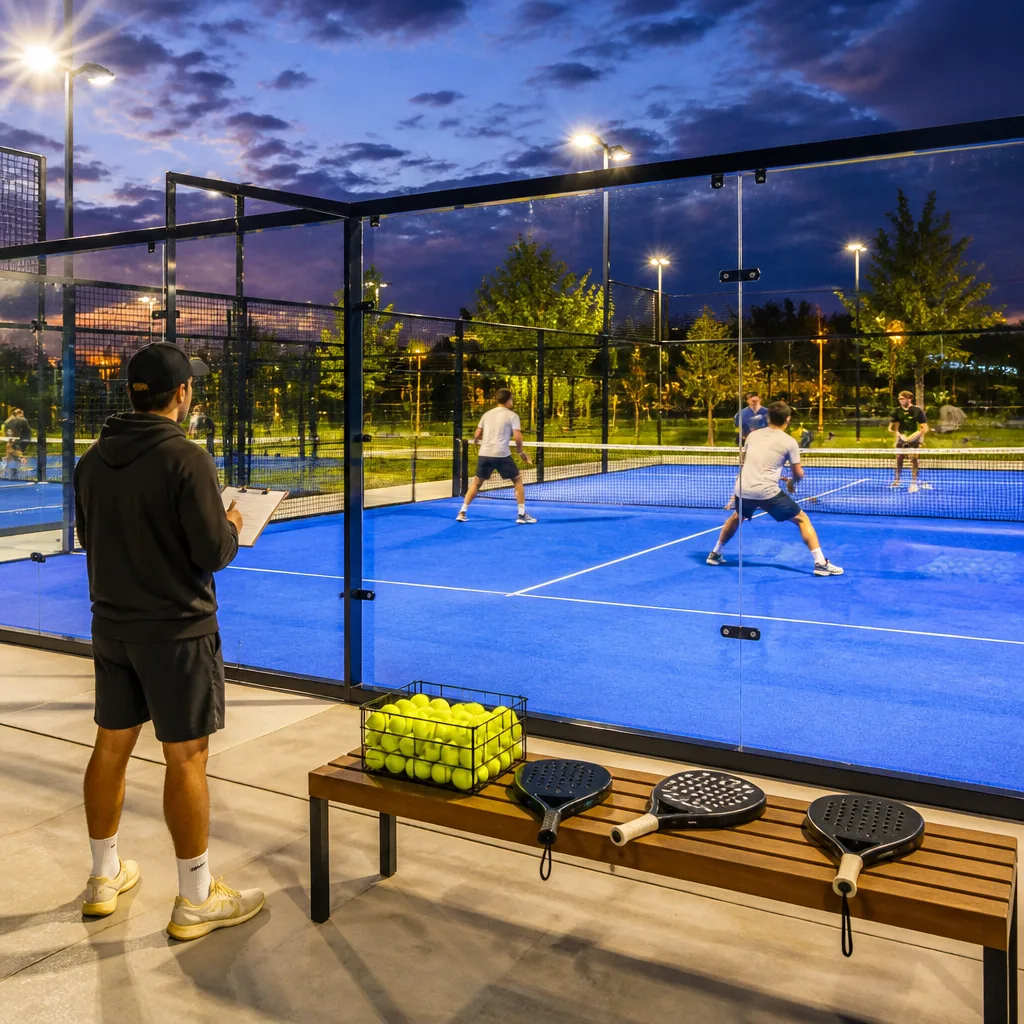
Padel — frequently characterised as a cross between tennis and squash — is drawing renewed interest as players and operators eye a low-barrier route into racket sports. Shorter courts, easier learning curves and a social, doubles-focused format give the sport a different profile from traditional racquet disciplines, and that combination is opening doors for rapid uptake.
Why padel is catching on
At its simplest, padel’s chief selling point is accessibility. Because the court is smaller than a tennis court and play is usually contested in pairs, newcomers can find rallies and success sooner than they might on a full-size tennis court. The enclosed court and the way the ball rebounds off walls create longer rallies and different tactical demands, which many players find engaging.
- Lower entry barrier: players do not need as much running capacity as tennis and can often enjoy meaningful rallies early in their learning curve.
- Social format: doubles play makes it easier to organise games and keeps sessions lively and communal.
- Facility flexibility: courts require less footprint than tennis courts, creating new possibilities for clubs and municipal facilities.
The mix of tennis- and squash-like elements means padel appeals to a wide range of ages and skill sets. For players coming from either tennis or squash backgrounds, padel offers familiar technical elements while rewarding different movement patterns and shot selection. For complete novices, the sport’s format can provide a gentler introduction to racket sports.
Implications for clubs and municipalities
Sport operators and municipal recreation planners are watching closely. Because padel courts occupy less space than full-size tennis courts, they can be considered when land supply is tight or when facilities want to diversify their offerings without large capital outlays. The social, doubles-focused nature of the sport also fits neatly with community programming objectives that prioritise participation and retention.
| Consideration | Padel impact |
|---|---|
| Space requirements | Smaller courts allow retrofit options for existing clubs or new urban sites |
| Programming | Easy to run beginner to social doubles sessions; attractive for mixed-age groups |
| Competitive pathway | Emerging opportunities for organised play at club and league level |
That said, adoption is not automatic. Successful integration often requires operators to think through court construction standards, booking systems that favour doubles play and beginner-friendly lesson plans. Equipment supply and the development of coaches with sport-specific expertise are practical steps clubs must address to turn interest into sustained participation.
What this means for players and the wider racket-sport scene
For individual players, padel provides another recreational option that pairs well with existing racket-sport participation. Players who already enjoy tennis or squash may add padel for variety or social reasons without needing to abandon their primary sport. For community sport organisers, the sport presents a chance to broaden the net of participants by offering a format that lowers technical and physical barriers.
While long-term forecasts for any emerging sport depend on a constellation of local and national factors, the immediate attractions are clear: social doubles play, a smaller court footprint and a blend of tactical elements from two established racquet sports. Those features give padel a plausible pathway from niche curiosity to mainstream recreational activity, provided clubs and municipalities are prepared to invest in the necessary infrastructure and coaching capacity.
Padel’s present moment looks less like a sudden craze and more like an opening act — a sport that, through practical advantages and social appeal, is well placed to expand as communities and clubs adapt to meet new player preferences.