Province backs multi‑year restoration at Second Marsh
Queen’s Park is providing $1,008,460 to support restoration and resilience efforts at Oshawa Second Marsh, provincial officials announced, boosting a project already partly funded by the federal government. The grant will help finance targeted habitat restoration and enhancement initiatives intended to strengthen the marsh’s ecological health and long‑term climate resilience.
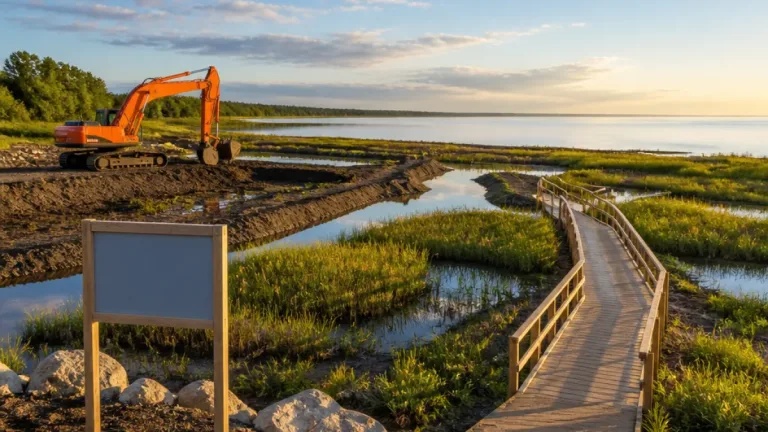
Second Marsh, located south of Colonel Sam Drive in Oshawa, is one of the largest coastal wetlands on Lake Ontario’s north shore. The site provides important habitat and ecological services, including support for several species at risk. The City of Oshawa and the Central Lake Ontario Conservation Authority (CLOCA) will lead the work over the next four years in partnership with community and industry groups.
Partners and species focus
CLOCA said the provincial funding will support delivery of the Oshawa Second Marsh Restoration and Resilience Plan. Over the four‑year project period, CLOCA will collaborate with partners including Ducks Unlimited Canada, Friends of Second Marsh and the Hamilton‑Oshawa Port Authority (HOPA) to restore and enhance wetland and coastal habitats.
The restoration work is explicitly aimed at improving habitat for species at risk identified by CLOCA and local partners. The announcement named the Least Bittern, Blanding’s Turtle and American Eel among species that will benefit from the targeted measures.
“Oshawa Second Marsh provides critical natural infrastructure – including habitat for species at risk,” said Todd McCarthy, Minister of the Environment, Conservation and Parks.
Oshawa’s mayor also commented on the investment, framing the marsh as a valuable local natural asset and noting the funding will advance restoration work to support species at risk and strengthen the marsh’s ecosystem.
Funding picture and purpose
The provincial contribution of $1,008,460 supplements an earlier federal grant: the project previously received $1,614,500 from the Canada Water Agency through the Great Lakes Freshwater Ecosystem Initiative. Together, those amounts will support a comprehensive approach focusing on species at risk, habitat enhancement and long‑term climate resilience.
| Source | Amount | Program |
|---|---|---|
| Province of Ontario | $1,008,460 | Species Conservation Program |
| Canada (Canada Water Agency) | $1,614,500 | Great Lakes Freshwater Ecosystem Initiative |
Local impact and longer‑term implications
Restoration at Second Marsh will take place in a landscape where urban development, port operations and changing lake conditions intersect. The marsh not only supports wildlife but also provides ecosystem services valued by residents, including flood mitigation, shoreline protection and recreational and educational opportunities.
For local stakeholders, the combined provincial and federal funding enables a coordinated effort to address both immediate habitat needs and broader resilience challenges posed by climate change. CLOCA’s chief administrative officer described the marsh as providing "important habitats and vital ecological services," and said the province’s funding supports CLOCA’s capacity to carry out the plan.
- Funding supports a four‑year restoration and resilience plan for Oshawa Second Marsh.
- Work will be delivered by CLOCA with partners including Ducks Unlimited Canada, Friends of Second Marsh and HOPA.
- Species targeted include the Least Bittern, Blanding’s Turtle and American Eel.
As work progresses, residents can expect to see habitat rehabilitation measures and possibly public engagement or volunteer opportunities through partner organisations, though specific project milestones and timelines beyond the four‑year window were not detailed in the announcement.
The provincial grant represents a significant provincial investment in a local natural heritage feature and illustrates how multiple levels of government and local partners are pooling resources to protect and restore coastal wetlands that are integral to Oshawa’s environmental health.