
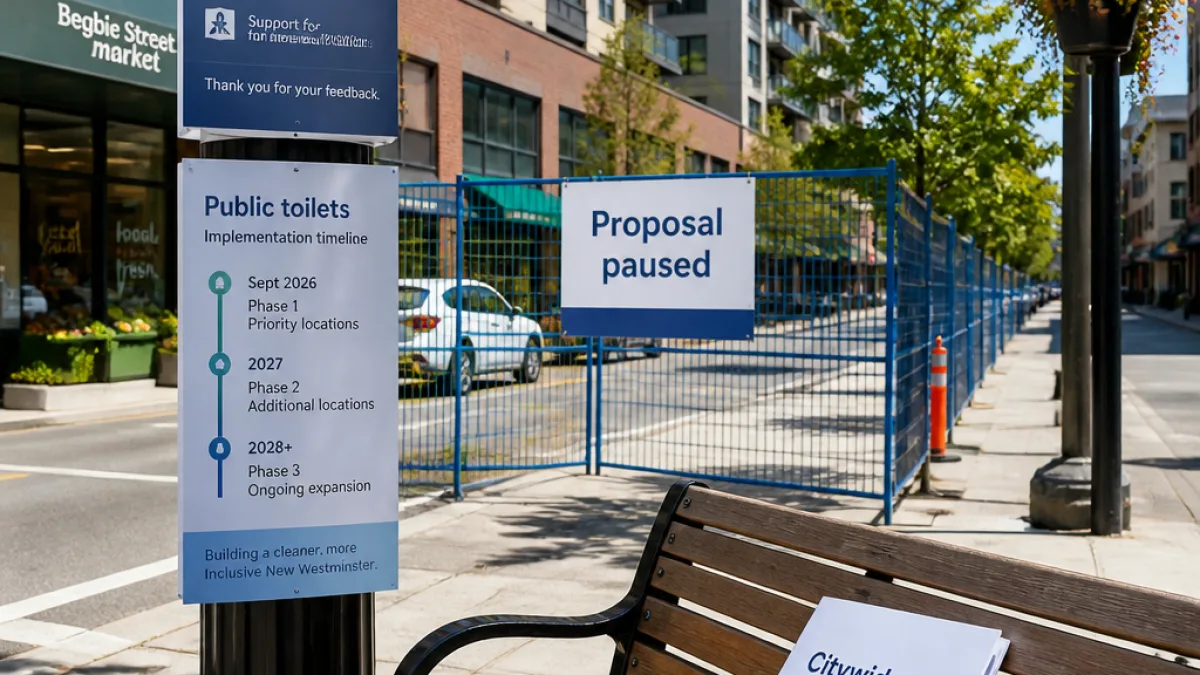
A proposal that once set off a contentious debate in downtown New Westminster has been reframed as a broader municipal plan: council has endorsed a citywide public‑toilet strategy and agreed not to proceed with the purchase and installation of a standalone public toilet on Begbie Street.
The issue first came to a head in June 2024 when council voted 4‑2 in favour of building a permanent free‑standing toilet in front of a condominium on Begbie Street. After substantial feedback from neighbours, businesses and other community members — including residents of the Interurban building — council reversed course a week later and asked staff to develop a comprehensive, citywide strategy before moving ahead with a downtown pilot.
Framing toilets as infrastructure
The strategy — which council endorsed in July — was prepared with input from two working groups: an interdepartmental city staff working group and an external working group made up of representatives from businesses, faith‑based organisations, non‑profits and advocacy groups, along with community leaders and people with lived and living experience of homelessness and social exclusion.
A staff report accompanying the plan says the strategy recognises public toilets as essential infrastructure that support public health, accessibility, dignity, economic activity and community participation. The report identifies two pressing problems the strategy aims to address: limited access to public toilets, and the growing presence of human waste in public and private spaces — which the city describes as significant issues affecting community well‑being and public health.
"A phased five‑year implementation plan beginning in September 2026 outlines short‑, medium‑ and long‑term actions to improve public toilet accessibility, availability, operations, partnerships, and long‑term infrastructure planning across the city, supported by a comprehensive governance structure."
Scope and intended beneficiaries
The endorsed strategy comprises 29 recommendations designed to address the needs of a wide cross‑section of residents and visitors. The staff report lists intended beneficiaries as the general public, seniors, people living with disabilities, people with underlying health conditions, families with young children, and people who are unhoused.
- Two working groups informed the plan: an internal city staff group and an external stakeholder group.
- The strategy contains 29 recommendations and a five‑year phased implementation timeline.
- Council will not proceed with the Begbie Street toilet purchase and installation.
Phased implementation and governance
The plan puts a timeline on work to expand and improve public‑toilet services. Beginning in September 2026, the city will begin a five‑year roll‑out divided into short‑, medium‑ and long‑term actions. The staff report says implementation will focus on several areas: accessibility and availability of facilities; operations and service models; partnerships with community organisations and businesses; and long‑term infrastructure planning. The report also calls for a comprehensive governance structure to guide the work.
| Element | Detail |
|---|---|
| Recommendations | 29 |
| Start of phased implementation | September 2026 |
| Timeframe | Five years |
Council’s decision represents a shift from a site‑specific pilot — which drew immediate local attention and objection from nearby residents — to a citywide approach that seeks to balance public‑health needs, accessibility and community concerns. The strategy aims to knit together municipal departments and local partners to provide a more consistent and planned set of public‑toilet services across New Westminster.
Public toilets have become a municipal concern in many cities as pressures on downtown spaces have intensified; in New Westminster, council’s endorsement signals a move to treat restroom access as part of infrastructure planning rather than an ad‑hoc response to isolated complaints or neighbourhood disputes. The five‑year timeline gives staff and partners time to pilot different models and establish governance to manage operations and partnerships.
With the Begbie Street installation off the table, the next steps will be the development and public reporting of the specific short‑ and medium‑term actions that staff say will begin in late 2026. For residents, the strategy promises a methodical, citywide effort to improve access, while aiming to address the public‑health and dignity concerns raised during the Begbie Street controversy.
Implementation details and how the 29 recommendations will translate into facilities or service models across neighbourhoods will be the crucial next chapter for council and the community to watch.
















