
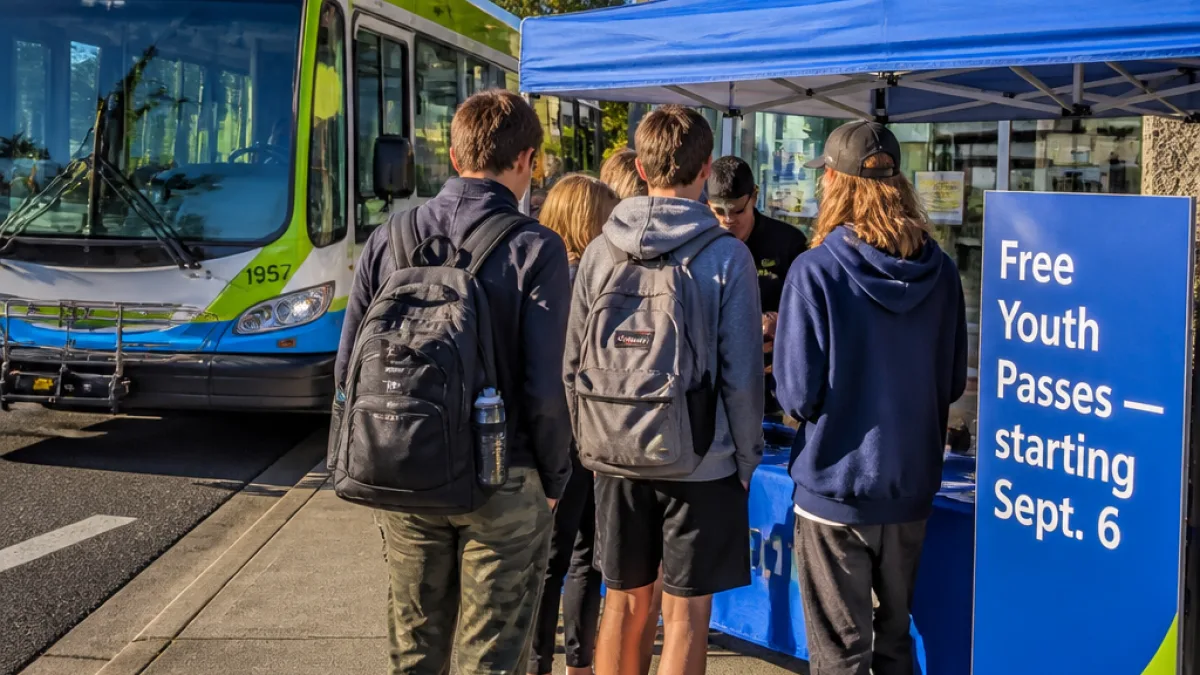
Free youth passes begin Sept. 6 across the Regional District of Nanaimo
The Regional District of Nanaimo will begin offering free bus passes to young people aged 13 to 18 this fall, a move officials say is aimed at improving access to school, work and recreation across the region. The two‑year pilot program officially starts on Sept. 6, with physical passes available to pick up from Aug. 17.
According to the regional district, youth passes will be distributed at a series of pop‑up events throughout the RDN and at the RDN transit office at 6300 Hammond Bay Road, Nanaimo. The office will offer weekday pickup from 8:30 a.m. to 4:30 p.m. starting Aug. 17.
“By making transit more accessible, we can help young people get to school, work, recreation and community services more easily, which benefits the whole community.” — Stuart McLean, RDN board chair
Officials say the program will run for a two‑year period, after which the regional district will review outcomes and decide whether to continue the initiative. The pilot follows a provincial scheme that already allows children under 12 to ride free under British Columbia’s “Get on Board!” program.
Practical details for pickup and timelines
The regional district has published locations for the pop‑up distribution events on its information page. Youth who cannot attend pop‑up events can obtain passes at the RDN transit building during the posted weekday hours.
- Program start date: Sept. 6
- Pass pickup begins: Aug. 17
- Office pickup hours: 8:30 a.m. to 4:30 p.m. on weekdays
- Pilot length: two years
| Item | Details |
|---|---|
| Eligible ages | 13–18 |
| Pass distribution starts | Aug. 17 (pop‑ups and Hammond Bay office) |
| Program active from | Sept. 6 for two years |
Regional and neighbouring jurisdictions have been experimenting with youth fare relief. The City of Victoria, for instance, already offers free transit for 13‑ to 18‑year‑olds and has encouraged broader adoption across the Capital Regional District. In conversations elsewhere on Vancouver Island, councillors have cautioned that fare relief is only meaningful where service exists.
“Our transit service here is extremely limited. It is vastly different than what is currently in the core,” said Maja Tait, Sooke’s mayor and a CRD director, during a 2025 meeting about youth fares. “So it’s one thing to say to young people, we have a free bus pass, but guess what? There’s no bus. It still leaves people driving with a free bus pass.”
That caveat is relevant to communities across the RDN, where routes and frequencies vary. For many families, reduced fares for teenagers can ease the cost of getting to school, youth programs and part‑time work. For transit planners, the pilot presents an opportunity to measure ridership changes, peak loads and whether younger riders shift travel patterns.
Council and transit officials will be watching measures such as boarding numbers, service capacity and uptake at distribution events as they evaluate the pilot at its conclusion. The regional district has encouraged residents to check the RDN information page for details on pop‑up locations and times.
As the pilot rolls out, the region faces the twin challenges of supporting sustainable transportation and ensuring services match community needs. For teenagers and their families, the new passes may provide immediate relief — and for planners, the two years will offer data to weigh the program’s longer‑term value to Nanaimo and neighbouring communities.
















