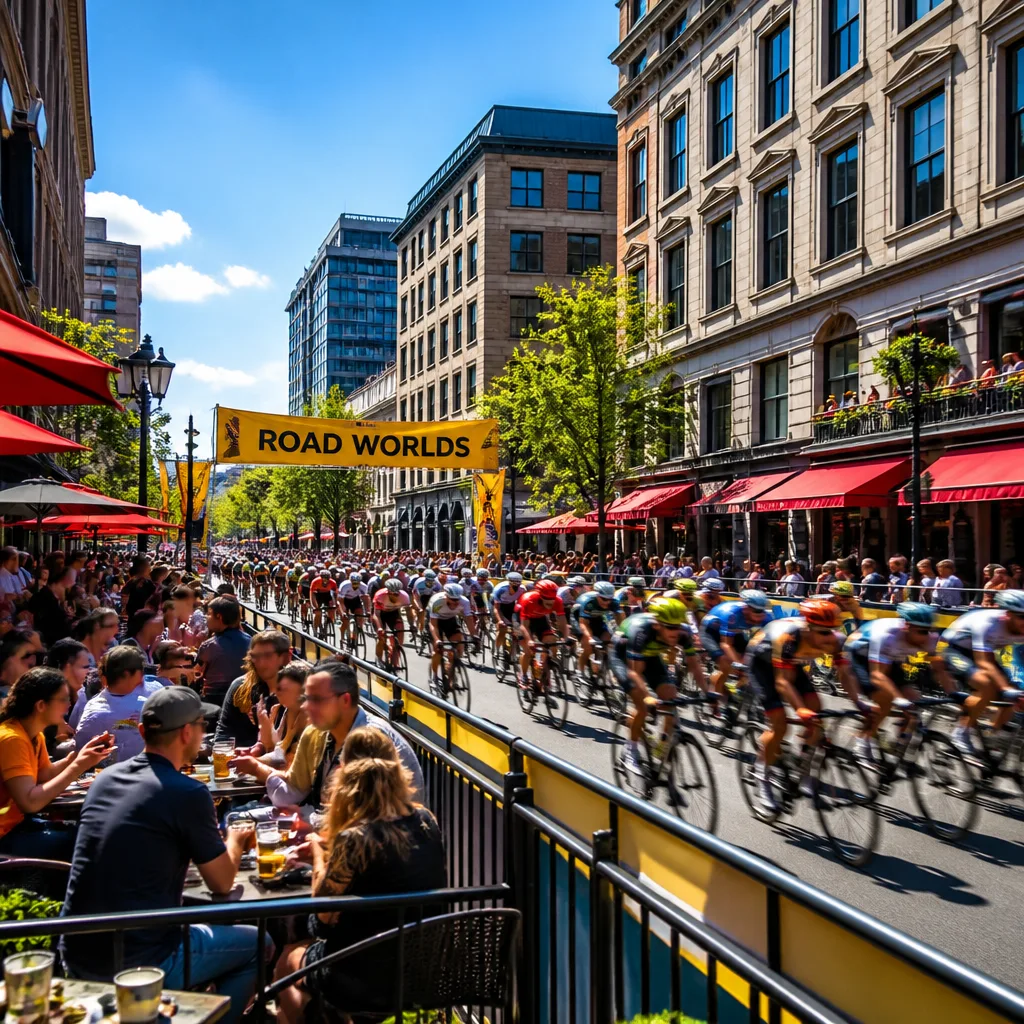
Montreal is seeing a mid‑season tourism surge that could translate into fuller arenas, busier racecourses and a stronger economic tailwind for sporting events as the city prepares to host the UCI Road World Championships later this summer.
Numbers point to an unusually busy summer
Tourisme Montréal reported that the city welcomed 7 per cent more visitors from the United States this year, reversing a 7 per cent decline recorded last summer. The agency also noted a 5 per cent increase in visitors from Canada and the rest of the world, while hotel bookings rose 12 per cent, producing an average occupancy rate of 82 per cent between May and July.
| Metric | Change / Value |
|---|---|
| U.S. visitors | +7% |
| Canadian & other international visitors | +5% |
| Hotel bookings (May–July) | +12% (occupancy 82%) |
| Total visitors in 2025 | 11.9 million |
| Tourism spending in 2025 | $5.8 billion |
The influx is not limited to leisure travellers. Tourisme Montréal highlighted a near‑doubling of international business conventions in July compared with the year before, a factor that typically increases weekday hotel demand and creates additional spectators for nearby sporting fixtures.
Festivals and sport feed one another
Major summer festivals reported record or near‑record attendance, a dynamic that benefits sports organisers by creating a fuller, more electric atmosphere across the city.
- Festival International de Jazz de Montréal achieved its highest ever attendance, propelled in part by Quebec breakout act L’angine de poitrine.
- Osheaga recorded its second most popular year on the books.
- Just for Laughs saw record closing‑night attendance this summer.
“This summer, Montréal is reaching new heights, and that speaks to the strength and diversity of our destination,” said Yves Lalumière, president and CEO of Tourisme Montréal.
Those same crowds and the stronger travel patterns set the stage for the UCI Road World Championships, where spectator interest often tracks with overall tourism trends. With August and September described by Tourisme Montréal as “still looking very strong,” the city appears on course for a banner year that will touch both culture and sport.
What this means for sports stakeholders
Event organisers, teams and local sports businesses will be watching booking and search‑trend data closely. Higher occupancy and visitor numbers typically help:
- Increase gate receipts and on‑site spend at races and matches;
- Boost corporate hospitality and convention‑related sponsorship revenue;
- Create stronger broadcast atmospheres for international audiences.
Tourisme Montréal also flagged increased Google searches for accommodation as evidence of robust, near‑term demand — a sign that last‑minute ticket sales and walk‑up attendance for outdoor events like road races could be higher than usual.
Reflecting on last year’s comparative downturn, Tourisme Montréal pointed to a rebound in U.S. visitors after a 2025 decline linked to bilateral tensions and public perceptions. The rebound, combined with the festival windfall and the convention uptick, makes a compelling economic story: in 2025 the city attracted 11.9 million visitors who spent $5.8 billion.
For sports planners, the immediate task is operational: scaling transport, security and fan amenities to handle denser crowds without compromising event quality. For broadcasters and sponsors, the opportunity is clear — Montreal’s mix of high profile cultural events and the UCI Road World Championships could generate stronger viewership and commercial returns than in recent summers.
As the city aims for a record year, the interplay between festivals and sport will be a key subplot — and Montreal’s hospitality sector will be judged on how well it converts this summer’s momentum into long‑term gains.