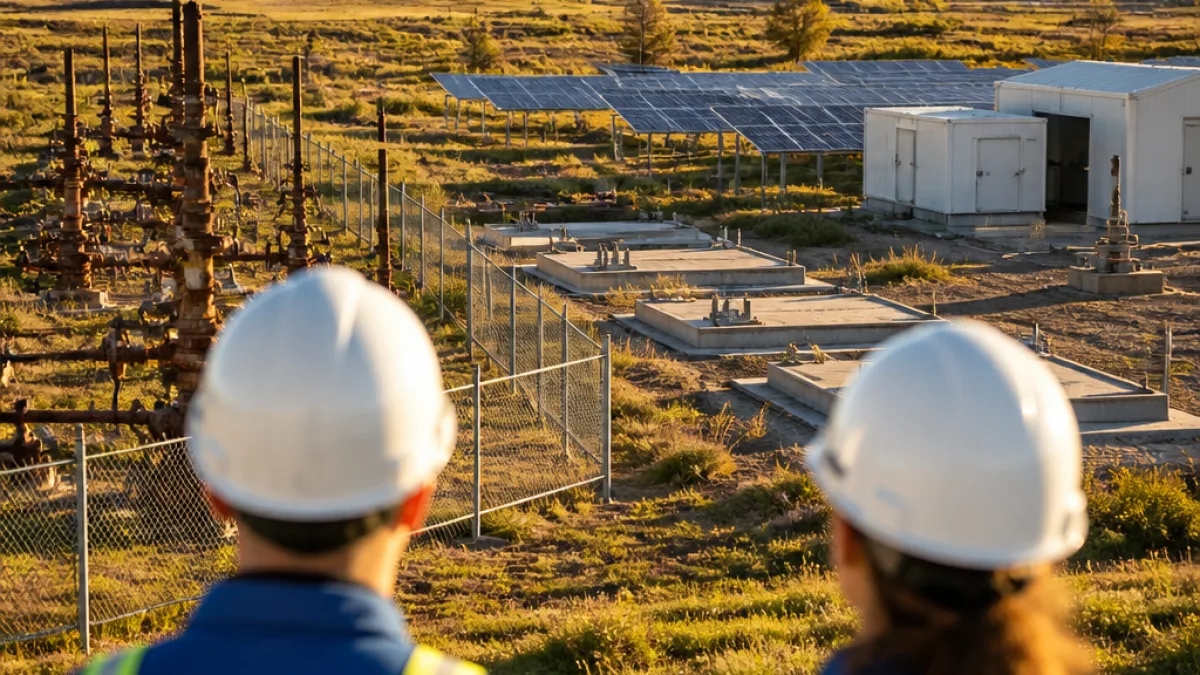
A Medicine Hat energy consultant has picked up two nominations at the Alberta Science and Technology (ASTech) Awards for projects that aim to give new life to aging oil and gas sites.
Local expertise, provincial problem
Paterson, who operates Paterson Consulting Inc. out of Medicine Hat, said the recognition reflects growing momentum around converting inactive or orphaned well sites into productive energy or industrial assets. The work is being framed as one practical response to a mounting provincial challenge: a backlog of wells that are no longer producing but still pose environmental, legal and economic questions.
“There’s actually landowners right now taking a civil suit out with the Alberta energy regulator because there is such a backlog on these oil and gas wells,” Paterson told reporters. He said pilots and small-scale projects already completed around the province have demonstrated feasibility for repurposing well sites.
“One of the things that we see that could be quite promising is we’ve already proved this out. We’ve already done these pilots, and they’ve just recently done a very high-tech one-megawatt project in the MD of Taber, so we’re looking to do more of these projects throughout the province.”
From single-purpose wells to mixed-use energy sites
Paterson emphasised that the opportunity extends beyond swapping an oil well for a single solar array. He envisions repurposed locations hosting mixed-use energy projects that could supply electricity to local manufacturing, farms or data centres — facilities that are increasingly hungry for reliable, local power.
He also pointed to new equipment and techniques being developed abroad and introduced to Canadian projects. Examples mentioned include ultra-low-noise turbines from Italy suitable for both natural gas and geothermal applications, and emerging methods to remediate contaminated soils at former production sites.
- Environmental remediation: New soil-repurposing technologies could reduce reclamation timelines and costs.
- Energy diversification: Repurposed sites could host solar, small-scale turbines, geothermal or hybrid systems to serve local needs.
- Investment interest: International investors are reportedly scouting Canadian opportunities as they assess geopolitical risk elsewhere.
International interest, local implications
Paterson said investor interest is starting to arrive from overseas. He cited Asian markets, including Singapore, as seeking alternatives to more uncertain investment climates in other countries. That attention could translate into capital flows for Alberta projects, he said — a point that brings economic opportunity for communities that host former oil and gas infrastructure.
While such inbound capital can help get projects off the ground, the practical work of conversion remains anchored in engineering, environmental assessment and regulatory approvals. Projects to re-use well sites must satisfy provincial standards and community expectations, particularly where landowners and neighbours are affected.
| Issue | Implication |
|---|---|
| Backlog of inactive/orphaned wells | Legal actions by landowners and increased scrutiny of reclamation timelines |
| Pilot projects | Proof of concept for mixed-use energy and remediation approaches |
| International investment | Potential source of capital but adds a need for clear regulatory frameworks |
The ASTech nominations place Medicine Hat on the roster of Alberta organisations being recognised for applied science and technology work, particularly where it intersects with resource-management challenges. For a region shaped by energy production, turning legacy infrastructure into fresh economic assets would represent a pragmatic transition that keeps jobs and investment local.
For now, the nominations signal that local consultants are contributing solutions to a problem that affects farmers, municipalities and companies across the province. The next step, Paterson said, is scaling proven pilots into repeatable projects so communities can realise the benefits of redevelopment rather than simply shouldering the costs of abandonment.
Those developments will be watched closely in Medicine Hat and beyond as Alberta seeks pathways to manage the end-of-life phase for a large stock of hydrocarbon infrastructure while meeting new demand for electricity and industrial power.